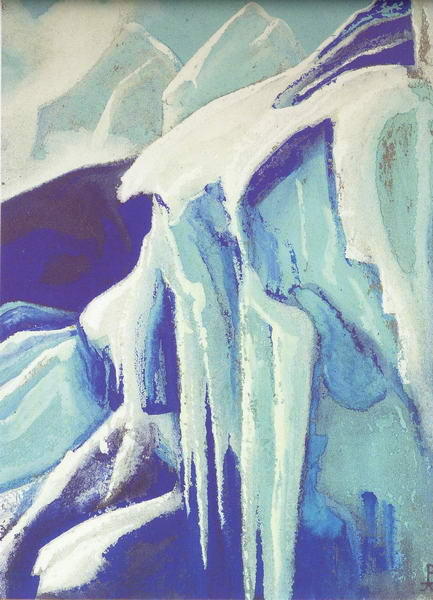
Explore Nicholas Roerich’s ‘Ices,’ a stunning impressionistic oil painting of a glacial formation. Discover its cool blues, textured brushstrokes & symbolic power.
Explore Nicholas Roerich's (1874-1947) captivating art: Symbolism, Himalayan landscapes & mystical paintings. Designs for Ballets Russes & advocate for cultural preservation.
A Monumental Vision of Frozen Majesty
The artwork, titled “Ices,” presents an arresting depiction of glacial grandeur—a towering ice formation bathed in diffused light and rendered with the unmistakable mark of Nicholas Roerich’s impressionistic style. More than just a visual representation of frozen water, it embodies Roereich's profound engagement with spiritual symbolism and his unwavering belief in the transformative power of art. Captured sometime around 1941, this piece exemplifies Roereich’s distinctive approach to landscape painting, prioritizing emotional resonance over meticulous detail.
Style and Technique: Impressionistic Brushstrokes
Roereich’s technique is characterized by loose, expressive brushstrokes—a hallmark of impressionism—that prioritize capturing the immediate sensation of observing a natural scene. Unlike academic realism, which strives for photographic accuracy, Roereich sought to convey the essence of his subject matter through color and texture. Thick impasto layers build up on the canvas, creating palpable surface irregularities that mimic the crystalline structure of ice itself – jagged edges and layered planes contribute to an overall textural richness. The predominant palette consists of cool blues ranging from icy turquoise to deep sapphire, interwoven with whites and subtle hints of purple and grey at the base. These colors aren’t merely descriptive; they are deliberately chosen to evoke feelings of serenity and contemplation.
Historical Context: Roereich's Spiritual Journey
Nicholas Roerich’s artistic output was deeply influenced by his spiritual explorations—particularly his fascination with Tibetan Buddhism and shamanic traditions. He believed that art could serve as a conduit for accessing higher consciousness and communicating universal truths. “Ices” reflects this conviction, portraying the icy landscape not just as an aesthetic subject but as a symbol of resilience, purity, and the enduring beauty of nature’s forces. Roereich's work emerged during a period marked by significant artistic experimentation and intellectual ferment—the aftermath of World War I saw artists grappling with questions of identity and purpose amidst the ruins of European civilization.
Symbolism: Frozen Beauty and Inner Reflection
The icy expanse depicted in “Ices” transcends its literal representation, functioning as a powerful metaphor for inner stillness and spiritual contemplation. The towering ice formation symbolizes strength and permanence—a reminder that even amidst chaos and uncertainty, beauty persists. Furthermore, the diffused light illuminating the ice underscores Roereich’s belief in illumination—both physical and metaphysical—as essential to perceiving the divine order of the cosmos. Consider how this artwork might inspire interior designers seeking to create spaces imbued with tranquility and contemplation.
Emotional Impact: Capturing a Momentary Sublime
Ultimately, “Ices” succeeds in conveying an emotional experience akin to what Romantic artists termed the sublime—a feeling of awe mingled with terror—but tempered by acceptance of nature’s grandeur. Roereich's masterful brushwork captures not just the visual appearance of the glacier but also its palpable energy and majesty. It invites viewers to pause, reflect, and appreciate the profound beauty inherent in confronting the immensity of the natural world.