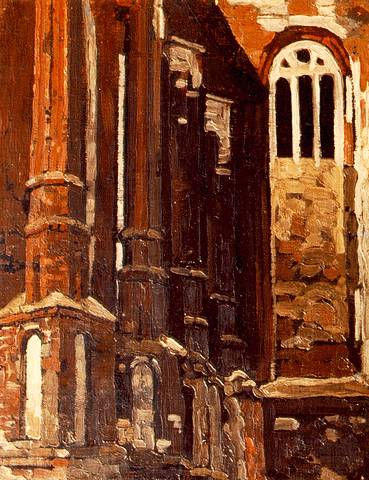
Kovno. Old church.

Nicholas Roerich’s evocative depiction captures the solemn beauty of an old Lithuanian church tower, rendered in a symbolic style emblematic of early 20th-century spiritual art. Explore this captivating masterpiece and bring its timeless essence into your home.


Nicholas Roerich (1874 - 1947)

Explore Nicholas Roerich's (1874-1947) captivating art: Symbolism, Himalayan landscapes & mystical paintings. Designs for Ballets Russes & advocate for cultural preservation.

A Window Into Spiritual Russia: Exploring Nicholas Roerich’s “Kovno. Old Church.”

  • Subject Matter and Composition The painting depicts an imposing church nestled within the cityscape of Kovno (modern Vilnius), Lithuania. Its dominant feature is undeniably its twin towers, which punctuate the skyline with a solemn grandeur. Careful observation reveals three windows strategically positioned—one high on the left tower, another low on the right tower, and a central window offering a balanced perspective—illuminating the interior space and anchoring the viewer’s gaze.
  • Stylistic Considerations: Symbolism Embodied Nicholas Roerich's artistic approach is characterized by a profound symbolic intent. He wasn’t simply documenting architectural reality; he was conveying deeper spiritual ideas rooted in Eastern mysticism. This style aligns with Roerich’s broader philosophical framework, which sought to harmonize science and religion through the lens of universal symbolism.
  • Technique: Impressionistic Brushstrokes Executed around 1903, “Kovno. Old Church.” showcases Roereich's masterful use of impressionistic brushwork. Loose, textured strokes capture the play of light on the brick façade and contribute to an overall sense of atmosphere—a palpable stillness that invites contemplation. The artist skillfully blends colors to create a harmonious palette reflecting the muted tones typical of Lithuanian landscapes.
  • Historical Context: Lithuania’s Artistic Renaissance This artwork emerged during Lithuania's burgeoning artistic renaissance, a period marked by renewed interest in national identity and cultural heritage. Roereich’s depiction reflects this spirit, celebrating the enduring beauty of historic buildings and traditions—a testament to Lithuania’s rich past.
  • Emotional Resonance: Tranquility and Remembrance Ultimately, “Kovno. Old Church.” transcends mere visual representation; it evokes a feeling of serene contemplation. The church's weathered stone walls whisper tales of centuries gone by, prompting viewers to reflect on themes of faith, resilience, and the passage of time. Its quiet dignity serves as an inspiration for interior designers seeking pieces that convey understated elegance and timeless beauty.