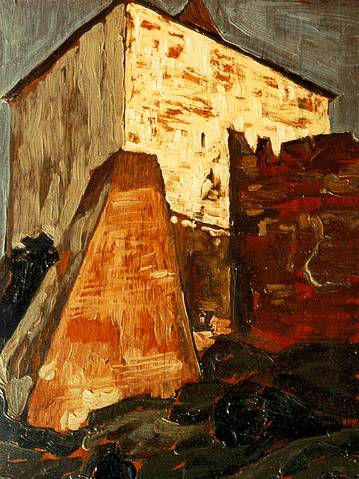
Nicholas Roerich’s "Kremlin Tower in Novgorod" (1903) captures a detailed scene of a red brick tower within a complex architectural setting, showcasing the artist's meticulous style and reflecting his interest in historical subjects. Discover this captivating artwork and bring its timeless beauty into your space.
Nicholas Roerich’s “Kremlin Tower in Novgorod”: A Window into Russian Spirit
Nicholas Roemerich's "Kremlin Tower in Novgorod," painted in 1903, is more than just a depiction of a medieval structure; it’s a profound meditation on the soul of Russia itself. This evocative work captures a pivotal moment in time – the early 20th century – while simultaneously tapping into centuries of Russian history and spiritual belief. The painting immediately draws the eye to the imposing red brick tower, a symbol of Novgorod's resilience and enduring spirit, standing proudly against a backdrop that speaks volumes about the region’s character.
- Subject Matter: The primary focus is undeniably the Kremlin Tower in Novgorod, a key landmark representing the city’s historical importance as a major trading center and religious hub.
- Composition: Roerich masterfully employs a complex composition, layering architectural details with human figures to create a sense of depth and narrative. The placement of the two individuals adds an element of scale and invites the viewer to contemplate their role within this historical scene.
Roerich’s Artistic Style and Technique
Roerich's style in "Kremlin Tower in Novgorod" is firmly rooted in Russian Realism, yet infused with a distinctly spiritual sensibility that would become a hallmark of his oeuvre. He meticulously renders the textures of the brickwork, the weathered stone, and the surrounding landscape, demonstrating a remarkable attention to detail. The use of color is particularly noteworthy – rich reds and ochres dominate, evoking warmth, strength, and a connection to the earth. His brushstrokes are confident and deliberate, contributing to the painting’s overall solidity and sense of permanence. Roerich's technique involved layering thin glazes over an initial underpainting, building up depth and luminosity that is characteristic of his later works.
- Color Palette: Dominated by earthy tones – reds, browns, ochres – reflecting the landscape and historical materials.
- Brushwork: Precise yet expressive, contributing to a sense of solidity and texture.
Historical Context and Symbolism
Painted in 1903, “Kremlin Tower in Novgorod” reflects a period of significant change in Russia. The late Imperial era was marked by both immense progress and deep-seated social tensions. Roerich’s interest in Novgorod stemmed from its historical significance as an early center of Russian Orthodox Christianity and its enduring spirit of independence. The tower itself symbolizes not just physical defense but also spiritual fortitude – a testament to the nation's ability to withstand adversity. The inclusion of human figures suggests a connection between the past and present, inviting viewers to consider their own place within Russia’s long narrative.
- Novgorod’s Significance: The painting reflects Novgorod’s role as a key center of Russian history and culture.
- Symbolism of the Tower: Represents resilience, spiritual strength, and historical continuity.
Emotional Impact and Artistic Legacy
"Kremlin Tower in Novgorod" resonates with a profound sense of melancholy and reverence. Roerich’s ability to capture not just the physical appearance of the tower but also its underlying spirit elevates this work beyond a simple landscape painting. It is a powerful reminder of Russia's rich past, its enduring traditions, and the human capacity for both strength and vulnerability. This piece exemplifies Roerich’s broader artistic mission – to explore the intersection of art, spirituality, and cultural heritage. A hand-painted reproduction offers an unparalleled opportunity to experience the full impact of this remarkable artwork.