Nicholas Roerich’s “Mekheski – Moon People”: A Chronicle of Myth and Light
The painting "Mekheski – Moon People," created in 1915 by the visionary artist Nicholas Roerich, is far more than a depiction of a nocturnal landscape; it's a profound meditation on ancient mythologies, spiritual exploration, and the enduring human connection to the cosmos. Executed with meticulous detail and imbued with a haunting beauty, this work exemplifies Roerich’s unique artistic style – a synthesis of Symbolist aesthetics, archaeological research, and his deeply held belief in the interconnectedness of all things.
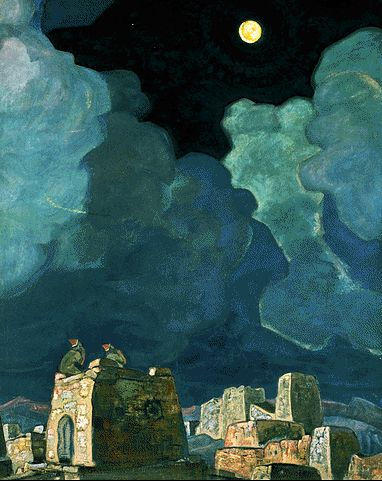
Roerich's fascination with Siberian folklore and shamanistic traditions profoundly shaped his art. The title itself, “Mekheski,” refers to a mythical people inhabiting the remote regions of Siberia, often associated with lunar deities and celestial wisdom. The scene presented depicts a group of figures – likely representing these Mekheski – gathered around what appears to be a crumbling ruin, bathed in the ethereal glow of a full moon. The composition immediately draws the viewer into a space of mystery and contemplation, inviting reflection on themes of time, memory, and the enduring power of ancient narratives.
Technique and Materiality: A Layered Approach
Roerich’s technique is characterized by its remarkable layering and textural richness. He employed oil paints applied with a delicate touch, building up multiple translucent glazes to achieve an almost luminous effect. The use of cardboard as the support adds to the painting's tactile quality, suggesting a connection to ancient materials and construction methods. Notice the subtle gradations in tone – from the deep blues and purples of the night sky to the warm ochres and browns of the ruins – creating a sense of depth and atmospheric perspective that is both realistic and dreamlike. The meticulous detail evident in the figures’ clothing, the weathered stone of the ruins, and even the individual blades of grass contributes significantly to the painting's immersive quality.
Symbolism and Spiritual Resonance
Beyond its aesthetic qualities, “Mekheski – Moon People” is rich in symbolic meaning. The moon itself represents cycles, intuition, and the feminine divine—a recurring motif in Roerich’s work. The ruins symbolize lost civilizations, forgotten knowledge, and the impermanence of earthly existence. The figures themselves are ambiguous; they could be shamans, pilgrims, or simply witnesses to a timeless event. Their posture suggests reverence and contemplation, hinting at a spiritual quest for understanding. Roerich believed that art possessed the power to unlock hidden dimensions of consciousness, and this painting undoubtedly invites viewers to engage in their own personal journey of discovery.
A Legacy of Cosmic Vision
"Mekheski – Moon People" stands as a testament to Nicholas Roerich’s extraordinary artistic vision. His work continues to resonate with audiences today, offering a powerful reminder of the enduring mysteries of the universe and the profound connection between humanity and the cosmos. Reproductions of this evocative piece capture not only its visual beauty but also the spirit of exploration and spiritual seeking that defined Roerich's life’s work. It is a painting that speaks to our deepest longings for meaning, belonging, and a glimpse beyond the veil of everyday reality.