Nicholas Roerich’s “Ominous”: A Meditation on Mortality and Spiritual Resonance
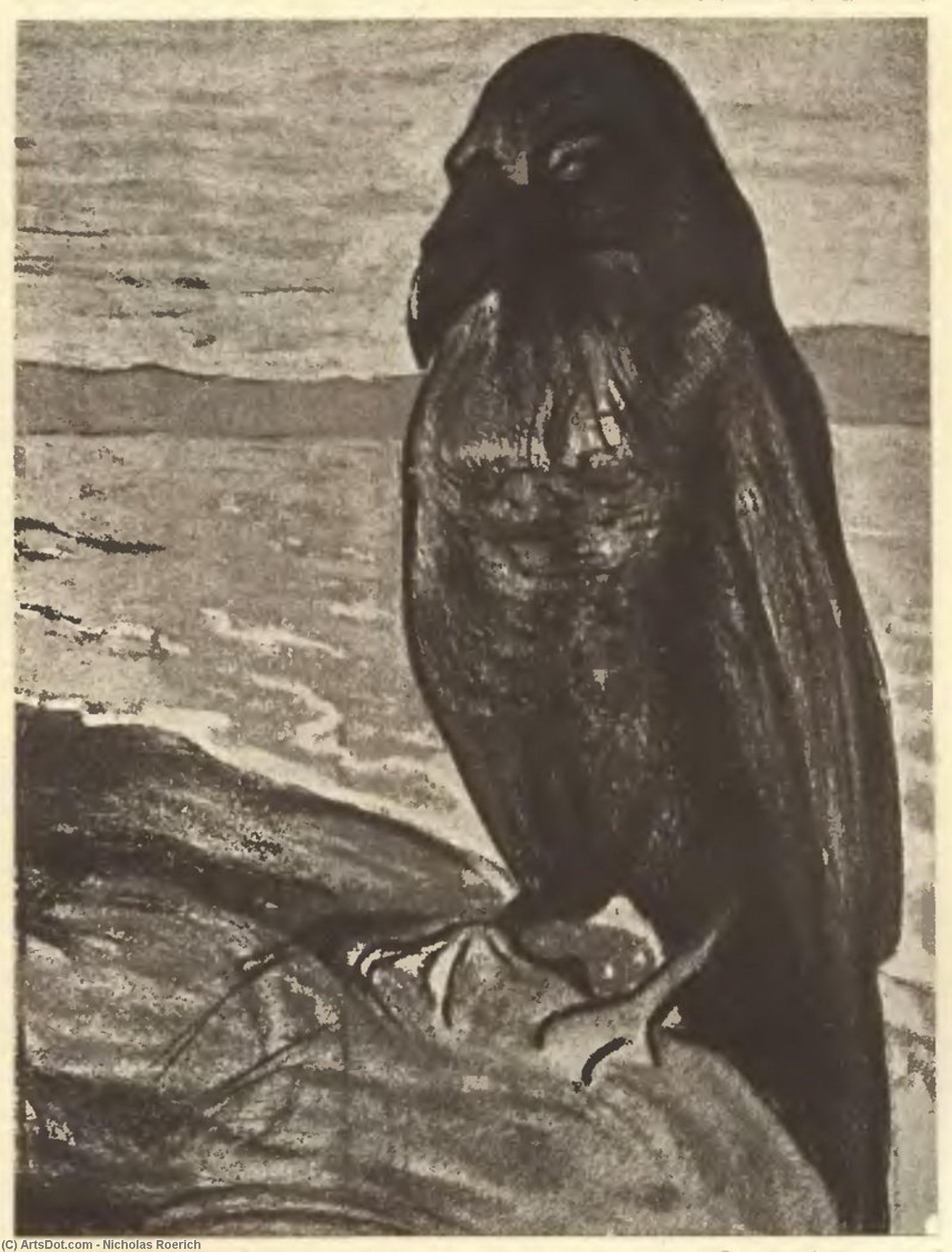
Nicholas Roemerich's "Ominous," painted in 1901, is more than just a depiction of two birds; it’s a profound exploration of mortality, spirituality, and the interconnectedness of life – themes that would become central to Roerich’s oeuvre. The painting immediately draws the eye to the dramatic composition: a larger, imposing black bird dominates the scene, perched atop a smaller avian form near the water's edge. This visual juxtaposition speaks volumes about the concepts of dominance, vulnerability, and perhaps even the cyclical nature of existence – birth, struggle, and eventual surrender.
- Subject Matter: The central focus is undeniably the birds themselves, but their presence is interwoven with a human element. Three figures are subtly integrated into the landscape, adding another layer of interpretation to the work’s meaning.
- Composition: Roerich masterfully employs leading lines created by the rocks and water to guide the viewer's eye towards the dominant black bird, intensifying its impact. The boat in the distance further emphasizes the scale of the scene and hints at human ambition against the backdrop of nature’s power.
A Masterclass in Symbolism – Roerich’s Spiritual Vision
Roerich was deeply influenced by esoteric traditions, particularly those rooted in ancient Russia and Central Asia. “Ominous” is replete with symbolic resonance. The black bird, often associated with death and the unknown, could represent a confronting encounter with one's own mortality or the forces of chaos. Conversely, the smaller bird might symbolize hope, resilience, or perhaps the soul’s journey towards enlightenment. The presence of humans adds another layer of complexity – are they witnesses to this symbolic drama, participants in it, or simply reflections of humanity’s relationship with the natural world?
Roerich's work frequently explored themes of reincarnation and spiritual evolution, concepts he believed were deeply embedded within the fabric of reality. This painting can be seen as a visual representation of these ideas, inviting contemplation on the transient nature of life and the possibility of an afterlife.
Technique and Style – Roemerich’s Distinctive Approach
Painted in 1901, “Ominous” exemplifies Roerich's developing style, characterized by a meticulous attention to detail and a rich, layered application of paint. He employed a technique known as ‘verlata’—a layering method where thin glazes of color are applied over dried underlayers—to achieve luminous effects and create a sense of depth and atmosphere. The use of muted earth tones – browns, grays, and blacks – contributes to the painting's somber mood, while subtle highlights accentuate the textures of the birds’ feathers and the rocks.
Roerich was a master colorist, and his ability to create atmospheric perspective is particularly evident in this work. The distant boat appears hazy and indistinct, further emphasizing the foreground drama and creating a sense of vastness within the scene.
Emotional Impact and Legacy – A Timeless Resonance
"Ominous" possesses a haunting beauty that continues to captivate viewers over a century later. Its evocative imagery and profound symbolism invite introspection and contemplation on fundamental questions about life, death, and spirituality. Roerich’s work transcends mere representation; it aims to evoke an emotional response and stimulate the viewer's imagination. This reproduction offers a unique opportunity to own a piece of art that embodies not only Roerich’s artistic skill but also his deeply held spiritual beliefs – a testament to his enduring legacy as one of the 20th century’s most significant artists.