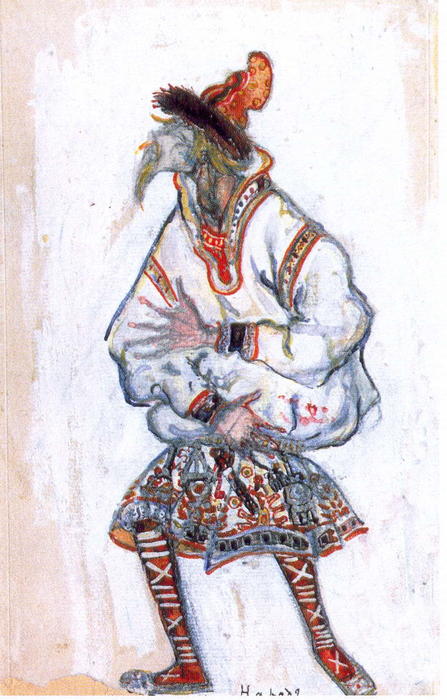
People (Old man)

Nicholas Roerich’s enigmatic ‘People (Old man)’ captures a hauntingly serene portrait imbued with symbolic avian imagery—a bird-like face and perched birds—reflecting the artist's spiritual explorations during the early 20th century. Explore this captivating masterpiece and bring its timeless beauty into your home.


Nicholas Roerich (1874 - 1947)

Explore Nicholas Roerich's (1874-1947) captivating art: Symbolism, Himalayan landscapes & mystical paintings. Designs for Ballets Russes & advocate for cultural preservation.

A Portrait Steeped in Mythic Resonance: Exploring Nicholas Roerich’s “People (Old Man)”

  • Subject Matter and Composition The painting depicts an elderly man, rendered with meticulous detail against a backdrop of architectural elements—likely hinting at a monumental building or wall. What immediately draws the eye is not merely his physical form but the striking resemblance to a bird’s face; this deliberate stylistic choice elevates the portrait beyond a simple depiction of age and experience.
  • Style and Technique Roereich's artistic style aligns closely with Anthroposophy, a spiritual philosophy developed by Rudolf Steiner that emphasizes interconnectedness between humanity and nature. The painting showcases a masterful blend of realism and symbolic representation—characteristic of Anthroposophical art. Roerich employed tempera paint on canvas, known for its luminosity and durability, achieving subtle tonal gradations that convey depth and atmosphere.
  • Historical Context Created in 1913, “People (Old Man)” emerged during a period of significant artistic experimentation and intellectual ferment. The painting reflects the broader influence of Anthroposophy on Roereich’s worldview—a belief system rooted in Eastern mysticism and aimed at fostering human unity. It stands as testament to Roereich's desire to capture not just outward appearance but also inner spiritual essence.
  • Symbolism The inclusion of two birds within the composition is laden with symbolic significance. Birds universally represent freedom, aspiration, and transcendence—themes central to Anthroposophy’s core tenets. Their placement strategically reinforces the idea that the old man embodies wisdom gained through contemplation and a connection to higher realms.
  • Emotional Impact “People (Old Man)” transcends mere visual representation; it evokes feelings of serenity, introspection, and reverence for the natural world. Roereich’s deliberate use of color—primarily muted hues—creates an atmosphere of quiet contemplation, inviting viewers to contemplate themes of mortality, wisdom, and spiritual transformation. It's a piece designed to inspire awe and provoke reflection on the human condition.