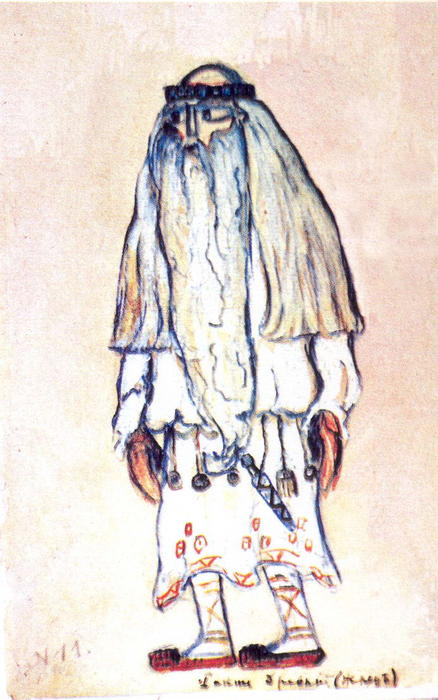
Nicholas Roerich’s haunting ‘Sacrificer,’ painted in 1913, captures a solemn priest figure against a monumental building, adorned with symbolic chains representing spiritual struggle and contemplation. Explore this evocative masterpiece and bring its timeless beauty into your home.
A Portrait of Spiritual Resolve: Exploring Nicholas Roerich’s “Sacrificer”
- Subject Matter & Composition:
- Stylistic Influences & Technique:
- Historical Context & Philosophical Resonance:
- Symbolism – Chains and Light:
- Emotional Impact & Artistic Legacy:
Subject Matter & Composition
Nicholas Roerich’s “Sacrificer” presents a striking visual narrative centered around a solitary figure draped in white robes, embodying an aura of solemn contemplation. The man stands before what appears to be a monumental building—likely inspired by ancient temples and architectural grandeur—establishing a dialogue between human vulnerability and the enduring presence of spiritual authority. Roerich’s masterful composition directs the viewer's gaze upwards, emphasizing the figure’s posture and reinforcing his role as a conduit for divine contemplation. The deliberate framing contributes to an atmosphere of profound seriousness, inviting viewers to consider themes of sacrifice, devotion, and inner transformation.
Stylistic Influences & Technique
Roerich's artistic style is deeply rooted in Anthroposophy—a spiritual philosophy developed by Rudolf Steiner—which profoundly shaped his worldview and artistic practice. He employed a technique characterized by layered glazing – a method perfected during his formative years at the Imperial Academy of Arts – resulting in luminous surfaces that capture subtle tonal variations. This meticulous layering process allowed Roerich to achieve an unparalleled depth of color and texture, mirroring the spiritual richness he sought to convey. The artist’s brushstrokes are deliberate and expressive, conveying both restraint and dynamism, reflecting the internal struggle inherent in the depicted sacrifice.
Historical Context & Philosophical Resonance
Painted in 1913, “Sacrificer” emerged during a period of significant intellectual ferment within Russia—the dawn of Anthroposophy’s influence—and coincided with Roereich's exploration of Eastern mysticism and shamanic traditions. The painting reflects Steiner’s concept of the ‘Great Work,’ an individual spiritual quest aimed at achieving unity with the cosmos. Roerich believed that art could serve as a vehicle for accessing higher consciousness, mirroring the symbolism found in ancient religions and myths. The image speaks to anxieties surrounding modernity and the need for reconnection with primal spiritual forces—a sentiment prevalent during the early 20th century.
Symbolism – Chains and Light
The prominent chains encircling the figure’s torso are a potent visual symbol representing burdens of earthly existence, limitations imposed by ego, and obstacles to spiritual ascension. However, juxtaposed against this darkness is an ethereal glow emanating from above—likely referencing divine illumination—suggesting that transcendence is attainable through unwavering faith and selfless devotion. This duality underscores Roereich's belief in the transformative power of inner struggle and the necessity of confronting one’s fears to embrace enlightenment.
Emotional Impact & Artistic Legacy
“Sacrificer” transcends mere visual representation; it evokes a palpable sense of solemn contemplation and spiritual yearning. The painting compels viewers to confront questions about purpose, sacrifice, and the pursuit of inner harmony. Roereich’s enduring artistic legacy lies in his ability to capture not only aesthetic beauty but also profound philosophical ideas—ideas that continue to resonate with audiences today. Reproductions of “Sacrificer” offer a captivating glimpse into Roereich's visionary spirit and serve as an inspiring reminder of the transformative potential inherent within art itself.