A Portrait of Wisdom: Exploring Nicholas Roerich’s “Socrates”
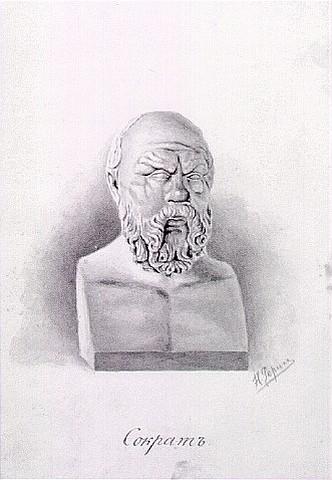
Nicholas Roerich's "Socrates," completed in 1893, stands as a testament to the enduring fascination with classical ideals and the pursuit of spiritual contemplation. This striking monochrome bust portrait captures the solemn gaze and intellectual intensity characteristic of Socrates—a figure revered throughout history for his philosophical inquiries into ethics and epistemology.
- Subject Matter: The artwork centers on a meticulously rendered depiction of Socrates’ head and shoulders, embodying the philosopher's iconic presence in Western thought. Roerich skillfully portrays his facial features – the furrowed brow, piercing eyes, and prominent beard – conveying a profound sense of seriousness and contemplation.
- Style & Technique: Executed in Realism with an emphasis on capturing likeness and conveying emotion, “Socrates” exemplifies Roerich’s mastery of charcoal or graphite. The artist achieves remarkable tonal range and textural detail, skillfully simulating the appearance of weathered stone or marble—a deliberate choice reflecting the artistic conventions of his time.
- Composition: Centered on Socrates' head and shoulders, the composition prioritizes visual impact by minimizing extraneous elements. A simple rectangular base provides stability beneath the bust, directing the viewer’s gaze directly to the subject’s countenance and reinforcing its importance.
- Lighting & Perspective: The illumination originates from above and slightly to the left, creating subtle highlights and shadows that sculpt Socrates' form and imbue it with depth. Despite the two-dimensional nature of the photograph, Roerich successfully suggests perspective through shading—a technique honed by observing classical sculpture.
- Symbolic Elements: Beyond its aesthetic qualities, “Socrates” carries symbolic weight. The laurel wreath adorning Socrates’ head signifies recognition for his intellectual achievements and unwavering commitment to philosophical truth—a potent emblem of the humanist values championed during Roerich's era.
Historical Context & Artistic Influences
Created in 1893, “Socrates” reflects Roerich’s engagement with the artistic currents of his time—particularly Realism and Symbolism. Inspired by the monumental sculptures of ancient Greece, Roerich sought to distill the essence of Socrates' character into a single image, prioritizing clarity and emotional resonance.
Furthermore, Roerich’s artistic vision was profoundly shaped by his fascination with Himalayan landscapes and spiritual mysticism—themes that permeate his broader oeuvre. “Socrates” serves as an exemplar of this stylistic blend, demonstrating Roerich's ability to synthesize intellectual rigor with imaginative expression.
Material & Craftsmanship
Based on visual evidence, the original artwork was likely crafted using charcoal or graphite on paper—a traditional medium favored by Realist artists for its capacity to achieve nuanced tonal gradations and textural subtleties. Roerich’s meticulous attention to detail underscores his dedication to capturing the likeness of Socrates with unwavering accuracy.
A Legacy of Reflection
"Socrates" transcends mere visual representation; it embodies a timeless pursuit of wisdom and ethical contemplation—values that continue to inspire artists and audiences alike. Roerich’s masterful depiction captures not only Socrates' physical appearance but also the profound spirit of inquiry that defines his legacy.