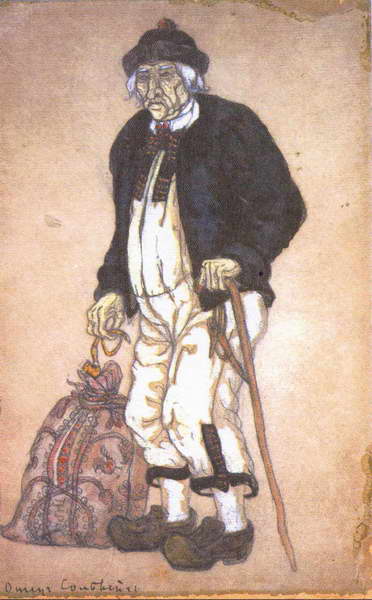
Nicholas Roerich's "Solveig’s Father": A Portrait of Melancholy and Spirit
“Solveig’s father,” painted in 1912 by the visionary artist Nicholas Roerich, is more than a simple depiction of an elderly man; it’s a poignant meditation on age, solitude, and the enduring human spirit. This evocative work, rendered in Roerich's signature Art Nouveau style, captures a moment of quiet contemplation, inviting viewers to consider themes of loss, memory, and the weight of experience. The painting’s stark black-and-white palette amplifies its emotional resonance, drawing attention to the textures of the man’s worn coat and the weathered lines etched onto his face – a testament to a life fully lived.
Art Nouveau Elegance and Roerich's Vision
Created during a pivotal period in Roerich’s career, “Solveig’s father” exemplifies the artist’s evolving aesthetic. Roerich was deeply influenced by Art Nouveau, characterized by its flowing lines, organic forms, and emphasis on decorative detail. However, unlike some of his contemporaries who merely adopted stylistic elements, Roerich infused these influences with a profound spiritual depth. The painting's composition—the man’s deliberate posture, the carefully placed cane, and the bag at his feet—suggests a journey, both physical and perhaps metaphorical. The use of strong outlines and flattened perspective, hallmarks of Art Nouveau, contribute to the work’s dramatic intensity.
- Style: Art Nouveau (Modern)
- Technique: Oil on Canvas – Roerich employed a meticulous layering technique, building up subtle gradations in tone and texture to create a sense of depth and realism.
Symbolism and the Weight of Years
The symbolism within “Solveig’s father” is layered and open to interpretation. The old man's attire—a hat and coat—suggests a bygone era, hinting at a past that holds both comfort and sorrow. The cane and walking stick are not merely aids for mobility; they represent resilience, experience, and perhaps the struggle against time itself. The bag he carries could symbolize memories, burdens, or simply necessities. The title itself, “Solveig’s Father,” adds another layer of complexity, potentially referencing Norse mythology – Solveig is a character from Henrik Ibsen's play *Peer Gynt*, known for her steadfast love and loyalty. This connection elevates the painting beyond a simple portrait, imbuing it with themes of devotion and enduring relationships.
Historical Context: Roerich at the Dawn of Modernity
Painted in 1912, “Solveig’s father” reflects the anxieties and uncertainties of the early 20th century. Roerich was grappling with questions of spirituality, philosophy, and the role of art in a rapidly changing world. His work during this period demonstrates a growing interest in exploring themes of human suffering and the search for meaning amidst chaos. The photograph of the original painting, taken around the time of its creation, offers a glimpse into the artistic practices of the era, highlighting the importance of documenting and preserving artistic heritage.
This hand-painted reproduction captures the essence of Roerich’s masterpiece, offering an unparalleled opportunity to bring this evocative work into your home or office. Its timeless themes and exquisite craftsmanship make it a truly exceptional addition to any art collection.