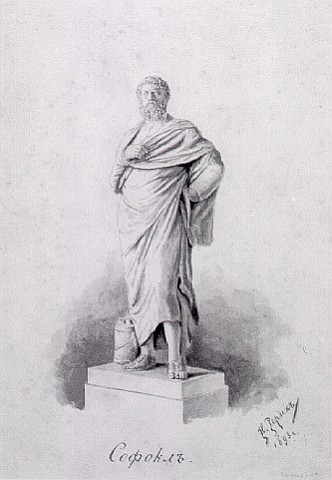
Nicholas Roerich’s study of Sophocles, a meticulously rendered graphite drawing in the style of 19th-century academic art, captures the Greek playwright's dignified pose and intellectual stature. Explore this evocative piece and add a timeless classic to your collection.
Sophocles: A Study in Classical Dignity by Nicholas Roerich
Nicholas Roemerich’s “Sophocles” is not merely a depiction of an ancient playwright; it's a profound meditation on intellect, reverence for the past, and the enduring power of artistic legacy. Executed in 1893, this preparatory sketch, rendered primarily in graphite and charcoal, offers a remarkably intimate glimpse into Roerich’s meticulous approach to capturing classical form and conveying a sense of solemn contemplation. The artwork's restrained palette – dominated by shades of gray, white, and subtle browns – immediately establishes an atmosphere of quiet dignity, mirroring the subject’s historical significance and the artist’s own intellectual rigor.
Technical Mastery: Hatching and Texture
- Line Work: The artwork's foundation lies in its extraordinarily precise line work. Roerich employs extensive hatching and cross-hatching techniques to build up the figure’s form, particularly within the drapery and facial features. This deliberate layering of lines creates a palpable sense of texture, imbuing Sophocles with a remarkable three-dimensionality despite the predominantly flat perspective.
- Value Control: The artist demonstrates masterful control over value, subtly modulating tones to define contours and create gradations that suggest volume and form. This meticulous attention to detail is characteristic of Roerich’s academic training and reflects his commitment to anatomical accuracy.
- Blending & Gradation: Evidence of blending and subtle gradations in value are present throughout the piece, adding depth and realism to the depiction of Sophocles' skin, beard, and clothing.
Historical Context and Neoclassical Influence
Created in 1893, “Sophocles” firmly situates itself within the neoclassical aesthetic that dominated 19th-century art. Roerich’s work echoes the ideals of classical sculpture – a reverence for idealized human form, balanced composition, and a focus on intellectual virtue. The choice of Sophocles as a subject is particularly significant; he represents the pinnacle of Greek thought and dramatic achievement, embodying qualities that Roerich himself sought to capture in his art. This piece can be seen as a direct engagement with the artistic traditions of antiquity, reflecting a broader European fascination with classical culture during this period.
Symbolism and Emotional Resonance
The composition itself speaks volumes about the artwork’s intended meaning. The central placement of Sophocles on a pedestal elevates him to a position of authority and importance, symbolizing his enduring influence on Western thought. The dignified posture, combined with the muted color palette, evokes a sense of solemnity and contemplation – inviting viewers to reflect on the nature of knowledge, artistic achievement, and the timeless questions posed by Greek drama. The soft, diffused lighting further enhances this emotional impact, creating an atmosphere of reverence and intellectual curiosity.
A Timeless Study
"Sophocles" is more than just a sketch; it’s a testament to Nicholas Roerich's artistic skill and his deep appreciation for the legacy of classical art. This meticulously rendered study offers a rare opportunity to connect with the spirit of antiquity, inviting viewers to contemplate the enduring power of human intellect and creativity. A hand-painted reproduction captures the essence of this remarkable artwork, allowing its profound beauty and intellectual depth to enrich any interior space.