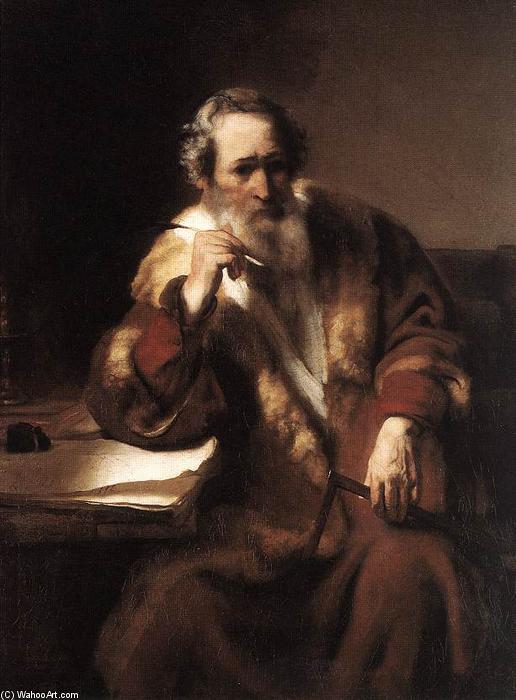
Apostle Thomas

Nicolaes Maes’s "Apostle Thomas" is a captivating Baroque painting showcasing the apostle in a moment of quiet contemplation with dramatic chiaroscuro lighting and rich detail, reflecting Rembrandt's influence. Discover this stunning 1656 masterpiece and bring art history home.


Nicolaes Maes (1634 - 1693)

Discover Nicolaes Maes (1634-1693), a Dutch Golden Age painter celebrated for intimate genre scenes & masterful portraits influenced by Rembrandt. Explore daily life through his captivating art.

Staatliche Museen (Kassel, Germany)

Explore Staatliche Museen Kassel: Immerse yourself in European art history from the Middle Ages to modern times—including Rembrandt masterpieces and contemporary exhibitions—plus ancient Egyptian, Greek & Roman treasures!

A Study in Contemplation: Nicolaes Maes’s Apostle Thomas

  • The Weight of Faith: Nicolaes Maes’s “Apostle Thomas” is more than a mere portrait; it's a carefully constructed meditation on faith, knowledge, and the quiet moments of introspection. Executed in 1656 during his formative years, this Baroque masterpiece reveals the burgeoning talent of a young artist deeply influenced by the master himself, Rembrandt van Rijn. The painting’s power resides not just in its subject – the Apostle Thomas, traditionally depicted as the doubter who demanded to feel Jesus' wounds – but in Maes’s ability to translate that theological tension into a palpable visual experience.
  • Baroque Drama and Dutch Light: Born in Dordrecht in 1634, Nicolaes Maes inherited the hallmarks of the Dutch Golden Age: a profound understanding of light and shadow – *chiaroscuro* – and an unwavering commitment to realism. This particular work exemplifies this approach brilliantly. The dark, almost impenetrable background serves as a dramatic stage for Thomas’s figure, intensifying the impact of the carefully rendered details. Maes skillfully manipulates light to illuminate Thomas' face and hands, drawing the viewer’s eye to his contemplative expression and the objects he holds – a book and quill pen – symbols of learning and devotion.

Technical Mastery: A Rembrandt-Inspired Approach

  • Detailed Rendering and Texture: Maes's meticulous attention to detail is immediately apparent. The fur lining of Thomas’s robe isn’t simply painted; it’s sculpted with a remarkable understanding of texture, conveying warmth and luxury. Similarly, the folds of the fabric, the quill pen, and the book itself are rendered with painstaking accuracy, demonstrating Maes's dedication to capturing the nuances of form and material. This level of detail was characteristic of artists working under Rembrandt’s influence, who prioritized a realistic portrayal over idealized beauty.
  • Color Palette and Composition: The color palette is rich and warm, dominated by browns, reds, and golds – colors associated with wealth, piety, and the divine. The composition itself is carefully balanced, with Thomas positioned centrally within the frame, creating a sense of stability and authority. The use of negative space further enhances the painting’s impact, allowing the viewer's eye to rest and contemplate the scene.

Historical Context: Faith and Portraiture in the Dutch Golden Age

  • The Rise of Religious Portraiture: The mid-17th century was a period of significant religious upheaval in Europe, and this is reflected in the subject matter of many Dutch portraits. Portraits were not merely representations of individuals; they were often statements of faith and social status. Thomas, as one of the apostles who doubted Jesus, offered an opportunity to explore themes of doubt, repentance, and ultimately, redemption – a potent message for a society grappling with religious questions.
  • Rembrandt’s Influence: Maes's apprenticeship under Rembrandt was crucial to his development. The influence of Rembrandt’s dramatic use of light and shadow, his psychological insight into his subjects, and his masterful handling of color are all evident in “Apostle Thomas.” This painting stands as a testament to the enduring legacy of one of history’s greatest artists.

Provenance and Significance

  • A Staatliche Museen Masterpiece: Currently housed at the Staatliche Museen in Kassel, Germany, “Apostle Thomas” represents a significant addition to the collection of Baroque masterpieces. Its presence within a public institution underscores its artistic merit and accessibility to art lovers worldwide.
  • Collecting the Spirit of the Golden Age: This reproduction offers an unparalleled opportunity to own a piece of Dutch history, capturing not only the visual beauty of Maes’s work but also the intellectual and spiritual context in which it was created. It's a window into a pivotal era of artistic innovation and religious exploration – a timeless testament to the power of human contemplation.