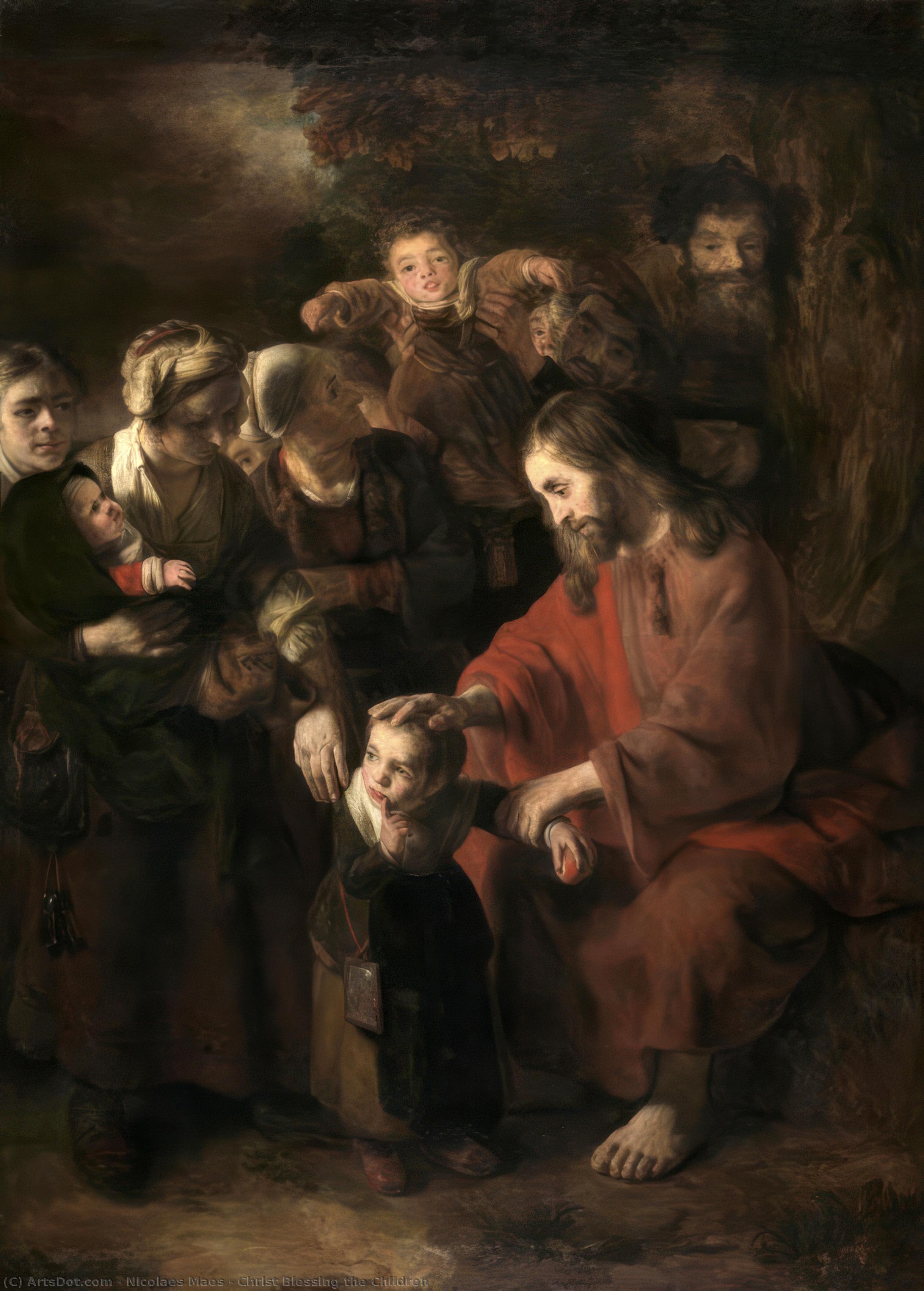
Nicolaes Maes’s "Christ Blessing the Children" captures Dutch Golden Age piety with Rembrandt-inspired chiaroscuro and a tender scene of Jesus blessing children. This meticulously detailed oil painting, circa 1652, offers a glimpse into domestic faith and is perfect for art lovers.
A Divine Encounter in Light and Shadow
In the quiet, evocative depths of Nicolaes Maes’s “Christ Blessing the Children,” painted around 1652-1653, we find a profound moment of spiritual intimacy captured with the masterful precision of the Dutch Golden Age. This is not merely a religious depiction; it is a window into a period of intense piety and domestic devotion. The scene centers on Jesus Christ, whose presence radiates a gentle authority as he gathers children toward him, embodying the timeless biblical promise to let the little ones come unto Him. Through Maes’s lens, the sacred becomes tangible, inviting the viewer to step out of the temporal world and into a space of profound grace and reverence.
The composition is a masterclass in chiaroscuro, a technique Maes perfected during his formative years in the legendary studio of Rembrandt van Rijn. By manipulating the dramatic interplay between deep, velvety shadows and piercing, warm light, Maes directs our gaze with surgical intent. The light does not merely illuminate; it sanctifies. It catches the soft contours of a child’s face, the texture of a humble garment, and the compassionate expression of Christ himself, creating an illusionistic depth that feels almost three-dimensional. This heavy use of shadow serves to isolate the central figures from the surrounding world, focusing all emotional energy on the tender interaction between the divine and the innocent.
Symbolism and the Soul of the Dutch Golden Age
Beyond the technical brilliance lies a rich tapestry of symbolism that would have resonated deeply with a 17th-century audience. The painting functions as a visual sermon on nurturing, protection, and the sanctity of the family unit—values that were the bedrock of Dutch society. As Christ cradles a child, the artist communicates a sense of divine tenderness that mirrors the domestic ideals of the era. Even the subtle inclusion of small details, such as the presence of birds within the scene, adds layers of naturalistic beauty and life, grounding the spiritual event in the physical reality of the world.
For the discerning collector or interior designer, this artwork offers more than just aesthetic beauty; it provides a focal point of contemplative peace. The painting’s ability to evoke emotion through texture—the heavy glazes of pigment that suggest the weight of fabric and the softness of skin—makes it a commanding presence in any curated space. Whether placed in a grand library or a quiet study, a high-quality reproduction of this masterpiece brings with it an atmosphere of historical weight and spiritual tranquility, serving as a timeless reminder of the beauty found in moments of humble devotion.