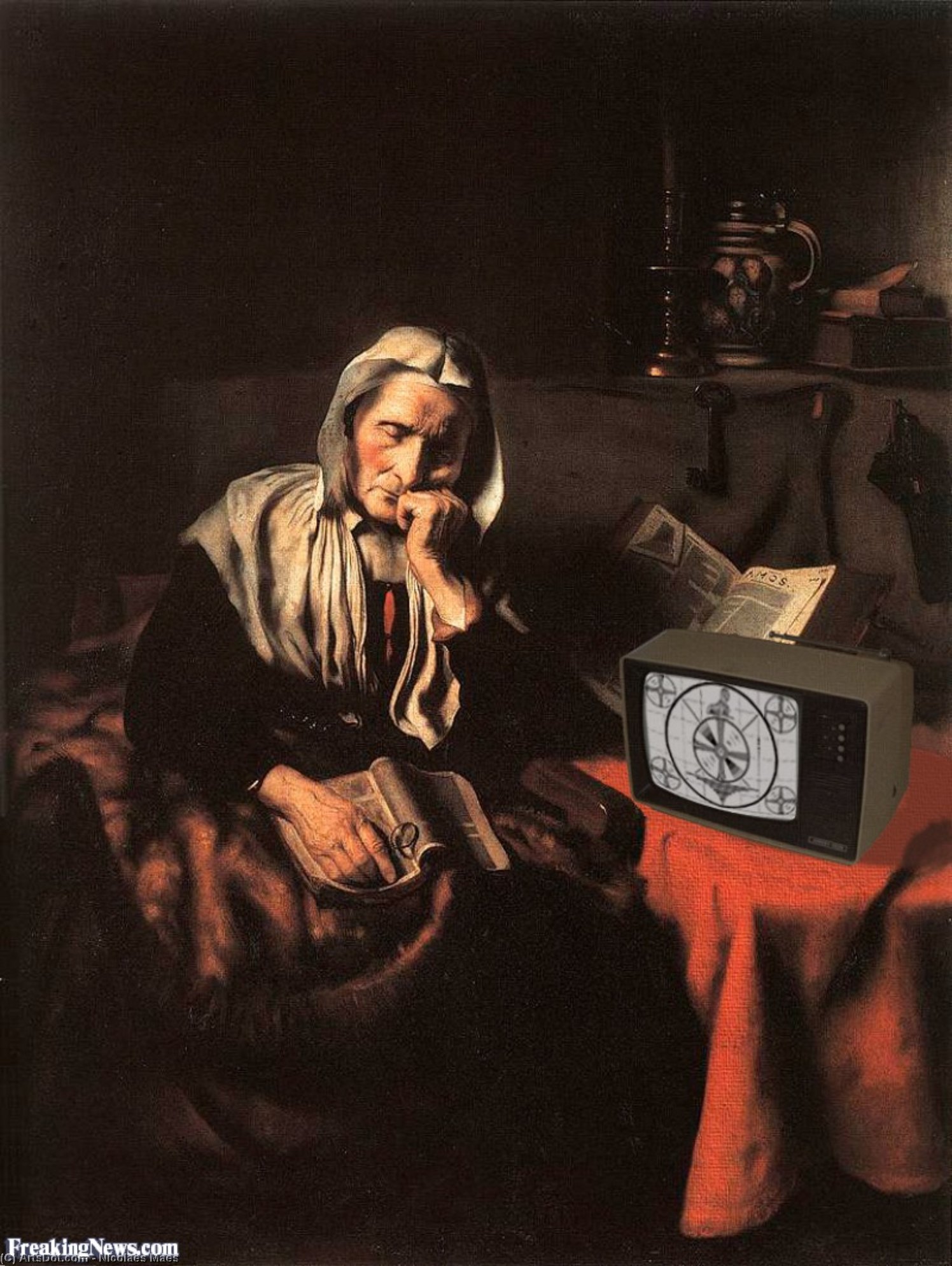
A Moment Frozen in Time: Nicolaes Maes’s “An Old Woman Dozing”
Nicolaes Maes's "An Old Woman Dozing," painted circa 1656, isn’t merely a depiction of an elderly woman resting; it’s a carefully constructed tableau brimming with quiet observation and subtle moral commentary. This oil on canvas masterpiece, now residing within the Royal Museums of Fine Arts of Belgium, offers a poignant glimpse into Dutch domestic life during the Golden Age – a world where industry and piety were highly valued, yet moments of serene contemplation held their own significance.
The painting immediately draws the eye to its central figure: an older woman seated in a simple chair, her head resting gently on her hand. Her posture is one of utter relaxation, almost lost in a dreamlike state. The scene unfolds within a modestly furnished room – a red-cloth covered table laden with everyday objects: a book open on a Bible, a lace pillow for bobbin lace (a symbol of diligent work and domestic industry), a jug, and a candlestick casting a warm glow. These elements aren’t haphazardly arranged; they speak to a life lived within the confines of a comfortable, if not opulent, household. The careful placement of each item suggests a deliberate composition, designed to convey a specific message beyond simple representation.
The Language of Symbolism
Maes masterfully employs symbolism to enrich the painting’s narrative. The open Bible, prominently displayed on the table, is particularly significant. Its pages are turned to Amos, a prophet known for his harsh condemnations of societal injustice and moral failings. This deliberate choice underscores the painting's underlying theme: the potential consequences of idleness and neglecting one’s duties. The lace pillow, traditionally associated with industrious women engaged in intricate needlework, is subtly positioned as if discarded – a visual representation of the woman’s lapse into inactivity. The hourglass, a symbol of fleeting time and impending judgment, further reinforces this message, reminding the viewer of the urgency to remain vigilant and productive.
The inclusion of the key for the larder—a small, unassuming object—adds another layer of meaning. In 17th-century Dutch society, access to the kitchen larder, where valuable provisions were stored, was a privilege reserved for those who diligently managed their households. The key’s presence suggests that this woman, despite her comfortable circumstances, has succumbed to a state of neglect, abandoning her responsibilities and potentially jeopardizing her family's well-being.
A Masterclass in Dutch Genre Painting
“An Old Woman Dozing” exemplifies the hallmarks of Dutch Golden Age genre painting. Maes’s skill lies not just in his realistic depiction of a domestic scene, but also in his ability to infuse it with psychological depth and moral instruction. The lighting—a warm, diffused glow emanating from the candlestick—creates an atmosphere of intimacy and tranquility, drawing the viewer into the woman's private world. The artist’s attention to detail is remarkable, from the delicate folds of the fabric to the subtle wrinkles on the woman’s face – all contribute to a sense of immediacy and authenticity.
Influenced profoundly by Rembrandt van Rijn during his apprenticeship, Maes inherited the master's masterful use of *chiaroscuro*—the dramatic interplay of light and shadow. This technique is particularly evident in the way Maes uses light to highlight key elements within the composition, guiding the viewer’s eye and emphasizing the painting’s central themes. The subtle gradations of tone create a sense of depth and volume, bringing the scene to life with remarkable realism.
A Timeless Reflection on Human Nature
“An Old Woman Dozing” transcends its historical context to offer a timeless meditation on human nature—on the balance between leisure and responsibility, idleness and diligence. It’s a poignant reminder that even in moments of quiet repose, we are constantly judged by our actions and choices. The painting's enduring appeal lies not only in its technical brilliance but also in its ability to resonate with viewers across generations, prompting reflection on our own lives and the values we hold dear.