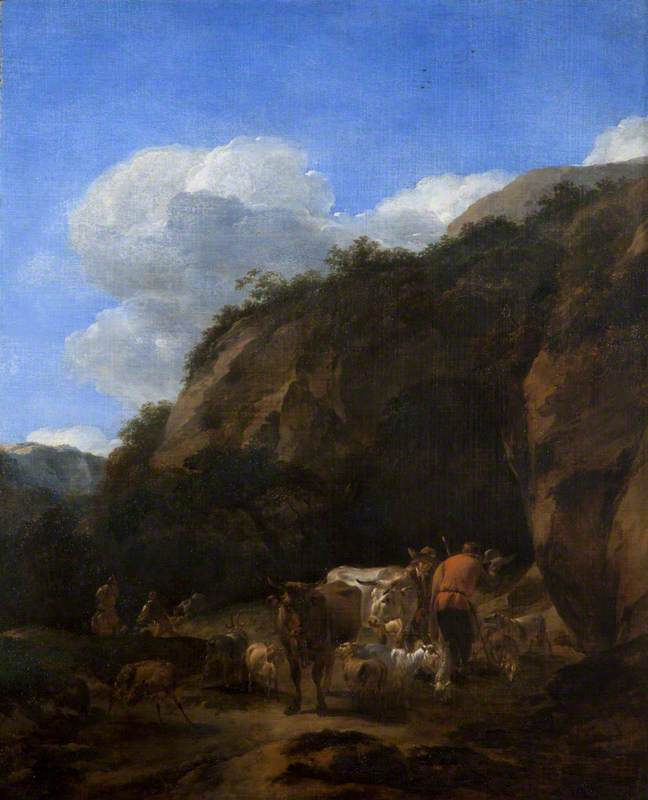
Nicolaes Berchem’s ‘A Hilly Landscape’ captures the serene beauty of Dutch Golden Age pastoral scenes with cattle and shepherds, showcasing masterful atmospheric perspective and a tranquil mood – discover this stunning reproduction.
Nicolaes Pietersz Berchem (1620-1683) was a Dutch Golden Age master of idyllic Italianate landscapes, blending Northern realism with Southern romanticism. Explore his pastoral scenes & enduring legacy.
Experience the Palladian grandeur of Kedleston Hall and the poignant colonial history of Sudbury Hall in Derby, where breathtaking architecture and exquisite art await your discovery within these National Trust treasures.
A Hilly Landscape with Herdsmen, Cattle and Sheep – A Window Into Dutch Pastoral Ideal
Nicolaes Pietersz Berchem’s “A Hilly Landscape with Herdsmen, Cattle and Sheep” is more than just a depiction of rural life; it's a masterful distillation of the artistic sensibilities that defined the Dutch Golden Age. Painted around 1670-72, this artwork resides within the National Trust collection at Kedleston Hall and Eastern Museum, offering viewers a glimpse into a world where nature reigned supreme alongside humanist ideals. Berchem’s skill lies not merely in capturing a picturesque vista but in orchestrating an atmosphere of serene contemplation—a testament to his profound understanding of chiaroscuro and his ability to convey emotion through subtle tonal variations.
The painting showcases a gently sloping hillside dotted with grazing cattle and sheep, overseen by several shepherds diligently tending their flocks. The composition is carefully balanced, drawing the eye upwards towards the distant horizon where hazy mountains dominate the skyline. Berchem employs a technique characteristic of Baroque landscape painting—specifically, atmospheric perspective—to create an illusion of depth that transports the viewer into this tranquil pastoral scene. Cool blues and greens dominate the upper reaches of the canvas, gradually transitioning to warmer hues as they descend toward the road upon which the cattle wander. This masterful use of color contributes significantly to the overall mood of peace and tranquility.
Beyond its aesthetic beauty, “A Hilly Landscape with Herdsmen” carries symbolic weight rooted in Renaissance humanist thought. The idyllic depiction of rural life reflects a broader fascination with Arcadia—the legendary pastoral paradise of ancient Greece—a concept embraced by artists and intellectuals alike as a symbol of moral virtue and spiritual harmony. Berchem’s inclusion of shepherds embodies the noble ideal of man living in communion with God's creation, mirroring the prevailing religious fervor of the period. The careful arrangement of figures and animals reinforces this message, presenting them as emblems of simplicity, piety, and harmonious coexistence.
Furthermore, Berchem’s artistic influences extend beyond classical mythology; he was deeply inspired by Italian landscape painters like Giovanni Battista Piranesi and Andrea Pozzo, whose dramatic use of light and shadow established a new standard for Baroque art. Like these masters, Berchem sought to evoke emotion through visual spectacle—to transport the viewer into a realm where beauty transcends mere representation. The luminous quality of the painting’s highlights – particularly those illuminating the faces of the shepherds – underscores this ambition, inviting contemplation on themes of faith and human dignity.
The artwork's presence in The Metropolitan Museum of Art’s collection speaks to its enduring appeal and artistic significance. Its detailed etching by Johannes Visscher further enhances its visual impact, demonstrating Berchem’s collaborative spirit and ensuring that his masterpiece would reach a wider audience. “A Hilly Landscape with Herdsmen” continues to inspire admiration for its masterful technique, evocative atmosphere, and profound philosophical undercurrents—a timeless reminder of the beauty and serenity achievable through artistic contemplation.