A Golden Light on Pastoral Dreams: The Life and Art of Nicolaes Pietersz Berchem
Nicolaes Pietersz Berchem stands as a beacon of tranquility within the vibrant tapestry of Dutch Baroque art, embodying the serene beauty championed during his era. Born in Haarlem in 1620, he emerged from a family steeped in artistic tradition – his father, Pieter Claesz, was already establishing himself as a prominent still-life painter—a lineage that undoubtedly instilled in Berchem an appreciation for meticulous observation and masterful execution. His formative years were spent honing his craft under the tutelage of Rembrandt Harmensz van Rijn, arguably the most influential artist of his time, absorbing not only technical skills but also Rembrandt’s profound understanding of light and emotion – elements that would become hallmarks of Berchem's distinctive style.
- Italian Influence: Berchem’s artistic sensibilities were profoundly shaped by his travels to Italy during the mid-1650s, where he encountered the grandeur of Roman landscapes and absorbed the ideals of classical art. This exposure ignited a passion for idealized depictions of rural life, mirroring the humanist fascination with nature prevalent in Italian Renaissance thought.
- Style: Berchem’s oeuvre is characterized by an unparalleled sensitivity to light—particularly golden light—which he skillfully employs to illuminate his canvases with ethereal radiance. He eschewed dramatic contrasts favored by some contemporaries, opting instead for subtle gradations of color and tonal variation that convey a profound sense of peace and harmony.
- Technique: Berchem’s technique involved layering thin glazes over an underpainting created in oil paint, allowing him to achieve remarkable luminosity and depth. He meticulously blended pigments with brushes and palette knives, achieving textures that are both delicate and expressive—capturing the subtle nuances of foliage, animal fur, and human skin with breathtaking accuracy.
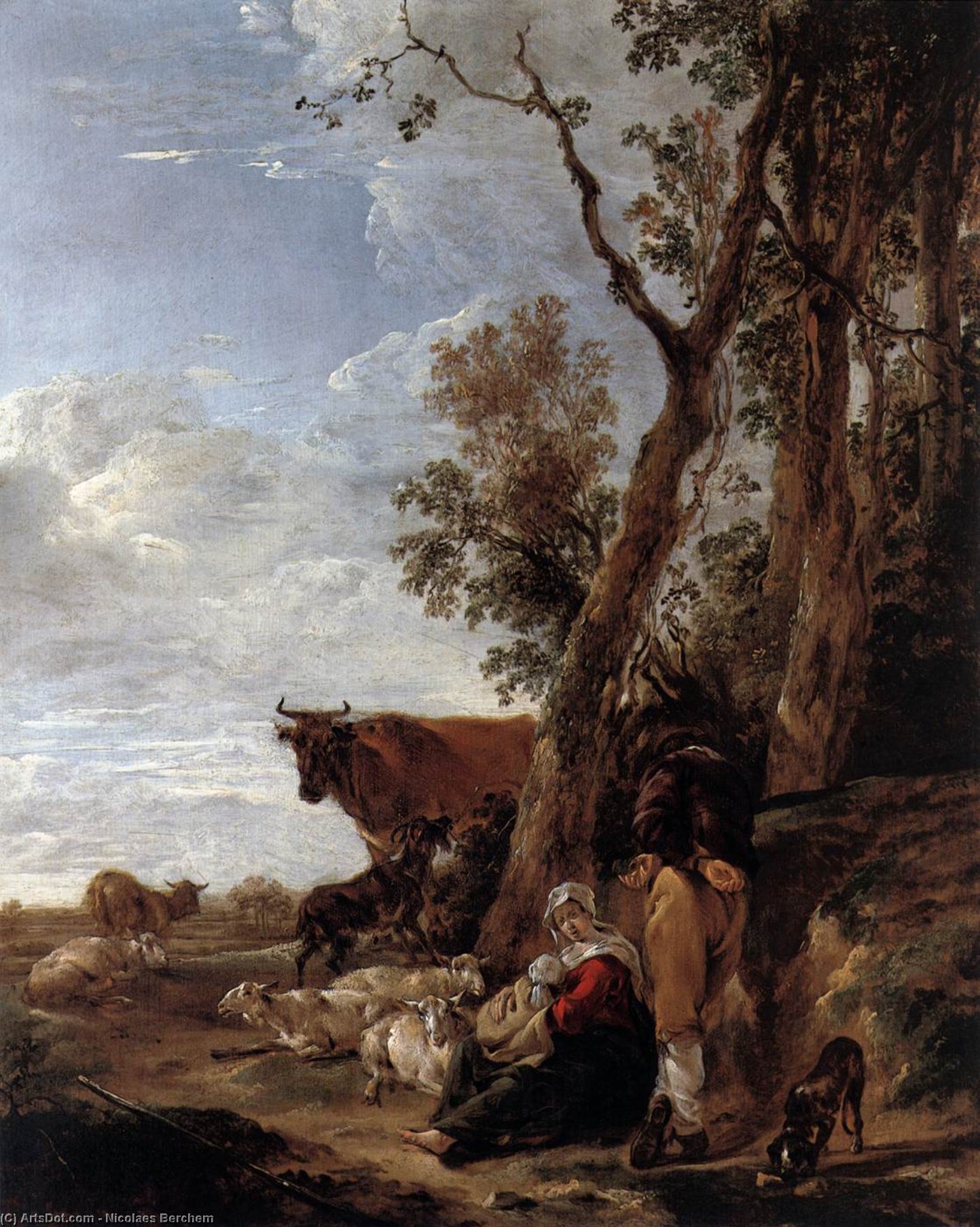
The painting “Rest,” completed in 1644, exemplifies Berchem’s artistic vision perfectly. It portrays a pastoral scene bathed in golden sunlight, featuring cows grazing peacefully amidst lush greenery. The composition is carefully balanced, drawing the eye towards a central group of figures—a man seated on the ground and another standing nearby—who appear to be engaged in quiet contemplation. Scattered throughout the landscape are sheep and lambs, symbolizing innocence and vulnerability, further enhancing the painting’s emotional resonance. Berchem's masterful use of color – predominantly warm yellows and greens – evokes a feeling of warmth and serenity, transporting viewers back to a bygone era of pastoral splendor.
Symbolism: The golden light itself represents divine grace and enlightenment, reflecting Berchem’s belief in the transformative power of nature—a conviction rooted in the humanist tradition that celebrated the beauty and moral lessons inherent in the natural world. The animals serve as emblems of tranquility and contemplation, inviting viewers to pause and appreciate the simple joys of rural existence.
Historical Context: Berchem's work emerged during a period of considerable artistic innovation within the Netherlands—a time when artists were increasingly interested in exploring themes of moral virtue and spiritual reflection. His paintings resonated deeply with audiences eager for images that offered solace and inspiration amidst the uncertainties of the era, cementing his place as one of the most beloved landscape painters of his generation.
Conclusion: An Enduring Legacy
Nicolaes Pietersz Berchem’s “Rest” remains a testament to the enduring power of pastoral beauty—a timeless masterpiece that continues to inspire admiration and contemplation centuries after its creation. Its luminous palette, meticulous technique, and profound symbolism encapsulate the spirit of Dutch Baroque art, securing Berchem's legacy as an artist who captured not merely what he saw but also what he felt—creating images that transcend time and place, inviting us to reconnect with the restorative influence of nature’s serene embrace.