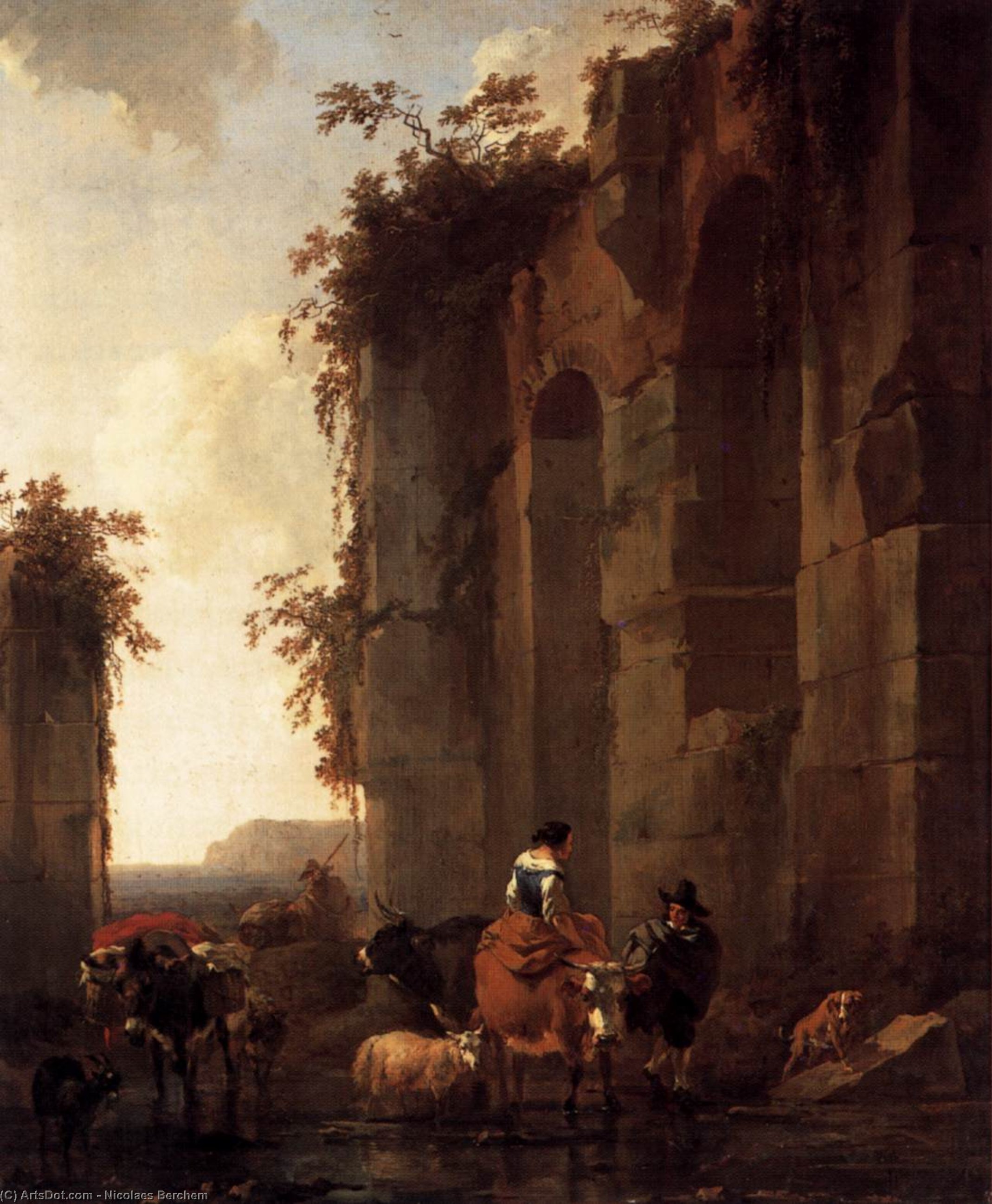
Ruins in Italy – A Dream of Antiquity by Nicolaes Berchem
Nicolaes Pietersz. Berchem’s “Ruins in Italy” isn't merely a landscape painting; it’s a meticulously crafted portal to a bygone era, a serene meditation on the passage of time and the enduring allure of classical antiquity. Completed in 1658, this work embodies the spirit of the Dutch Golden Age, specifically its fascination with Italianate landscapes – scenes that sought to capture not just the beauty of Italy, but also its intellectual and artistic heritage. Berchem, a master of atmospheric perspective and subtle detail, transports us to a sun-drenched hillside overlooking a crumbling Roman ruin, a place where myth and reality intertwine.
The composition is deceptively simple yet profoundly effective. A gentle stream meanders through the foreground, reflecting the azure sky above – a technique Berchem employed to heighten the sense of depth and tranquility. A shepherd and his flock graze peacefully nearby, their presence suggesting a timeless connection between humanity and nature. However, it’s the ruins themselves that command our attention. They aren't dramatic or imposing; instead, they are presented with a delicate vulnerability, as if time itself has gently eroded their grandeur. The weathered stones, partially obscured by vegetation, whisper tales of emperors, gladiators, and forgotten empires – remnants of a civilization lost but not entirely erased.
The Language of Light and Atmosphere
Berchem’s mastery lies in his ability to evoke atmosphere through light and color. He utilizes a characteristic “Rembrandt glow,” bathing the scene in a warm, golden light that seems to emanate from an unseen source. This isn't harsh sunlight; it’s diffused and softened, creating a hazy, dreamlike quality. The colors are muted – ochres, browns, greens, and blues – contributing to the painting’s overall sense of serenity and melancholy. Notice how he employs subtle gradations of tone to create a convincing illusion of depth, drawing the eye into the distance and immersing us in the landscape.
The technique itself is remarkably detailed for a painter working within the Dutch style. Berchem meticulously renders every stone, every leaf, every ripple in the water. Yet, he avoids excessive realism, opting instead to suggest rather than explicitly depict. This approach allows the viewer’s imagination to fill in the gaps, creating a more personal and engaging experience.
Symbolism and Historical Context
“Ruins in Italy” is deeply rooted in the intellectual currents of the 17th century. The rediscovery of classical antiquity during the Renaissance had sparked an intense interest in Roman history and culture throughout Europe. Dutch collectors and artists, eager to emulate the wealth and sophistication of their Italian counterparts, began commissioning landscapes depicting idealized versions of the Italian countryside – often incorporating ruins as symbols of lost glory and timeless beauty. Berchem’s painting reflects this trend, but it goes beyond mere imitation. It's imbued with a sense of contemplative melancholy, suggesting that even in the face of decay, there is still an enduring value to memory and tradition.
The shepherd and his flock represent a connection to simpler times, a return to nature – a theme frequently explored by artists during this period as a counterpoint to the complexities of urban life. The ruins themselves can be interpreted as symbols of mortality and the impermanence of earthly power, reminding us that all things eventually crumble.
A Timeless Vision
“Ruins in Italy” is more than just a beautiful landscape; it’s a profound meditation on time, memory, and the enduring legacy of the past. Berchem's ability to capture both the physical beauty of the Italian countryside and its symbolic significance has ensured that this painting remains a beloved masterpiece for centuries. Its quiet elegance and evocative atmosphere continue to resonate with viewers today, inviting us to pause, reflect, and contemplate our own place within the grand sweep of history.