A Moment Frozen in Time: Exploring the Elegance of Largillière’s “Study of Hands”
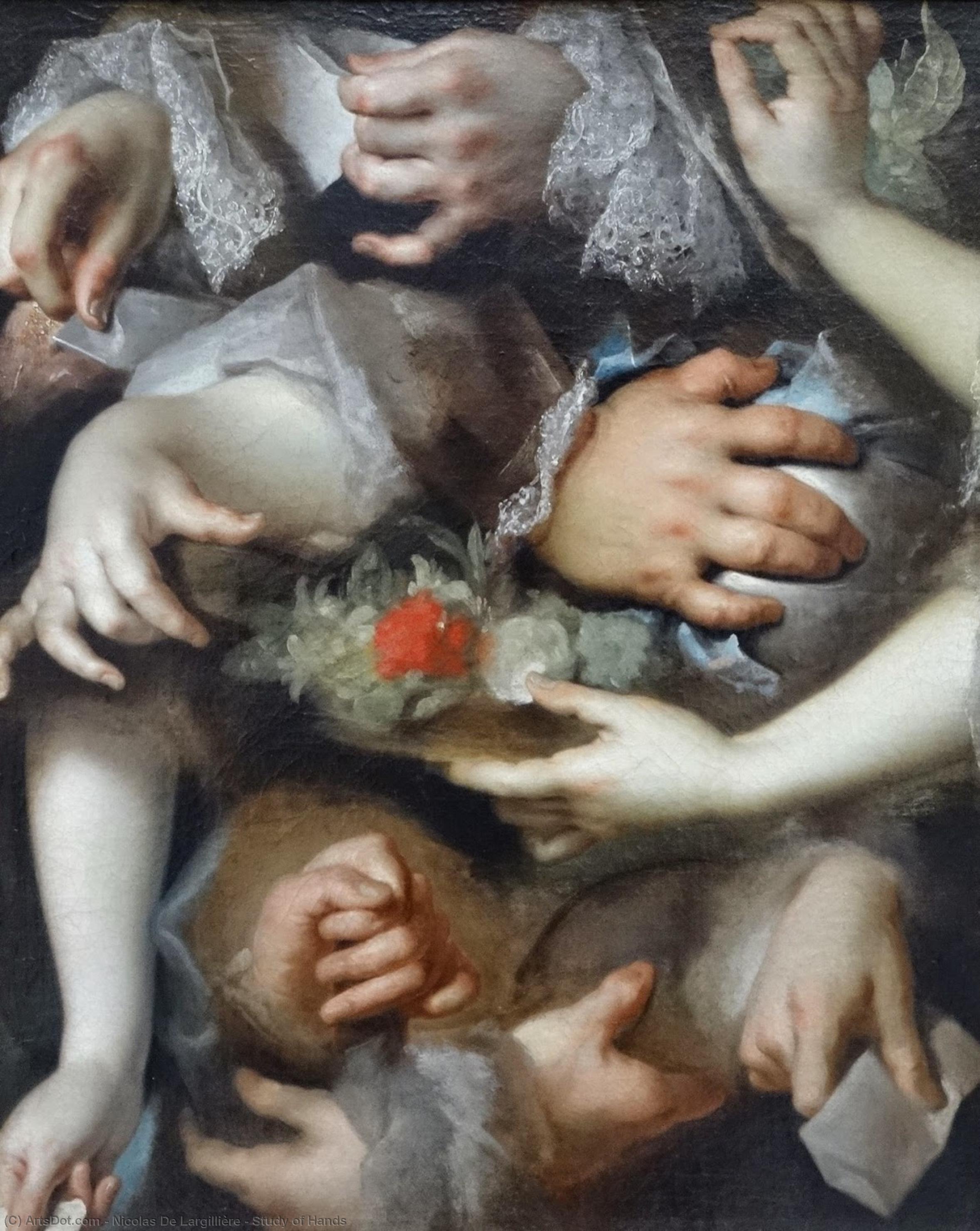
Nicolas de Largillière's "Study of Hands," painted around 1715, isn’t merely a portrait; it’s a profound meditation on gesture, stillness, and the subtle language of the human form. Within its deceptively simple composition—a group of hands delicately holding flowers within a bowl – lies a remarkable depth of observation and an exquisite mastery of Baroque technique. Largillière, a Parisian painter deeply embedded in the vibrant artistic circles of Antwerp and later Paris, captured not just likenesses but the very essence of his subjects’ presence, imbuing each hand with a quiet dignity and a palpable sense of life.
The painting immediately draws the eye to the hands themselves. They are rendered with an almost obsessive attention to detail – the delicate veins tracing across the skin, the subtle curve of the knuckles, the precise arrangement of the flowers. This meticulousness isn’t simply technical; it's a deliberate choice that elevates these everyday objects—hands and blossoms—to the level of profound beauty. Largillière wasn’t interested in dramatic poses or elaborate costumes; instead, he focused on capturing the quiet grace of ordinary moments, suggesting a world of unspoken stories and intimate connections.
The Baroque Embrace: Light, Shadow, and Composition
Largillière's style firmly resides within the Baroque period, a time characterized by dramatic contrasts, rich colors, and an emphasis on emotional intensity. He employs a masterful use of chiaroscuro – the interplay of light and shadow – to sculpt the forms of the hands and flowers, creating a sense of three-dimensionality that seems almost tangible. The soft, diffused light emanating from an unseen source gently illuminates the scene, casting delicate shadows that define the contours of each hand and flower. The composition itself is carefully balanced, with the bowl acting as a central anchor, drawing the eye inward towards the cluster of hands.
Notice how Largillière utilizes a shallow depth of field; the background fades into a hazy obscurity, further emphasizing the immediacy and intimacy of the scene. This technique directs our attention entirely to the hands and flowers, creating a sense of focused contemplation. The arrangement of the flowers—a mix of roses, lilies, and other blooms—adds a touch of natural beauty and symbolizes themes of love, grace, and remembrance – common motifs within Baroque art.
A Window into 18th-Century Parisian Society
“Study of Hands” offers a fascinating glimpse into the social and cultural landscape of 18th-century Paris. Largillière was a prominent portraitist who catered to the wealthy elite, capturing their status and refinement through meticulously rendered likenesses. The painting’s subject matter—a group of hands holding flowers—suggests an appreciation for beauty, elegance, and the pleasures of life. It reflects the aristocratic values of the time, where displays of wealth and refined taste were highly valued.
Considering the historical context, it's believed that Largillière may have been commissioned to paint a group of hands for a wealthy patron, perhaps as a decorative element in their home or as a gift. The painting’s intimate scale—measuring just 65 x 52 cm—suggests that it was intended for private viewing, further emphasizing its personal and sentimental value. The inclusion of the bowl hints at a moment of shared experience – perhaps a gathering of friends or family, united by beauty and conversation.
Bringing “Study of Hands” Home: A Reproduction to Cherish
ArtsDot is proud to offer high-quality reproductions of Nicolas de Largillière’s "Study of Hands," allowing you to bring this timeless masterpiece into your own space. Our meticulous printing process faithfully captures the painting's rich colors, subtle textures, and masterful chiaroscuro, ensuring that every detail is reproduced with exceptional clarity. Whether displayed in a formal salon or a cozy corner, this reproduction will serve as a constant reminder of Largillière’s artistic genius and the enduring power of beauty.