Explore the charming world of Nicolas Lancret (1690-1743), a French Rococo painter known for his delightful scenes of Parisian life, fêtes galantes & lighthearted social gatherings. Discover 'Le Déjeuner de Jambon' and more!
Explore the Louvre Museum in Paris! Home to iconic masterpieces like the Mona Lisa & Venus de Milo, journey through art history from ancient Egypt to Renaissance icons. Plan your visit today!
A Moment of Parisian Delight: Exploring Nicolas Lancret’s LA LECON DE MUSIQUE
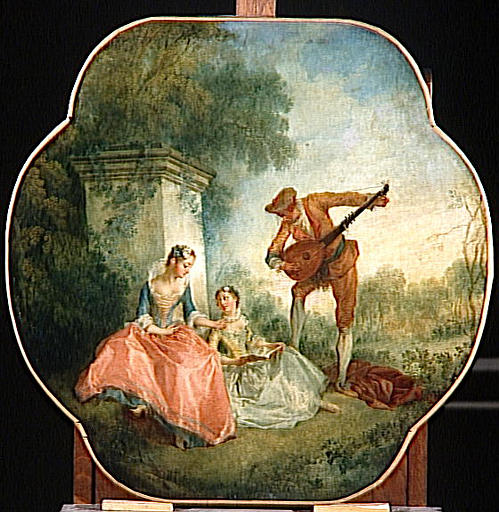
Nicolas Lancret's *LA LECON DE MUSIQUE*, painted circa 1730, encapsulates the very essence of Rococo artistry – a celebration of leisure, beauty, and aristocratic indulgence. More than just a depiction of an outdoor musicale, this pastel masterpiece speaks volumes about the cultural values of Louis XV’s France, offering viewers a glimpse into a world obsessed with refined entertainment and idealized romance.
Composition and Style: Echoes of Watteau
The painting's central focus is undeniably captivating: two elegantly dressed women seated amidst lush greenery, accompanied by a lute player poised to perform. Lancret skillfully employs the compositional techniques pioneered by Jean-Baptiste Watteau, whose *fêtes galantes* established a new paradigm for genre painting. Like Watteau’s canvases, *LA LECON DE MUSIQUE* prioritizes atmosphere and illusionistic space—a hazy landscape softens the edges of reality, creating an ethereal backdrop that enhances the scene's romantic charm. The oval frame itself reinforces this sense of enclosure and theatrical presentation, mirroring the conventions of the era. Lancret’s style is characterized by delicate brushwork, pastel hues, and a masterful manipulation of light to achieve a luminous effect—a hallmark of Rococo aesthetics.
Technique and Materials: Pastel Perfection
Lancret's technique relies heavily on pastel crayons – a medium favored for its ability to produce subtle gradations of color and create velvety textures. The artist meticulously blended pigments onto prepared canvas, layering delicate strokes to build up the image with remarkable precision. This painstaking process resulted in an astonishingly luminous surface, capturing the soft glow of candlelight and reflecting the dappled sunlight filtering through the trees. The pastel medium lends itself beautifully to conveying mood and emotion, mirroring the painting’s serene tranquility. Furthermore, Lancret utilized a thin varnish layer to protect the artwork and preserve its vibrancy for generations to come—a testament to his dedication to preserving artistic excellence.
Historical Context: Courtly Rituals and Artistic Patronage
*LA LECON DE MUSIQUE* emerged during a period of significant cultural flourishing in France under Louis XV. *Fêtes galantes*, elaborate outdoor entertainments organized by aristocratic families, were considered vital for maintaining social prestige and demonstrating artistic taste. Lancret’s painting exemplifies this trend, portraying a scene that would have resonated deeply with the Parisian elite—a visual representation of courtship rituals and idealized notions of beauty. The patronage system played an indispensable role in fostering artistic innovation during this era, ensuring that artists like Lancret received financial support to pursue their creative endeavors.
Symbolism and Emotional Impact: Tranquility and Refined Pleasure
Beyond its formal artistry, *LA LECON DE MUSIQUE* carries profound symbolic weight. The musical performance represents harmony and pleasure—values central to Rococo ideology. The women’s postures convey grace and composure, reflecting the aristocratic ideal of feminine virtue. Lancret's masterful use of color and light contributes to an overwhelming feeling of serenity, inviting viewers into a world untouched by worldly concerns. It is precisely this ability to evoke emotion that elevates *LA LECON DE MUSIQUE* beyond mere decorative art—transforming it into a timeless meditation on beauty, romance, and the pursuit of refined enjoyment.