A Moment of Rococo Serenity
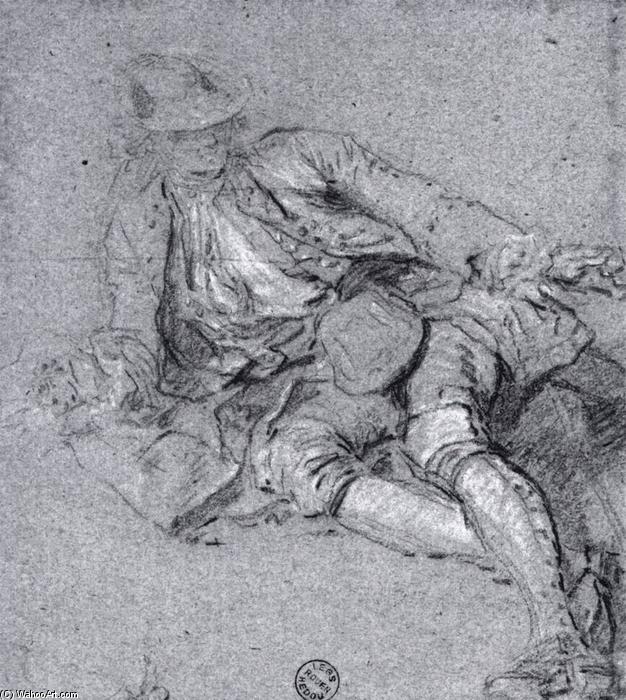
In the delicate, ephemeral strokes of Nicolas Lancret’s Study for Picnic after the Hunt, we are invited into a private, quiet moment captured in 1735. This exquisite chalk drawing serves as a window into the heart of the Rococo era, a period defined by its pursuit of grace, leisure, and the celebration of refined pleasure. The artwork presents two figures caught in a state of profound relaxation, their poses suggesting the gentle exhaustion that follows the excitement of a hunt. There is an intimate stillness here; the world outside this small gathering seems to fade away, leaving only the soft interplay of light and shadow upon the human form.
The composition is masterfully centered, drawing the viewer’s eye immediately to the organic curves of the subjects. One figure sits with a gentle tilt toward their companion, while the other reclines in a posture of complete ease. Through the medium of chalk on paper, Lancret achieves a sense of movement and life that belies the static nature of a sketch. The use of hatching and cross-hatching creates a rich, tactile texture, where deep charcoal shadows provide a dramatic contrast to the luminous, pale areas of the paper. This technique allows the artist to sculpt the figures out of the void, giving them a weight and presence that feels both ethereal and grounded.
The Artistry of the Sketch
As a preparatory study, this piece possesses a raw, expressive energy that finished oil paintings often lack. The lines are loose and fluid, reflecting the spontaneous hand of an artist working in the moment to capture an essence rather than a precise anatomical record. For the discerning collector or interior designer, this work offers a sophisticated aesthetic of understated elegance. The monochromatic palette—ranging from soft grays to deep, velvety blacks—ensures that the piece possesses a timeless quality, making it a versatile addition to any curated space, from a classical study to a contemporary gallery wall.
Beyond its technical brilliance, the drawing carries a profound emotional resonance. It evokes the fêtes galantes—those legendary outdoor celebrations of French high society—but strips away the grand spectacle to focus on the quietude of companionship. There is a sense of nostalgia embedded in these lines, a longing for a lost era of tranquility and unhurried beauty. To possess a reproduction of this study is to bring a piece of 18th-century French charm into the modern home, offering a constant reminder of the beauty found in life's simplest, most peaceful interludes.