A Tender Echo of Parisian Life
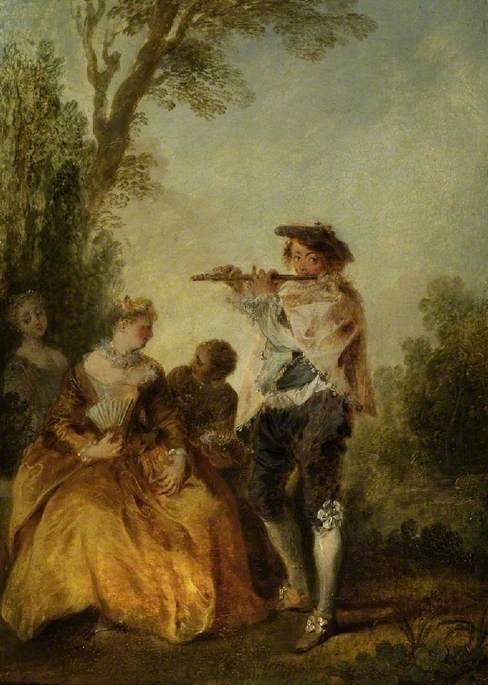
Nicolas Lancret’s “With a tender little song…” is more than just a painting; it's a fleeting moment captured in time, a whisper from the vibrant heart of 18th-century Paris. Completed around 1730, this exquisite work transports us to a *fête galante*, a refined outdoor celebration favored by the aristocracy – a world of leisurely picnics, musical performances, and exquisitely dressed figures bathed in the golden light of late afternoon. The scene unfolds within a meticulously rendered park setting, hinting at the manicured beauty that defined the gardens of Versailles and other grand estates.
Lancret’s style is distinctly Rococo, characterized by its delicate brushwork, pastel palette, and an emphasis on capturing fleeting emotions and social interactions. Unlike the dramatic narratives often found in history paintings, Lancret focuses on a seemingly simple tableau – a man playing his violin while elegantly dressed couples stroll nearby. Yet, within this apparent ease lies a subtle complexity. The figures are not merely posed; they seem to be caught in an intimate exchange, their gazes and gestures suggesting unspoken connections and shared enjoyment. Lancret’s skill lies in his ability to imbue ordinary moments with a sense of grace and charm.
The Language of *Fêtes Galantes*
To fully appreciate “With a tender little song…”, it's crucial to understand the context of *fêtes galantes*. These gatherings were carefully orchestrated spectacles designed to showcase the refined tastes and social graces of the French court. They weren’t about grand battles or historical events; instead, they celebrated beauty, pleasure, and the art of living well. Lancret expertly captures this atmosphere, depicting a scene that feels both idyllic and subtly artificial – a world constructed for aesthetic enjoyment.
Notice the careful attention to detail: the richly embroidered fabrics, the delicate floral arrangements, the precise positioning of the figures. These elements contribute to an overall sense of elegance and refinement. The violin player, positioned slightly off-center, draws our eye immediately, suggesting a focal point for the scene. The couple seated on the bench appear lost in their own world, while others observe with quiet amusement – a typical dynamic within these gatherings.
A Masterful Blend of Technique
Lancret’s technical prowess is evident throughout the painting. His use of *sfumato*, a technique borrowed from Leonardo da Vinci, creates soft transitions between colors and forms, lending the scene an ethereal quality. The light seems to diffuse gently, casting subtle shadows and highlighting the figures' delicate features. The artist skillfully employs broken brushstrokes – small, individual marks that coalesce into larger shapes – to create a sense of movement and vibrancy.
Furthermore, Lancret’s ability to render textures is remarkable. The velvet upholstery of the bench, the silk ribbons adorning the figures' clothing, and the foliage of the trees are all depicted with astonishing realism. This meticulous attention to detail elevates the painting beyond a simple depiction of a social gathering; it becomes a celebration of craftsmanship and artistic skill.
Symbolism and Emotional Resonance
Beyond its technical merits, “With a tender little song…” is rich in symbolism. The violin itself represents music, harmony, and pleasure – elements central to the *fête galante* experience. The couple’s interaction suggests romance and intimacy, while the onlookers convey a sense of shared amusement and camaraderie. The painting isn't simply about depicting a scene; it's about conveying an emotional state—a feeling of gentle joy and refined social connection.
Ultimately, Lancret’s masterpiece invites us to step back in time and experience the pleasures of 18th-century Parisian society. It is a testament to the artist’s skill, his understanding of Rococo aesthetics, and his ability to capture the fleeting beauty of everyday life. A reproduction of this work offers a window into a world of elegance, grace, and understated charm – a reminder that even in the most carefully constructed scenes, genuine emotion can still be found.