Nicolas Poussin’s “Hagar and the Angel”: A Landscape of Faith and Despair
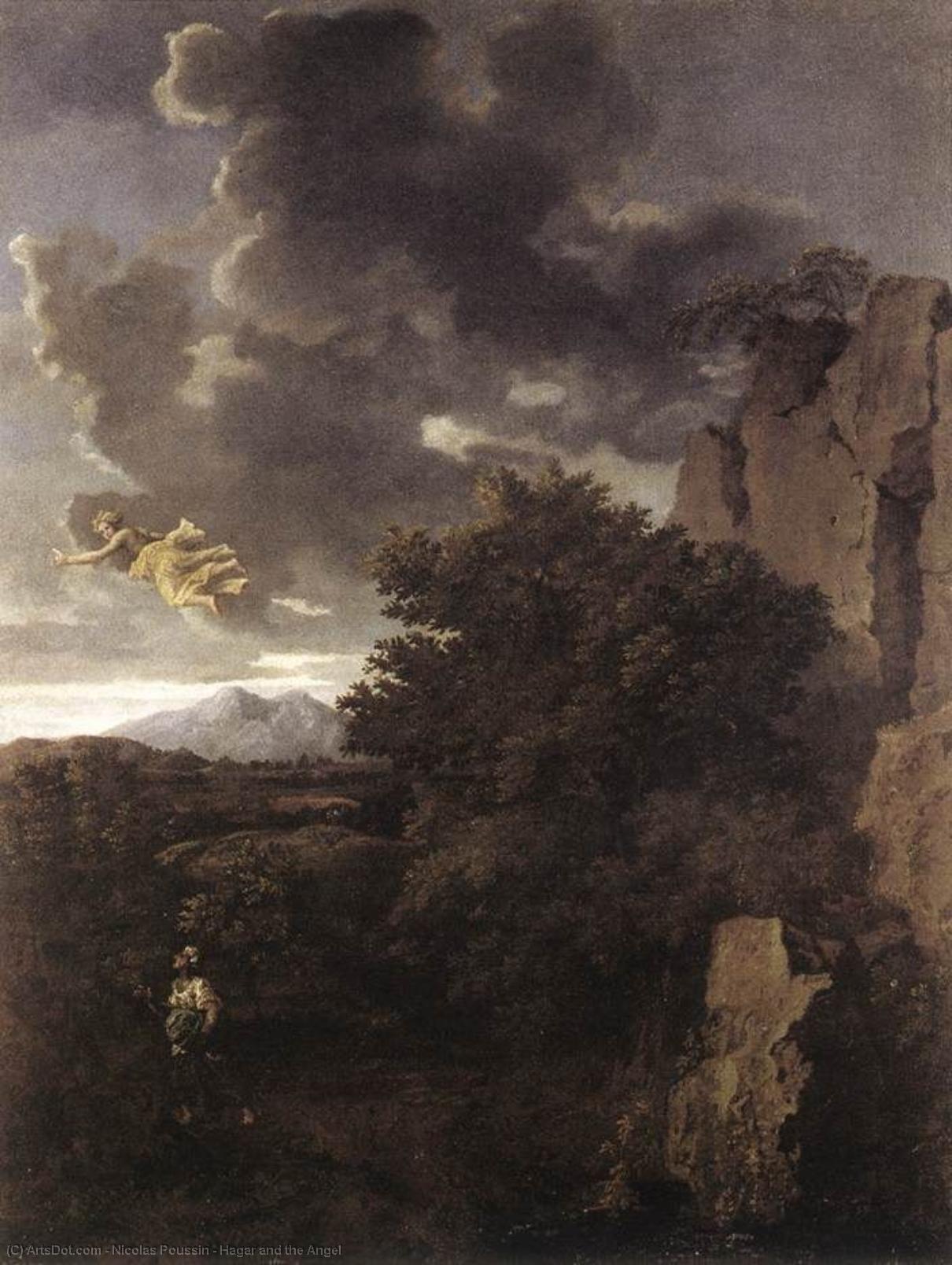
Nicolas Poussin's "Hagar and the Angel," painted in 1660, is more than just a biblical scene; it’s a profound meditation on faith, abandonment, and the precariousness of human existence. This oil-on-canvas masterpiece, currently housed within the Galleria Nazionale d'Arte Antica in Rome, reveals Poussin’s mastery of classical composition blended with Baroque drama, creating an image that continues to resonate centuries later. The painting depicts a pivotal moment from the Book of Genesis – Hagar, Abraham’s banished handmaiden, encountering the angel who instructs her to return to her master and Ishmael. Yet, it's not merely a recounting of a narrative; Poussin transforms this story into a deeply evocative exploration of vulnerability and divine intervention.
The composition itself is meticulously crafted, drawing heavily on classical principles while simultaneously embracing the emotional intensity characteristic of Baroque painting. Hagar occupies the lower left corner, rendered in muted tones of ochre and brown – colors that speak to her isolation and hardship. Her posture is one of profound humility, a subtle suggestion of supplication and resignation. Above her hovers the angel, not as a triumphant figure of authority, but rather as a gentle presence, bathed in an ethereal light that contrasts sharply with the shadowed landscape below. The placement of these two figures – separated by space yet inextricably linked through their interaction – immediately establishes a dynamic tension within the scene.
The Language of Light and Shadow: Chiaroscuro and its Dramatic Effect
Poussin’s signature use of *chiaroscuro*—the dramatic interplay of light and shadow—is central to the painting's power. He masterfully employs this technique to sculpt the figures, emphasizing their physicality and emotional states. The angel’s luminosity serves as a beacon in the otherwise somber landscape, drawing our attention to his role as a messenger of hope. Conversely, the deep shadows that engulf Hagar and the distant mountains create a sense of foreboding and uncertainty. The light doesn't simply illuminate; it guides the eye through the composition, leading us from the vulnerable figure in the foreground to the vastness of the landscape beyond.
Symbolism Woven into the Landscape
Beyond the immediate narrative, “Hagar and the Angel” is rich with symbolic meaning. The two mountains that dominate the background are often interpreted as representing the dualities inherent in human experience – hope and despair, faith and doubt. The solitary tree, a recurring motif in Poussin’s work, symbolizes resilience and endurance amidst adversity. The very act of Hagar being instructed to return signifies a journey of redemption, albeit one fraught with difficulty. The angel's presence isn’t simply an act of divine intervention; it represents the possibility of reconciliation and acceptance – a chance for Hagar to reclaim her place within the established order.
A Legacy of Classical Grace and Baroque Intensity
Poussin’s work stands as a testament to his ability to synthesize classical ideals with the dramatic flair of the Baroque. Influenced by artists like Guercino, he skillfully blended Renaissance precision with the heightened emotionalism of the era. “Hagar and the Angel” exemplifies this synthesis, demonstrating Poussin's profound understanding of human psychology and his masterful command of artistic technique. It’s a painting that invites contemplation, prompting viewers to consider not only the biblical story but also the universal themes of faith, loss, and the enduring search for meaning. The work’s continued popularity speaks to its timeless beauty and its ability to evoke powerful emotions in those who encounter it.
For art enthusiasts seeking a high-quality reproduction of this iconic masterpiece, ArtsDot offers meticulously hand-painted reproductions that capture the essence of Poussin's vision. Explore our collection today and bring this extraordinary work of art into your home or studio.