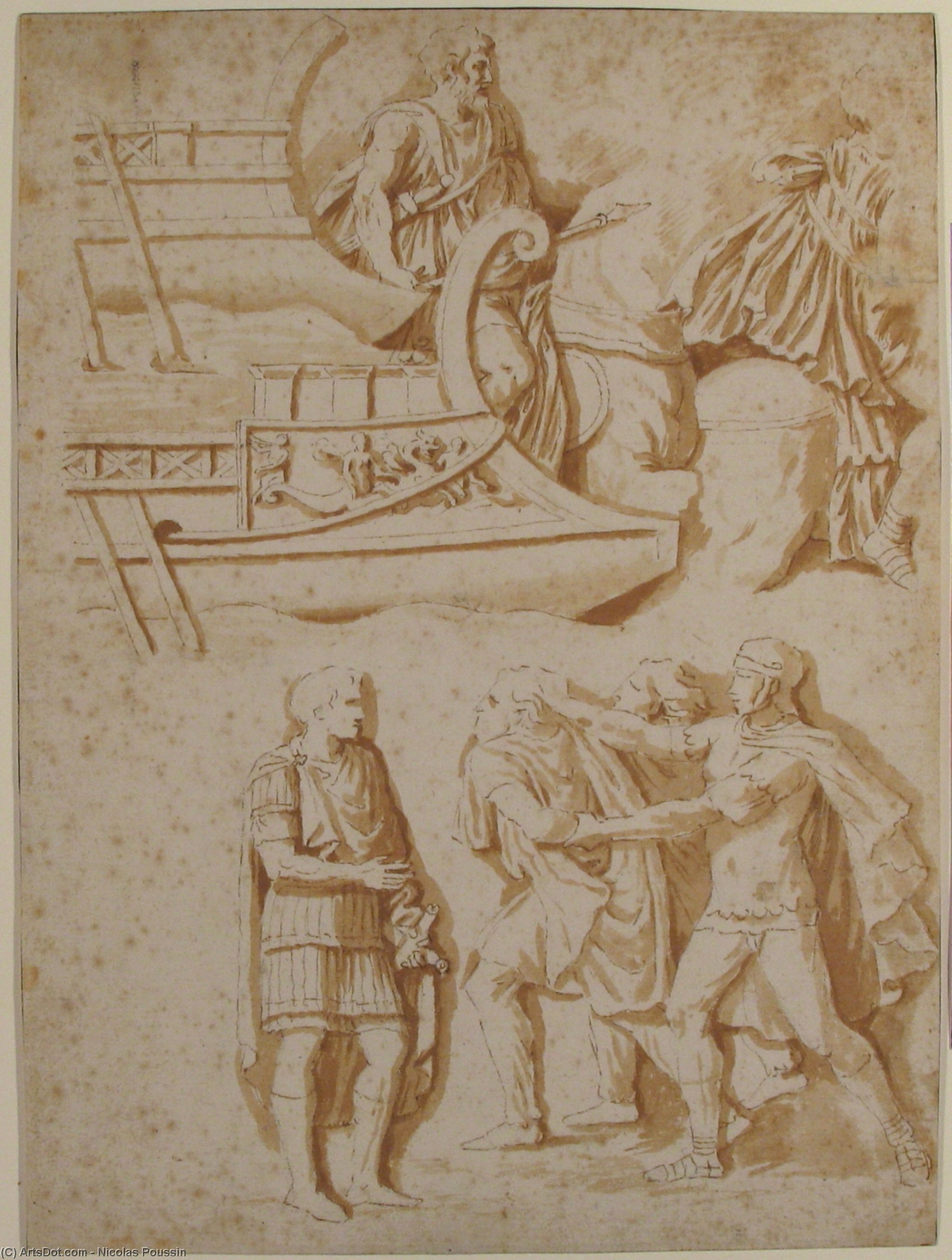
Studies of Details from Trajan's Column
Nicolas Poussin’s
Studies of Details from Trajan's Column stands as a cornerstone of Baroque art and a testament to the artist’s unparalleled dedication to classical ideals. Created around 1635 during his formative years in Rome—a city brimming with artistic fervor—this monumental painting transcends mere representation; it embodies Poussin’s profound understanding of composition, perspective, and emotive storytelling. As an expert at
ArtsDot.com specializing in art history and reproduction artistry, I can appreciate the enduring beauty and intellectual depth embedded within this masterpiece.
The painting depicts a meticulously rendered scene from ancient Rome—specifically, a depiction of Trajan’s Column, commemorating Emperor Trajan's victory over Dacia. Unlike many Baroque artists who prioritized dramatic spectacle, Poussin opted for a restrained elegance, prioritizing clarity and logic above flamboyant ornamentation. This deliberate choice reflects his unwavering belief in the principles of disegno – Italian Renaissance artistic theory—which championed precise observation and idealized form.
Composition and Symbolism
Poussin’s masterful composition draws upon techniques honed during his studies with Raphael and Michelangelo, skillfully layering planes of space to create a sense of depth that captivates the viewer. The central figures – a Roman soldier and two men—are positioned against a backdrop of architectural grandeur, mirroring the spiraling narrative of Trajan's Column itself. This column served as a powerful propaganda tool during Trajan’s reign, glorifying military triumph and imperial authority. Poussin subtly incorporates these themes into his artwork, prompting contemplation on power, memory, and the legacy of classical civilization.
Artist and Style
Nicolas Poussin (1594-1665) was a French painter who spent most of his artistic life in Rome—a city that served as an epicenter for artistic innovation during the Baroque period. His distinctive style is characterized by clarity, logic, and order; he eschewed excessive color and prioritized linear perspective to achieve remarkable realism. Unlike many contemporaries who sought to evoke emotion through dramatic gestures and vibrant hues, Poussin aimed for a serene beauty rooted in intellectual contemplation.
His influence extended far beyond his own lifetime, shaping the artistic sensibilities of subsequent generations—including Jacques-Louis David and Jean-Auguste-Dominique Ingres. The Musée du Louvre houses numerous paintings by Poussin, offering visitors an opportunity to immerse themselves in the grandeur of Baroque art and appreciate the enduring legacy of this influential artist.
Technique: Chiaroscuro and Sfumato
Poussin’s technique—particularly his masterful use of chiaroscuro (the dramatic interplay of light and shadow) and sfumato (a subtle blending of colors to create soft, hazy contours)—further enhances the painting's visual impact. These techniques imbue the figures with a palpable sense of volume and realism, drawing the viewer’s eye into the scene and fostering an emotional connection.
A handmade oil painting reproduction of Studies of Details from Trajan's Column is available on ArtsDot.com—allowing art enthusiasts to experience the exquisite beauty and meticulous craftsmanship of this iconic Baroque artwork firsthand.