Nicolas Poussin (1594-1665) was a French Baroque painter renowned for his masterful blend of classical ideals with religious themes. His formative years in Le Havre instilled a deep appreciation for artistic tradition, culminating in a transformative journey to Rome where he embraced the influence of antiquity and established himself as one of the foremost artists of his era.
Explore Nicolas Poussin's masterful Baroque paintings—renowned for serene landscapes and mythological narratives inspired by classical antiquity. Discover iconic artworks at ArtsDot.
Explore the Louvre Museum in Paris! Home to iconic masterpieces like the Mona Lisa & Venus de Milo, journey through art history from ancient Egypt to Renaissance icons. Plan your visit today!
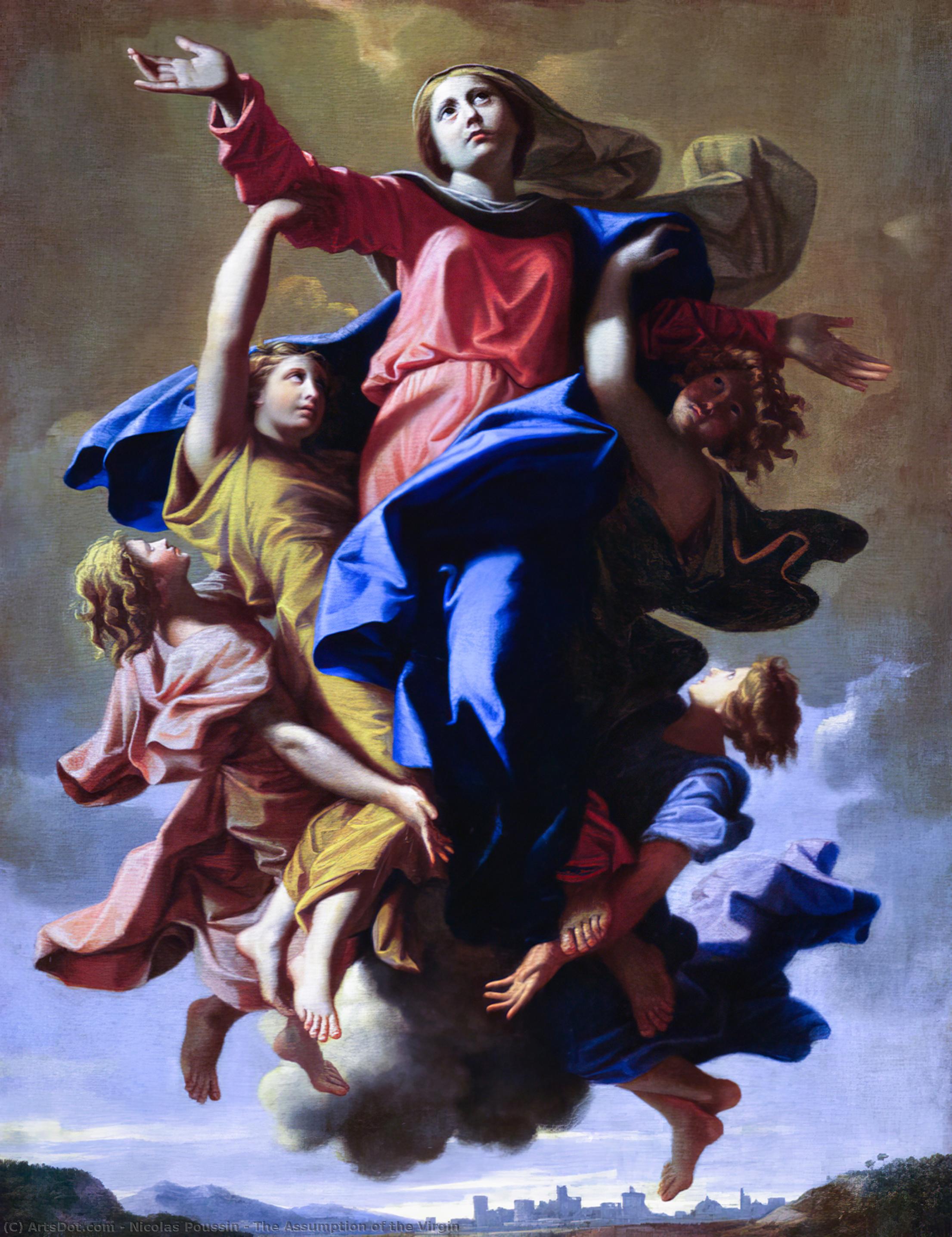
A Celestial Descent: Exploring Nicolas Poussin’s “The Assumption of the Virgin”
Nicolas Poussin, a name synonymous with the grandeur of French Baroque painting, was nonetheless a soul deeply rooted in Italian soil for much of his artistic life. Born in Le Havre, Normandy, in June 1594, his early years remain somewhat veiled in mystery, yet they undoubtedly laid the foundation for a career that would become pivotal in shaping the classical tradition within French art. Though he briefly studied in Paris during the early 1610s, absorbing influences from lesser-known artists of the time, it was his journey to Rome in 1624 that truly ignited his artistic destiny. This wasn’t merely a geographical relocation; it was an immersion into the heart of antiquity, a pilgrimage to the very source of inspiration that would define his aesthetic vision. Poussin's initial forays into painting were marked by a sensuous quality reminiscent of Venetian masters like Titian, yet even in these early works, a nascent sense of order and intellectual rigour began to emerge—a foreshadowing of the monumental achievements that awaited him in Rome.
The Classical Ideal Embodied: Style and Technique
Poussin’s artistic style is undeniably rooted in the precepts of classical art, specifically those championed by Raphael and Michelangelo. He meticulously adhered to principles of balance, proportion, and clarity—a deliberate rejection of the exuberant dynamism characteristic of Mannerism. The Assumption of the Virgin exemplifies this commitment to form with breathtaking precision. Executed in oil on canvas measuring 57 x 40 cm, Poussin employed a technique known as sfumato – a subtle blending of tones that creates an ethereal haze and softens contours—a masterful device for conveying depth and atmosphere. Lines are carefully drawn, creating geometric shapes that contribute to the overall harmonious composition. The artist’s meticulous attention to detail is evident in every brushstroke, reflecting his profound understanding of perspective and anatomical accuracy.
A Roman Commission: Historical Context
The painting was commissioned by Henri d'Étampes-Valençay, the French ambassador to Rome, during a period of intense artistic patronage under Louis XIV. This commission underscores the importance of humanist ideals within the royal court—a desire to elevate art as a vehicle for moral instruction and aesthetic contemplation. Completed in January 1650, “The Assumption of the Virgin” quickly gained acclaim amongst intellectuals and artists alike, cementing Poussin’s reputation as one of the foremost painters of his era. Its presence in prominent collections – including that of Louis XIV – speaks to its enduring appeal and artistic significance.
Symbolism Beneath Surface Beauty: Narrative Composition
The scene depicts Mary ascending into heaven, surrounded by angels and draped in luminous robes—a depiction deeply imbued with Christian symbolism. The central figure, Mary herself, is positioned at the apex of the composition, symbolizing divine grace and spiritual transcendence. Angels flank her, conveying protection and reverence. Below Mary are figures representing earthly witnesses – Saint James the Greater and Saint John the Evangelist – acknowledging humanity’s role in witnessing God's glory. The cloudy backdrop serves as a visual metaphor for purgatory—the intermediary state between earthly life and eternal salvation—further enriching the painting’s theological dimension.
Legacy of Elegance: Emotional Impact and Enduring Relevance
“The Assumption of the Virgin” transcends mere representation; it aspires to evoke contemplation and inspire awe. Poussin's masterful use of light and shadow creates a dramatic interplay that draws the viewer’s eye upwards, mirroring Mary’s ascent into heaven. The painting’s serene beauty—combined with its profound spiritual message—continues to resonate with audiences today. It stands as a testament to Poussin’s artistic genius and his unwavering devotion to classical ideals—a timeless masterpiece that secures its place amongst the greatest achievements of Baroque art.