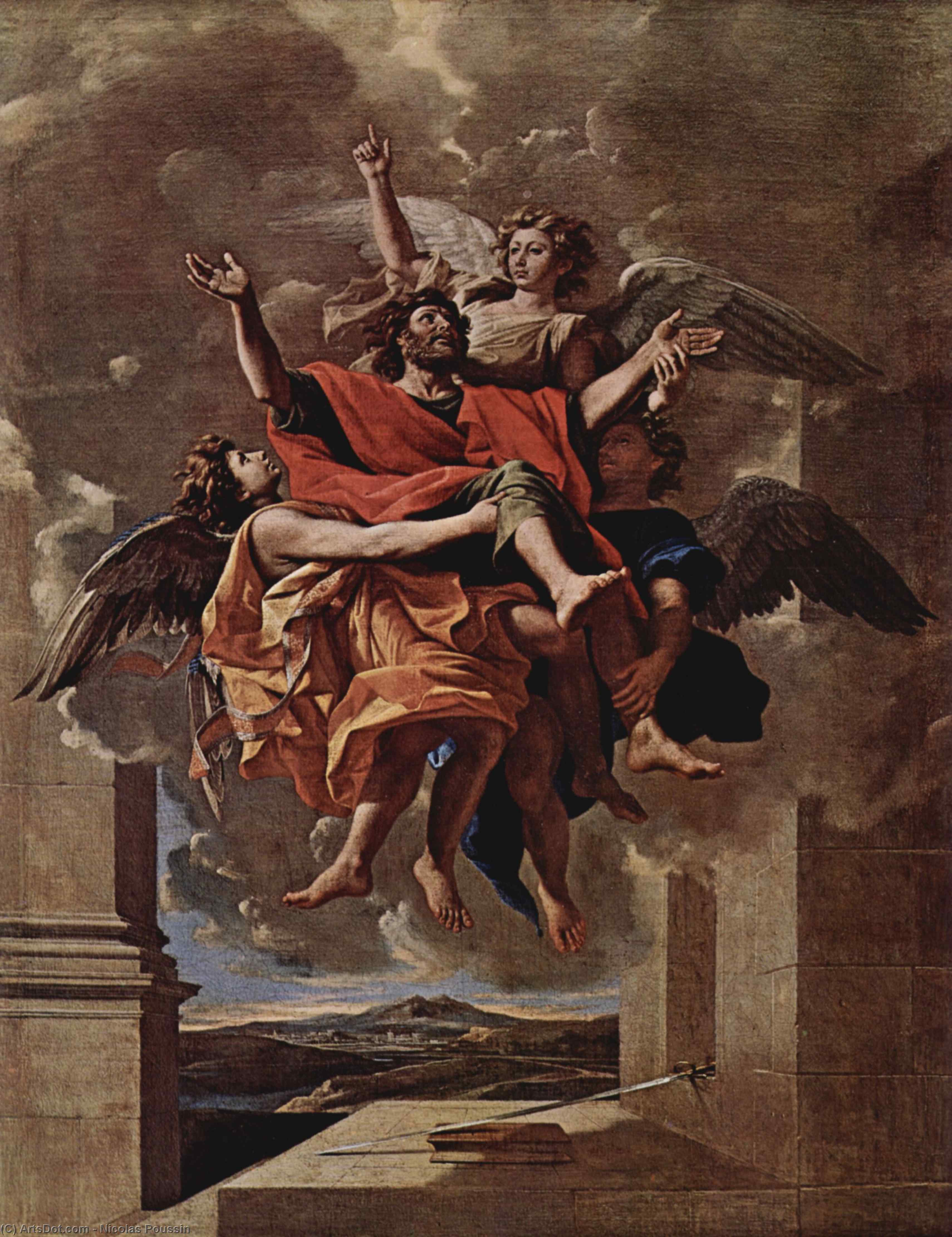
Discover Nicolas Poussin's 'The Vision of St. Paul' (1650), a stunning Baroque masterpiece capturing divine ascension with dramatic light, rich colors, and emotional intensity. Perfect for art collectors and enthusiasts.
Explore Nicolas Poussin's masterful Baroque paintings—renowned for serene landscapes and mythological narratives inspired by classical antiquity. Discover iconic artworks at ArtsDot.
Subject and Composition
This captivating Baroque masterpiece vividly captures a divine moment of celestial intervention, where a saintly figure, likely representing the Apostle Paul, is lifted into the heavens amidst a tumultuous sky. Supported by serene angelic beings with flowing garments and majestic wings, the scene exudes a sense of spiritual elevation and divine communication. The figures are meticulously detailed, emphasizing their physicality and spiritual significance, inviting viewers to contemplate themes of faith, divine power, and transcendence.
Artistic Style and Technique
Created in 1650, this painting exemplifies the dynamic and emotionally charged style characteristic of the Baroque era. The artist employs dramatic chiaroscuro—strong contrasts of light and shadow—to enhance the three-dimensionality of the figures and create a vivid sense of depth. The composition is alive with movement, achieved through flowing lines and organic shapes, which guide the viewer’s eye across the scene. The rich, warm color palette—dominated by earthy tones, golds, and deep reds—further amplifies the painting’s intensity and grandeur. The meticulous layering of oil paints results in luminous textures, from the softness of clouds and fabric to the ruggedness of architectural elements, showcasing the artist’s mastery of technique.
Historical Context and Symbolism
Produced during the height of the Baroque period, this work reflects the era’s fascination with divine intervention and spiritual ecstasy. The dramatic composition and emotional expression align with the Counter-Reformation’s emphasis on inspiring faith and devotion through art. Symbolically, the scene underscores themes of divine authority, spiritual elevation, and the triumph of faith over earthly concerns. The ascending figure signifies divine revelation and the soul’s journey toward enlightenment, while the surrounding angels symbolize divine messengers and celestial harmony.
Emotional Impact and Interior Inspiration
This powerful painting evokes awe and reverence, stirring deep emotional responses through its intense movement and luminous contrasts. Its grandeur makes it an ideal centerpiece for a sophisticated interior, inspiring contemplation and spiritual reflection. Whether displayed in a private collection, a religious setting, or an elegant living space, this artwork offers a profound visual experience that elevates any environment. Its timeless appeal and masterful execution make it a treasured addition for art lovers, collectors, and interior designers seeking a high-quality reproduction of a masterful Baroque scene.