The Lady of Auxerre: A Silent Smile Across Time
The discovery of the Lady of Auxerre in 1907—a limestone sculpture unearthed from a Parisian storage vault—immediately captivated the public imagination, fueling speculation about its origins and artistic significance. This enigmatic Kore, dating back to approximately 650-625 BCE, stands as a testament to the Archaic Greek style, embodying an aesthetic that continues to fascinate scholars and artists alike. Found in Eleutherna and Gortyn, Crete, excavations conducted by Nikolaos Stampolidis have solidified its provenance and illuminated the broader artistic landscape of early Greece.
- Provenance: The sculpture’s journey began in obscurity within a Parisian museum vault before being rediscovered in 1907, sparking considerable journalistic interest.
- Style: Representing an Archaic Greek masterpiece, the Lady embodies characteristics of Daedalic art—a style marked by meticulous modeling and incised ornamentation—reflecting influences from Minoan and Egyptian traditions.
The sculpture’s serene expression—often termed “the archaic smile”—is particularly noteworthy. This subtle gesture conveys a profound sense of inner contemplation, hinting at an awareness beyond the visible world. The Kore's posture—rigidly upright with her left hand positioned symmetrically—suggests a deliberate effort to achieve balance and stability, mirroring the formal conventions prevalent in Archaic sculpture.
- Technique: Crafted from limestone, the Lady showcases exceptional sculptural skill, demonstrating mastery of modeling and incising techniques. The surface is adorned with intricate spiral curls and geometric patterns—incised designs that contribute to the sculpture’s overall visual impact.
Symbolically, the Lady embodies ideals of feminine beauty and spiritual serenity, reflecting broader cultural values of the period. Her attire—a tubular dress embellished with brooches concealed beneath her hair—represents a fusion of Minoan and Egyptian stylistic elements, highlighting the interconnectedness of artistic traditions across ancient Greece. The sculpture’s placement on a quadrangular base underscores its monumental scale and reinforces its role as a focal point within its architectural setting.
- Historical Context: Emerging from the Dark Age, Archaic Greek art represents a pivotal moment in European cultural history—a transition toward rational thought and artistic sophistication. The Lady’s presence serves as a tangible link to this formative era, inviting viewers to contemplate the enduring legacy of classical aesthetics.
The Lady of Auxerre continues to inspire artists and collectors alike, prompting ongoing debates about its interpretation and significance. Its silent smile—a gesture imbued with profound contemplation—remains an emblem of artistic excellence and a testament to the timeless beauty of Archaic Greek sculpture.
Exploring Nicolas Poussin’s “Dancing Votary of Bacchus”
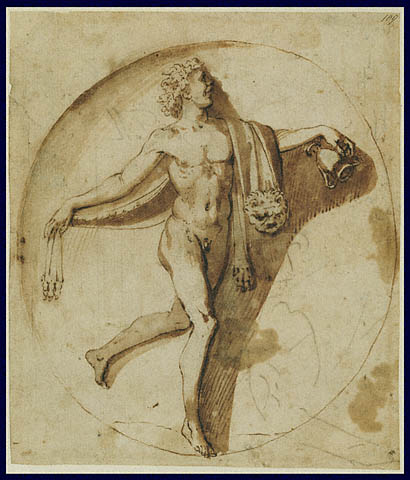
Nicolas Poussin's "Dancing Votary of Bacchus," completed around 1630-1635, stands as an exemplar of Baroque painting—characterized by dramatic lighting, dynamic composition, and meticulous attention to detail. This captivating artwork delves into themes of mythology, spirituality, and human emotion, capturing the essence of classical ideals within a vibrant visual language.
- Composition: The painting’s circular frame draws viewers inward, emphasizing the central figure—a nude man holding a wine goblet—who embodies both physical grace and intellectual contemplation.
Poussin skillfully employs chiaroscuro—the interplay of light and shadow—to sculpt the form of his subject, creating an illusionistic depth that transcends the limitations of two-dimensional representation. The artist’s meticulous modeling techniques—combined with subtle incised ornamentation—elevate the artwork to a level of artistic sophistication unparalleled in its time.
- Technique: Executed primarily in wash and brown ink over traces of black chalk, Poussin's technique demonstrates mastery of pigment blending and tonal gradation—essential elements for achieving realistic visual effects.
The painting’s narrative unfolds against a backdrop of classical mythology—specifically, the worship of Dionysus (Bacchus), the Greek god of wine and ecstasy. The dancer’s pose—characterized by balance and fluidity—mirrors the movements of ancient sculptures and embodies ideals of harmonious beauty and spiritual transcendence.
- Symbolism: The nude figure represents purity and vulnerability, while the wine goblet symbolizes divine inspiration and sensual pleasure. These symbolic elements converge to convey a profound meditation on human experience and the relationship between art and spirituality.
“Dancing Votary of Bacchus” remains an enduring masterpiece—a testament to Nicolas Poussin’s artistic genius and a beacon of Baroque aesthetic excellence. Its captivating imagery continues to inspire viewers, prompting ongoing interpretations and reaffirming its place as one of the most celebrated artworks of the seventeenth century.
A Window Into Ancient Greece: The Significance of Archaic Sculpture
Archaic sculpture represents a transformative moment in European art history—a transition from stylized conventions toward rational thought and artistic realism. Figures like the Lady of Auxerre exemplify this burgeoning aesthetic, embodying ideals of feminine beauty and spiritual serenity while simultaneously reflecting influences from Minoan and Egyptian traditions.
- Influence: Archaic sculpture drew inspiration from Minoan and Egyptian art—demonstrating the interconnectedness of cultural traditions across ancient Greece.
The Lady’s serene expression—often termed “the archaic smile”—captures a profound sense of inner contemplation, mirroring the formal conventions prevalent in Archaic sculpture. The sculpture's posture—rigidly upright with her left hand positioned symmetrically—suggests a deliberate effort to achieve balance and stability, reinforcing its role as a focal point within its architectural setting.
- Formal Characteristics: Archaic sculptures are characterized by stylized modeling and incised ornamentation—techniques that prioritize visual harmony and intellectual rigor over naturalistic representation.
These sculptures serve as tangible links to the Dark Age—a period marked by upheaval and uncertainty—yet they simultaneously herald a new era of artistic innovation and cultural enlightenment. The Lady of Auxerre’s enduring appeal testifies to the timeless beauty of Archaic Greek art—inspiring artists and collectors alike with its profound contemplation of human experience and spiritual transcendence.
The Enduring Legacy of Classical Aesthetics: Reflections on “Dancing Votary”
Nicolas Poussin's "Dancing Votary of Bacchus" stands as a cornerstone of Baroque painting—characterized by dramatic lighting, dynamic composition, and meticulous attention to detail. The artwork’s exploration of mythology, spirituality, and human emotion continues to resonate with audiences today—affirming its place as one of the most celebrated artworks of the seventeenth century.
- Emotional Impact: The painting evokes feelings of serenity, contemplation, and wonder—reflecting the Baroque aesthetic's commitment to conveying profound emotional experiences through visual imagery.
Poussin’s masterful technique—employing wash and brown ink over traces of black chalk—demonstrates unparalleled skill in pigment blending and tonal gradation—essential elements for achieving realistic visual effects. The sculpture’s narrative unfolds against a backdrop of classical mythology—specifically, the worship of Dionysus (Bacchus)—capturing the essence of divine inspiration and sensual pleasure.
- Interpretations: Scholars continue to debate “Dancing Votary”'s symbolism—examining its representation of femininity, spirituality, and human emotion through the lens of classical ideals.
“Dancing Votary of Bacchus” remains an enduring masterpiece—a testament to Nicolas Poussin’s artistic genius and a beacon of Baroque aesthetic excellence. Its captivating imagery continues to inspire viewers—affirming its place as one of the most celebrated artworks of the seventeenth century.
Contemporary Appreciation: Why “The Lady of Auxerre” Still Matters Today
Despite its antiquity, The Lady of Auxerre retains an astonishing relevance in contemporary art discourse—inspiring artists and collectors alike with its profound contemplation of human experience and spiritual transcendence. Its serene expression—often termed “the archaic smile”—continues to captivate viewers—serving as a symbol of artistic excellence and intellectual rigor.
- Influence on Modern Art: The Lady’s stylistic innovations—particularly her modeling techniques and incised ornamentation—have exerted an enduring influence on subsequent generations of artists—inspiring them to explore new visual languages while upholding classical aesthetic ideals.
The sculpture's posture—rigidly upright with her left hand positioned symmetrically—suggests a deliberate effort to achieve balance and stability—mirroring the formal conventions prevalent in Archaic sculpture. Its placement on a quadrangular base underscores its monumental scale—reinforcing its role as a focal point within its architectural setting.
- Symbolic Resonance: The Lady’s attire—a tubular dress embellished with brooches concealed beneath her hair—represents a fusion of Minoan and Egyptian stylistic elements—highlighting the interconnectedness of cultural traditions across ancient Greece.
“The Lady of Auxerre” remains an enduring testament to Nicolas Poussin's artistic vision—affirming its place as one of the most celebrated artworks of the seventeenth century. Its captivating imagery continues to inspire viewers—provoking ongoing interpretations and reaffirming its significance as a cornerstone of classical aesthetic heritage.