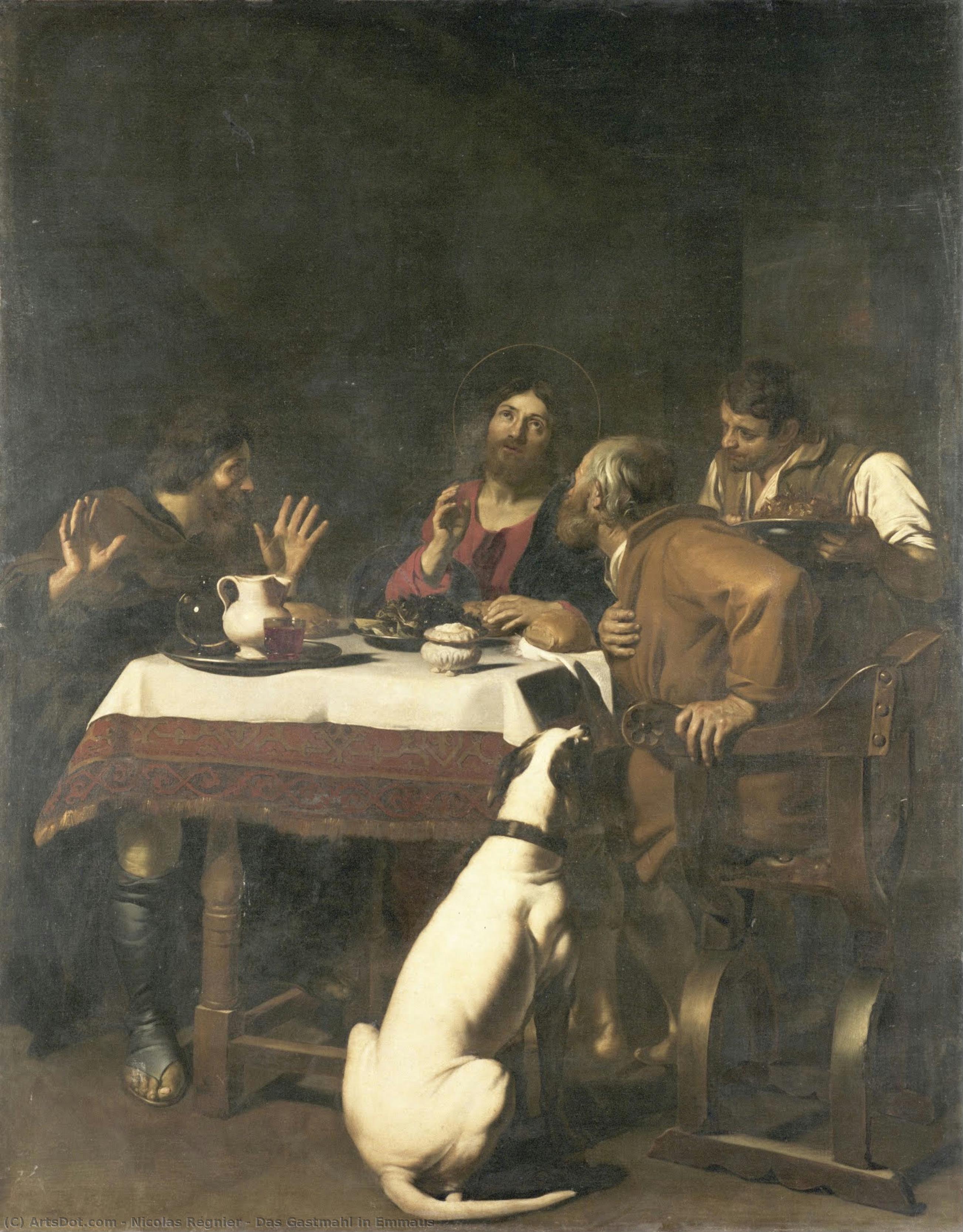
Nicolas Régnier’s ‘Das Gastmahl in Emmaus,’ a captivating black and white Baroque scene from 1617, depicts a lavish Roman feast with intricate details of food and figures. Explore this stunning reproduction by a key Flemish painter and immerse yourself in the era's artistic legacy.
The Intimate Drama of Emmaus: Régnier’s Masterpiece
Nicolas Régnier's "Das Gastmahl in Emmaus," painted in 1617, is more than just a depiction of a biblical scene; it’s a meticulously crafted tableau brimming with the anxieties and aspirations of its time. Commissioned by the Roman nobleman and art collector Vincenzo Giustiniani, this work offers a rare glimpse into the private world of a wealthy Italian family during the early Baroque period. Régnier, trained in the shadow of Caravaggio yet deeply influenced by Venetian artistic currents, masterfully blends dramatic realism with a subtle psychological depth that continues to resonate centuries later.
- Subject Matter: The painting portrays the iconic moment from Matthew’s Gospel where Jesus breaks bread with two disciples on the road to Emmaus. However, Régnier doesn't present this event as a straightforward miracle; instead, he captures the palpable tension and uncertainty of the figures as they grapple with the implications of their newfound understanding.
- Style & Technique: Régnier’s style is characterized by its dramatic chiaroscuro – the stark contrast between light and dark – a hallmark of Caravaggio's influence but tempered with a Venetian sensibility. The use of muted colors, predominantly browns, ochres, and reds, creates an atmosphere of subdued intensity, drawing the viewer into the scene’s emotional core. The artist employs a loose brushstroke technique, particularly evident in the rendering of fabrics and textures, contributing to the painting's sense of immediacy and realism.
A Window into Renaissance Patronage
Understanding the context of "Das Gastmahl in Emmaus" requires acknowledging the role of patronage within 17th-century Rome. Vincenzo Giustiniani was a prominent figure, not only for his wealth but also for his dedication to collecting and supporting artists. His commission reflects a broader trend – wealthy individuals like Giustiniani actively shaping artistic production, commissioning works that served both aesthetic and social purposes. Régnier’s success as a dealer and collector further underscores this dynamic; he was deeply embedded within the art market of Rome, facilitating the exchange of ideas and artworks.
- Roman Influence: The painting's setting – a richly furnished dining room – is typical of Roman interiors at the time, reflecting the opulence and sophistication associated with aristocratic life.
- Caravaggio’s Legacy: While Régnier departed from Caravaggio’s most radical innovations, the influence remains evident in his use of dramatic lighting and realistic portrayal of human figures. However, Régnier subtly refines these elements, creating a more nuanced and psychologically complex scene.
Symbolism and Emotional Resonance
"Das Gastmahl in Emmaus" is rich with symbolic meaning, inviting contemplation on themes of faith, doubt, and transformation. The figures’ gestures – the hesitant touch of the bread, the questioning gaze of one disciple – convey a sense of profound uncertainty and intellectual struggle. The dog present in the lower left corner adds an element of rustic realism, grounding the scene in everyday life while simultaneously hinting at the spiritual significance of the event. The carefully arranged table setting itself symbolizes hospitality and communion, central to the narrative’s core message.
- Gesture & Expression: Régnier's masterful use of gesture and expression is key to conveying the scene's emotional intensity. The disciples are not simply witnesses to a miracle; they are actively engaged in a process of understanding, their faces reflecting a mixture of awe, confusion, and nascent belief.
- Color Symbolism: The muted color palette contributes to the painting’s solemn mood, reinforcing the spiritual gravity of the scene.
A Timeless Masterpiece for Your Collection
This meticulously hand-painted reproduction captures the essence of Régnier's "Das Gastmahl in Emmaus" with exceptional detail and fidelity to the original. Perfect for adorning a study, dining room, or gallery space, this artwork offers a unique opportunity to own a piece of art history – a testament to the enduring power of faith, doubt, and human connection. Its size (282 x 222 cm) ensures it will be a commanding presence in any setting, while its historical significance adds an element of intellectual richness.