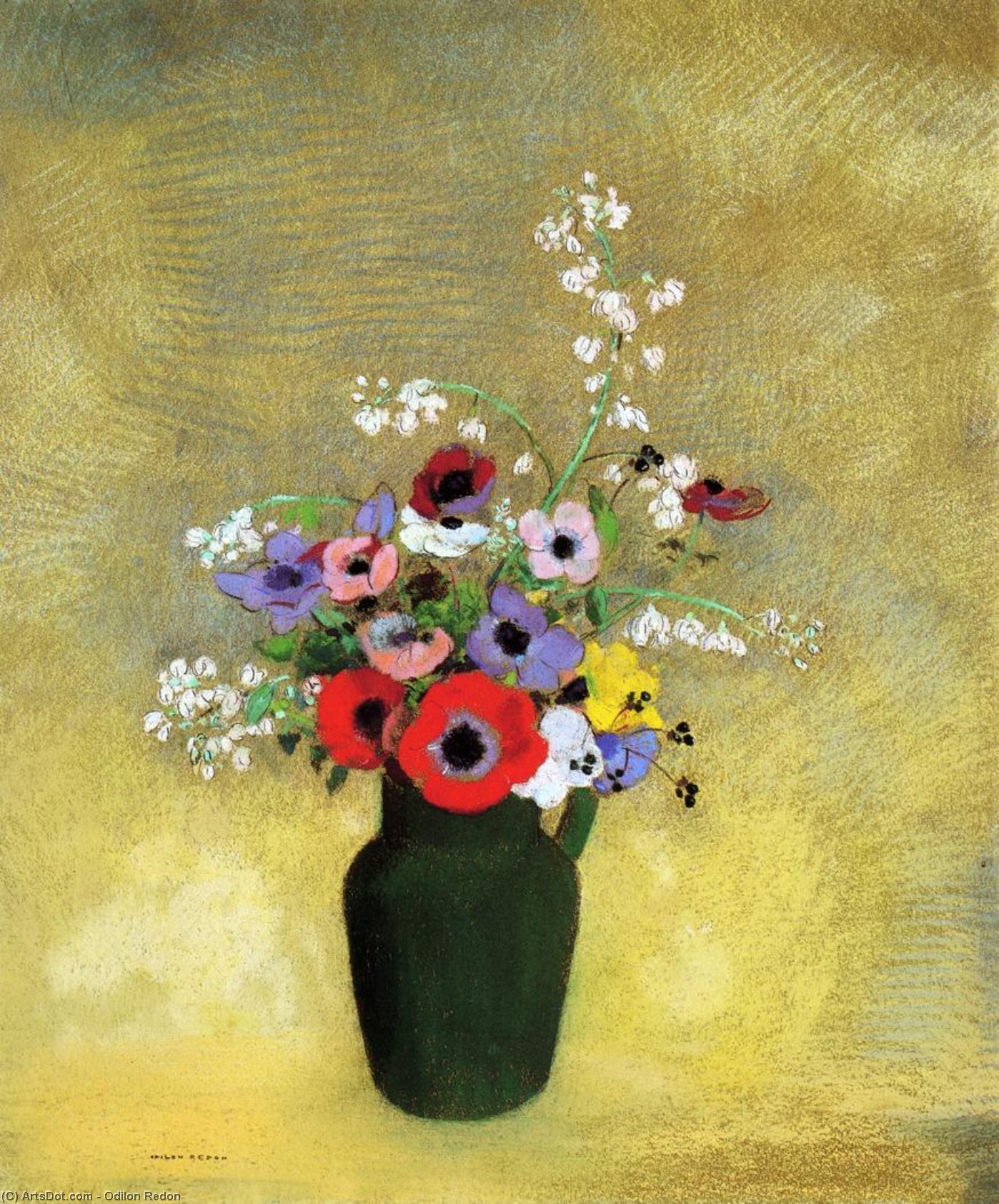
Flowers in a Green Pitcher by Odilon Redon: A Descent into the Subconscious
Odilon Redon’s “Flowers in a Green Pitcher” is more than just a still life; it's an invitation to journey into the shadowed landscapes of the imagination. Completed during a pivotal period in the evolution of art, this pastel masterpiece exemplifies the burgeoning Post-Impressionist movement, rejecting the purely observational focus of its predecessor and embracing instead a profound exploration of emotion and psychological depth. Measuring 54 x 62 cm, the painting’s intimate scale draws the viewer into a world where reality subtly dissolves, replaced by a dreamlike quality that speaks to Redon's lifelong fascination with the unseen.
- A Post-Impressionist Vision: Born in Bordeaux in 1840, Redon was profoundly influenced by artists like Paul Cézanne, who championed the idea of representing inner experience rather than simply replicating external appearances. This shift is powerfully evident here, as the flowers themselves seem to possess a melancholic beauty, imbued with an almost unsettling stillness.
- The Power of Pastel: The choice of pastel as the medium is crucial to understanding the work’s impact. Its soft, velvety texture lends itself perfectly to Redon's exploration of mood and atmosphere. The delicate brushstrokes create a luminous effect, enhancing the ethereal quality of the flowers and the pitcher, blurring the lines between tangible form and suggestive symbolism.
- Symbolic Arrangement: The arrangement of the flowers within the green pitcher is far from accidental. The vibrant reds – likely poppies or similar blooms – stand in stark contrast to the muted greens and yellows, creating a visual tension that mirrors the emotional complexity of the scene. This deliberate juxtaposition invites contemplation on themes of life, death, and beauty.
Decoding the Dreamscape: Redon’s Unique Style
Redon's artistic style is characterized by its hauntingly beautiful imagery, often drawing upon folklore, mythology, and his own intensely personal visions. He was a master of creating an atmosphere of mystery and unease, employing techniques that anticipate the Symbolist movement. “Flowers in a Green Pitcher” showcases this perfectly; the flowers aren’t rendered with photographic accuracy but rather as evocative symbols, hinting at deeper meanings. The green pitcher itself could represent fertility or perhaps even a vessel for holding secrets – a recurring motif in Redon's work.
- Fantasy and Reality: Redon skillfully blends elements of fantasy and reality, creating a world that feels both familiar and profoundly strange. This duality is central to his artistic vision, inviting viewers to question the nature of perception and the boundaries between conscious and unconscious thought.
- The Influence of Etching: His early training in etching and lithography – under Bresdin – significantly shaped his approach to composition and detail. The meticulous lines and shading techniques he developed during this period are evident in the precise rendering of the flowers’ petals and the subtle gradations of color within the pitcher.
Historical Context and Lasting Significance
Created around 1900, “Flowers in a Green Pitcher” reflects a broader artistic shift occurring at the turn of the century. The rise of Post-Impressionism paved the way for movements like Symbolism and Art Nouveau, which further explored subjective experience and emotional expression. Redon’s work continues to resonate with audiences today because it taps into universal human emotions – loneliness, beauty, mortality – with a rare sensitivity and artistic vision.
Currently housed in the Museum of Fine Arts in Boston, this painting offers a captivating glimpse into the mind of one of France's most enigmatic artists. A high-quality reproduction allows you to bring this evocative piece into your own space, inviting contemplation and adding a touch of timeless beauty to your surroundings.
Where to Explore Further
For those seeking to delve deeper into the world of Odilon Redon and Post-Impressionism, we recommend exploring our curated collection of Redon’s works. Discover similar pieces and gain valuable insights into his artistic process and influences: View this artwork or explore our comprehensive collection of Post-Impressionist art here: Discover the Movement