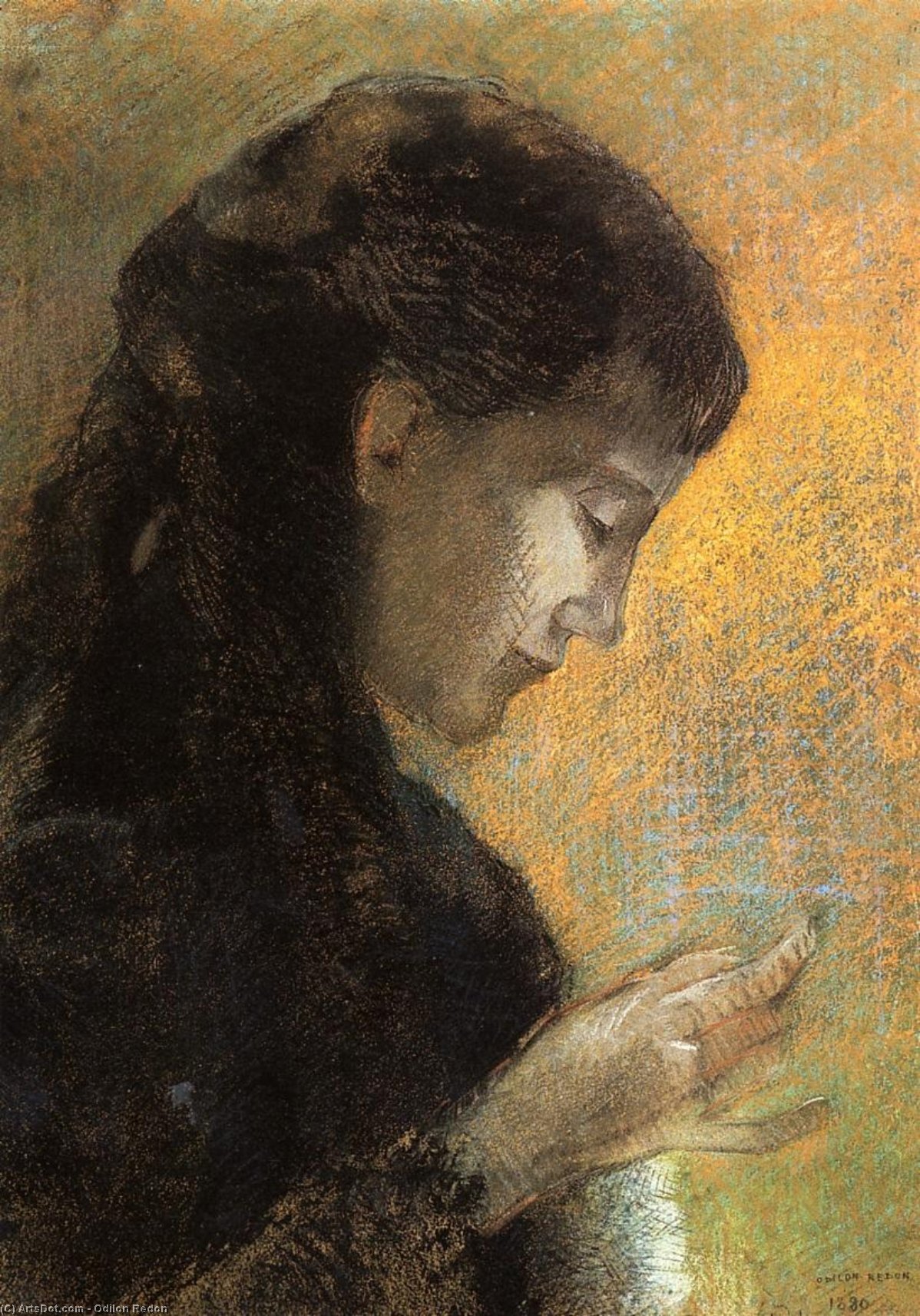
A Glimpse into the Dreamscape: Exploring Odilon Redon’s ‘Portrait of Madame Redon Embroiding’
Odilon Redon's 1880 pastel painting, “Portrait of Madame Redon Embroidering,” isn’t merely a depiction of a woman at her craft; it’s an invitation into the shadowed depths of the Symbolist imagination. Housed within the Musée d'Orsay in Paris, this intimate work transcends simple portraiture, offering instead a profound meditation on solitude, creativity, and the hidden worlds we construct within ourselves. Redon, a key figure in the Symbolist movement, deliberately eschewed the naturalistic trends prevalent at the time, choosing instead to represent absolute truths through evocative imagery and layered symbolism – a deliberate rebellion against the constraints of realism.
The painting immediately draws the eye with its muted palette—a symphony of dusky blues, deep greens, and charcoal grays. These colors aren’t applied in a straightforward manner; Redon masterfully employs pastel techniques to create an almost velvety texture, lending the scene an ethereal quality. Notice how light seems to emanate from within Madame Redon herself, highlighting her face and hands as she meticulously works at her embroidery. The background, deliberately blurred and indistinct, serves not as a distraction but as a visual metaphor for the subconscious – a realm of half-formed thoughts and lingering memories.
The Symbolism of Craft and Contemplation
At first glance, the subject appears straightforward: Madame Redon, identified by Redon himself, is absorbed in her embroidery. However, this seemingly simple activity carries significant symbolic weight. Embroidery, traditionally a domestic pursuit, represents not just skill but also patience, repetition, and the creation of something beautiful from humble materials. Within the context of Symbolism, it becomes a potent symbol for the creative process itself – a journey into the depths of one’s own imagination. The quiet intensity in Madame Redon's gaze suggests she is lost within her work, perhaps wrestling with deeper emotions or exploring hidden narratives.
The presence of two indistinct figures in the background adds another layer of intrigue. These shadowy presences aren’t clearly defined; they could represent memories, anxieties, or even aspects of Madame Redon's own psyche. They contribute to the painting’s overall atmosphere of mystery and invite viewers to project their own interpretations onto the scene. It is a deliberate ambiguity that is characteristic of Redon’s work – he offers no easy answers, instead prompting contemplation and emotional resonance.
Redon’s Technique and the Legacy of Symbolism
Odilon Redon's artistic journey was shaped by his early training in etching and lithography, techniques that instilled within him a deep appreciation for shadow, line, and the manipulation of form. This foundation is evident in “Portrait of Madame Redon Embroidering,” where he skillfully utilizes these elements to create a sense of depth and atmosphere. The delicate layering of pastel colors, combined with his masterful control of light and shadow, results in an image that feels both intimate and profoundly unsettling. His work stands as a powerful example of the Symbolist movement’s rejection of literal representation in favor of evocative symbolism and emotional truth.
Redon's influence extends far beyond this single painting; works like “Woman in Red,” “Joan of Arc,” and “Oriental Woman” further demonstrate his exploration of dreamlike imagery, psychological themes, and the power of suggestion. Today, reproductions of these pieces continue to captivate art lovers and collectors alike, offering a window into a world where beauty and darkness intertwine, and where the most profound truths are often found in the realm of the unseen.