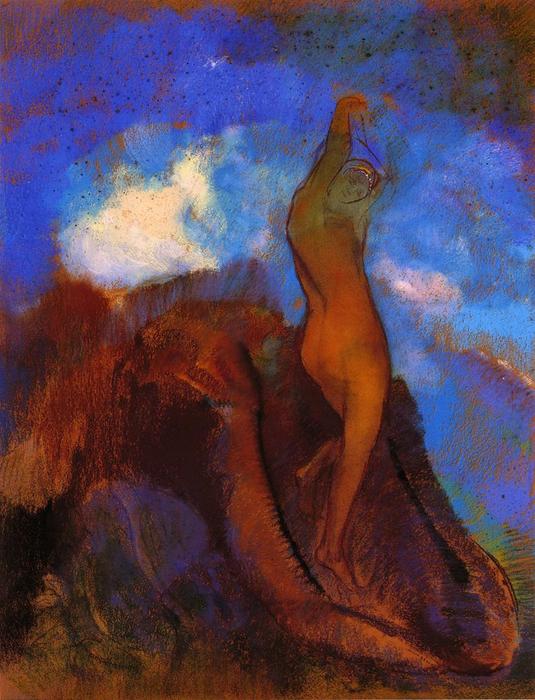
The
Birth of Venus by
Odilon Redon is a captivating painting that showcases the artist's unique style and interpretation of the mythological scene. Created in 1912, this pastel work measures 65 x 84 cm and is a prime example of Symbolist art.
Symbolism and Interpretation
The painting depicts the moment when Venus is born from the sea, surrounded by a blue background that contrasts with the vibrant colors of her body. The use of pastel as a medium adds a soft, ethereal quality to the work, emphasizing the dreamlike atmosphere of the scene. As seen in other works by
Odilon Redon, such as
Parsifal and
La coquille, the artist's focus on symbolism and mythology is evident.
Artistic Style and Influences
Odilon Redon's style is characterized by his use of bold colors, intricate details, and a blend of realism and fantasy. His work was influenced by various artistic movements, including
Impressionism and
Art Nouveau. The
Birth of Venus showcases the artist's ability to balance light and shadow, creating a sense of depth and dimensionality in the painting. For more information on the history of painting and its evolution, visit
History of Painting on Wikipedia.
Key Elements and Techniques
Some key elements of the painting include:
- The use of pastel as a medium to create soft, delicate colors
- The contrast between the blue background and the vibrant colors of Venus' body
- The incorporation of symbolism and mythology in the scene
The painting's composition and use of light are also noteworthy, as they create a sense of drama and intensity. For more information on the role of light in painting, visit
Light in Painting on Wikipedia.
To explore more artworks by
Odilon Redon and other artists, visit
The Birth of Venus on ArtsDot. Discover the beauty of handmade oil painting reproductions and learn more about the artistic styles and techniques that have shaped the world of art.