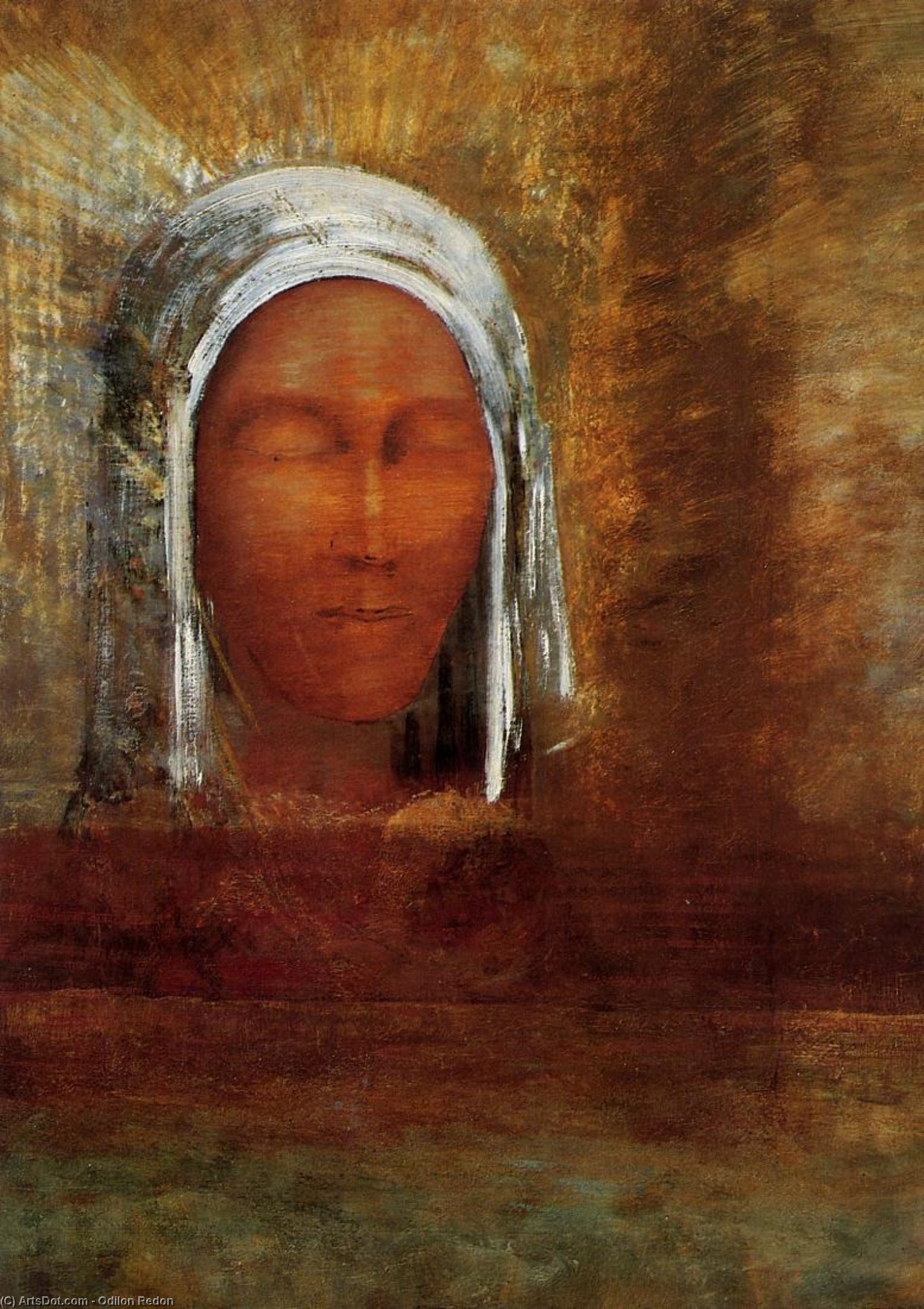
A Vision of Serenity: Exploring Odilon Redon’s *Virgin of the Dawn*
Odilon Redon's *Virgin of the Dawn*, painted in 1890, is a captivating example of Symbolist art—a movement that prioritized evoking moods and emotions over realistic depiction. This ethereal oil on canvas, currently housed at the POLA Art Foundation in Japan, presents not a literal representation of religious iconography, but rather an exploration of inner spirituality and nascent awakening. The painting’s power lies in its ambiguity; it invites contemplation and personal interpretation, making it a compelling piece for both private collectors and those seeking to infuse their spaces with a sense of mystery and tranquility.
Symbolism and the Dreamlike Aesthetic
Redon was deeply invested in symbolism, using imagery not as direct representation but as vehicles for conveying complex ideas and feelings. In *Virgin of the Dawn*, the central figure—a woman veiled in white—is bathed in a soft, golden light that suggests both purity and illumination. The upward gaze implies aspiration, perhaps towards divine understanding or inner peace.
The veil itself is particularly significant, acting as a barrier between the earthly realm and something beyond, hinting at hidden truths waiting to be revealed.
This isn’t a depiction of a specific Virgin Mary, but rather an archetype—a symbol of feminine grace, spiritual potential, and the dawn of consciousness. The cloudy background further enhances this dreamlike quality, creating a sense of vastness and the unknown.
Technique and Artistic Context
Redon’s masterful use of
oil on canvas allows for a rich texture and depth that contribute to the painting's atmospheric effect. He employs loose brushstrokes and subtle gradations of color, creating a sense of movement and fluidity. This technique is characteristic of his Symbolist period, where he moved away from earlier, darker works towards a more luminous palette. The late 19th century was a time of significant artistic upheaval, with artists rejecting academic realism in favor of exploring subjective experience.
- Redon’s work resonated with contemporaries like Gustave Moreau and Pierre Puvis de Chavannes,
- who also sought to create art that transcended the material world.
Interestingly, this period also saw Japanese aesthetics influencing Western artists – a trend reflected in Redon's simplified forms and emphasis on atmosphere.
Emotional Resonance and Interior Design Considerations
*Virgin of the Dawn* evokes a sense of quiet contemplation and serene hope. The soft colors and ethereal quality create a calming presence, making it an ideal piece for bedrooms, meditation spaces, or any area where one seeks tranquility. Its subtle palette complements a range of interior styles—from bohemian to minimalist—and its vertical composition can visually elongate a space.
A high-quality reproduction allows art enthusiasts to experience the emotional power of this masterpiece without the investment required for an original, bringing a touch of Symbolist magic into their homes. The painting’s enduring appeal lies in its ability to tap into universal themes of spirituality, hope, and the search for meaning—making it a timeless addition to any collection or living space.