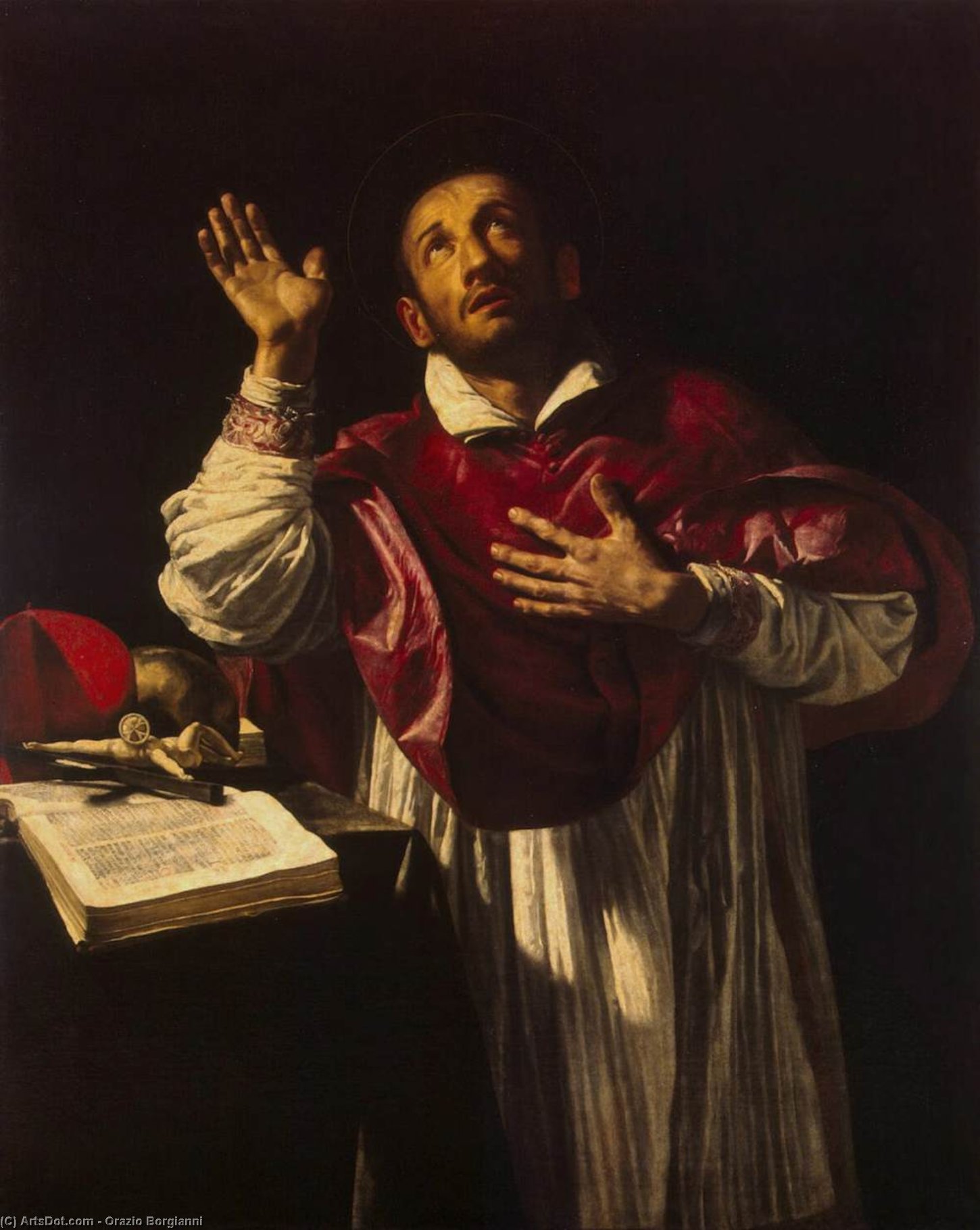
A Vision of Devotion: The Soul of St. Carlo Borromeo
In the quiet intensity of Orazio Borgianni’s 1610 masterpiece, St. Carlo Borromeo, viewers are invited into a profound meditation on the intersection of earthly mortality and divine grace. As a protégé of the legendary Giorgio Vasari, Borgianly carries forward the sophisticated traditions of the Florentine school while infusing them with the burgeoning emotional drama of the early Baroque period. This monumental work is far more than a mere portrait of a high-ranking cleric; it is a theatrical window into a soul in mid-supplication. The cardinal is captured in a moment of spiritual transcendence, his hands raised toward the heavens in an evocative gesture of prayer that bridges the gap between the viewer and the divine. Through his masterful command of light and form, Borgianni transforms a religious icon into a living, breathing presence that continues to captivate the modern eye.
The technical brilliance of the piece lies in its breathtaking use of chiaroscuro, the dramatic interplay between deep shadow and luminous highlights. Borgianni employs this technique to sculpt the figure of St. Carlo against a subtly textured, atmospheric background, creating an illusionistic depth that feels almost tactile. The rich, crimson hues of the cardinal's robes are rendered with such precision that one can almost sense the weight and texture of the heavy fabric. Every fold of the garment and every nuance of the saint’s weathered skin is meticulously detailed, showcasing a commitment to anatomical accuracy and naturalism. This luminous color palette does not merely decorate the canvas; it directs the viewer's gaze, pulling the eye upward from the earthly details toward the light of spiritual enlightenment.
Symbolism and the Memento Mori
Beyond its aesthetic splendor, the painting serves as a complex tapestry of symbolic meaning, deeply rooted in the Counter-Reformation era. Borgianni masterfully integrates elements of memento mori—reminders of death—to ground the saint's spiritual ecstasy in the reality of human frailty. The presence of two skulls, positioned on either side of the composition, acts as a stark, somber counterpoint to the cardinal’s upward gaze. These symbols of mortality serve to remind the observer of the fleeting nature of life and the inevitability of death, urging a focus on the eternal rather than the temporal. This tension between the physical decay represented by the skulls and the spiritual ascent of the saint creates a powerful emotional resonance that is both unsettling and deeply moving.
Complementing these symbols of mortality are elements representing wisdom and faith. A book rests within the composition, suggesting the profound theological knowledge and scholarly devotion that defined St. Carlo’s life. The subtle inclusion of a cross near the center of the frame acts as an anchor for the piece, reinforcing the central theme of Christian sacrifice. For the collector or interior designer, this artwork offers more than just visual beauty; it provides a sophisticated narrative layer to any space. Whether placed in a grand study or a contemplative gallery, a high-quality reproduction of this Borgianni masterpiece brings with it an aura of historical gravity, intellectual depth, and an enduring sense of peace.