Orientalism
Turkish
Canvas
Sakıp Sabancı Museum, Istanbul, Turkey
Oil on Canvas
72 x 53 cm
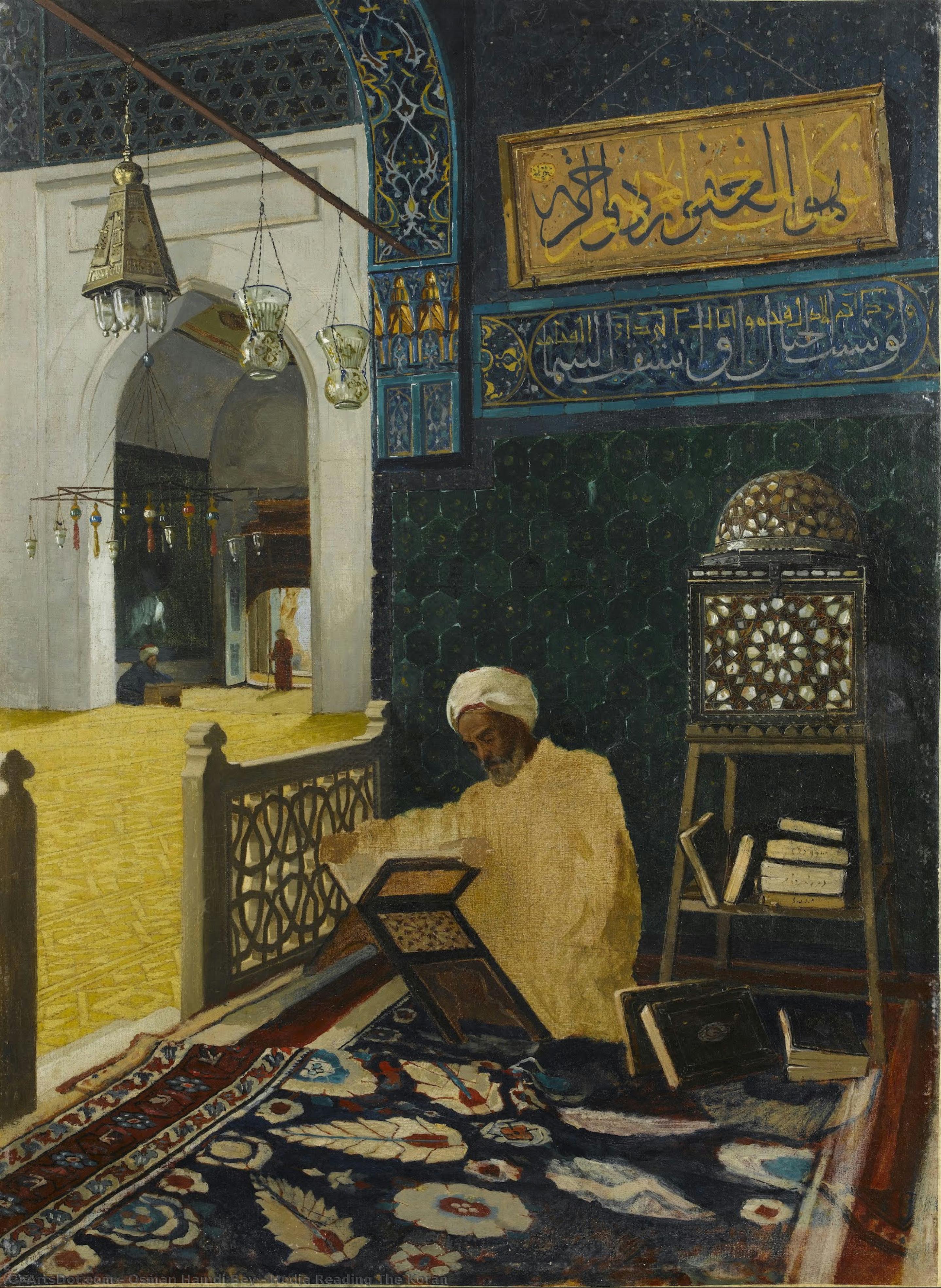
Admire Osman Hamdi Bey's serene depiction of a scholar engrossed in Quran reading—a masterpiece reflecting Ottoman artistic tradition and intellectual curiosity.
Explore Osman Hamdi Bey (1842-1910), a pioneering Ottoman painter & archaeologist! Discover his portraits, genre scenes, & legacy as founder of Turkish museums & art education. View artwork on ArtsDot.
Experience the breathtaking Ottoman calligraphy and 19th-century Turkish paintings at Istanbul's Sakıp Sabancı Museum, a historic Bosphorus palace offering an unforgettable journey through art and culture.
Hodja Reading The Koran – A Window into Ottoman Aesthetic and Spiritual Reflection
Osman Hamdi Bey, born in Istanbul in 1842, stands as a monumental figure not only within Turkish art history but also as a cornerstone of modern museum curation. His formative years were spent studying law in Paris—a deliberate choice that exposed him to the burgeoning artistic currents of Europe—yet it was this Parisian encounter that truly ignited his passion for painting and irrevocably shaped his artistic trajectory. This fascination would propel him to establish Istanbul Archaeology Museums and, later, the Şanlıurfa Mehmet Efendi Fine Arts University, cementing his legacy as a champion of cultural preservation and artistic education within Turkey.
- Subject Matter: The painting depicts a serene scene centered around a man engaged in prayer—specifically reading from the Quran—seated on the floor before a bookshelf laden with volumes. This deliberate selection of subject matter speaks to the core values of Ottoman society, prioritizing piety and intellectual pursuit.
- Style: Hamdi Bey’s style is characterized by meticulous realism blended seamlessly with decorative elements typical of Orientalism. He eschews dramatic gestures or theatrical compositions, opting instead for a quiet intimacy that invites contemplation.
The technique employed is masterful—a testament to Hamdi Bey's dedication to capturing subtle nuances of light and texture. Oil paint was applied onto canvas with painstaking precision, resulting in an image imbued with remarkable depth and luminosity. Notice the careful rendering of folds in drapery and the textured surface of the bookshelf, demonstrating a profound understanding of artistic materiality. The artist’s meticulous attention to detail elevates the painting beyond mere representation; it strives to convey a palpable sense of atmosphere—a feeling of quiet reverence and scholarly concentration.
Historical Context: Ottoman Reform and Artistic Engagement
Hodja Reading The Koran emerged during a period of significant reform within the Ottoman Empire. While facing challenges from European powers, the empire simultaneously witnessed an intellectual revival fueled by Western influences. Hamdi Bey’s artistic endeavors reflected this dynamic interplay between tradition and innovation—a desire to honor Islamic heritage while embracing new aesthetic sensibilities. His work embodies the spirit of the era, demonstrating a commitment to documenting cultural treasures and fostering appreciation for art within Turkish society.
Symbolism: Light, Knowledge, and Spiritual Harmony
Beyond its formal qualities, the painting resonates with rich symbolic meaning. The bookshelf represents accumulated knowledge—a cornerstone of Ottoman scholarship—while the Quran itself symbolizes divine guidance and spiritual contemplation. Furthermore, the diffused light illuminating the scene contributes to an overall feeling of serenity and harmony—reflecting the idealized vision of Islamic piety.
Emotional Impact: A Portrait of Inner Reflection
Ultimately, Hodja Reading The Koran transcends mere visual depiction; it communicates a profound emotional resonance. It invites viewers to consider themes of faith, learning, and inner peace—qualities valued throughout Ottoman history and continuing to inspire contemplation today. This artwork serves as an enduring reminder of Hamdi Bey’s artistic brilliance and his contribution to preserving Turkish cultural heritage.