Explore Osman Hamdi Bey (1842-1910), a pioneering Ottoman painter & archaeologist! Discover his portraits, genre scenes, & legacy as founder of Turkish museums & art education. View artwork on ArtsDot.
Explore Istanbul's Pera Museum – housing stunning Orientalist paintings like 'The Tortoise Trainer,' Anatolian treasures & exquisite Kütahya ceramics alongside captivating exhibitions.
A Symphony of Ottoman Grace
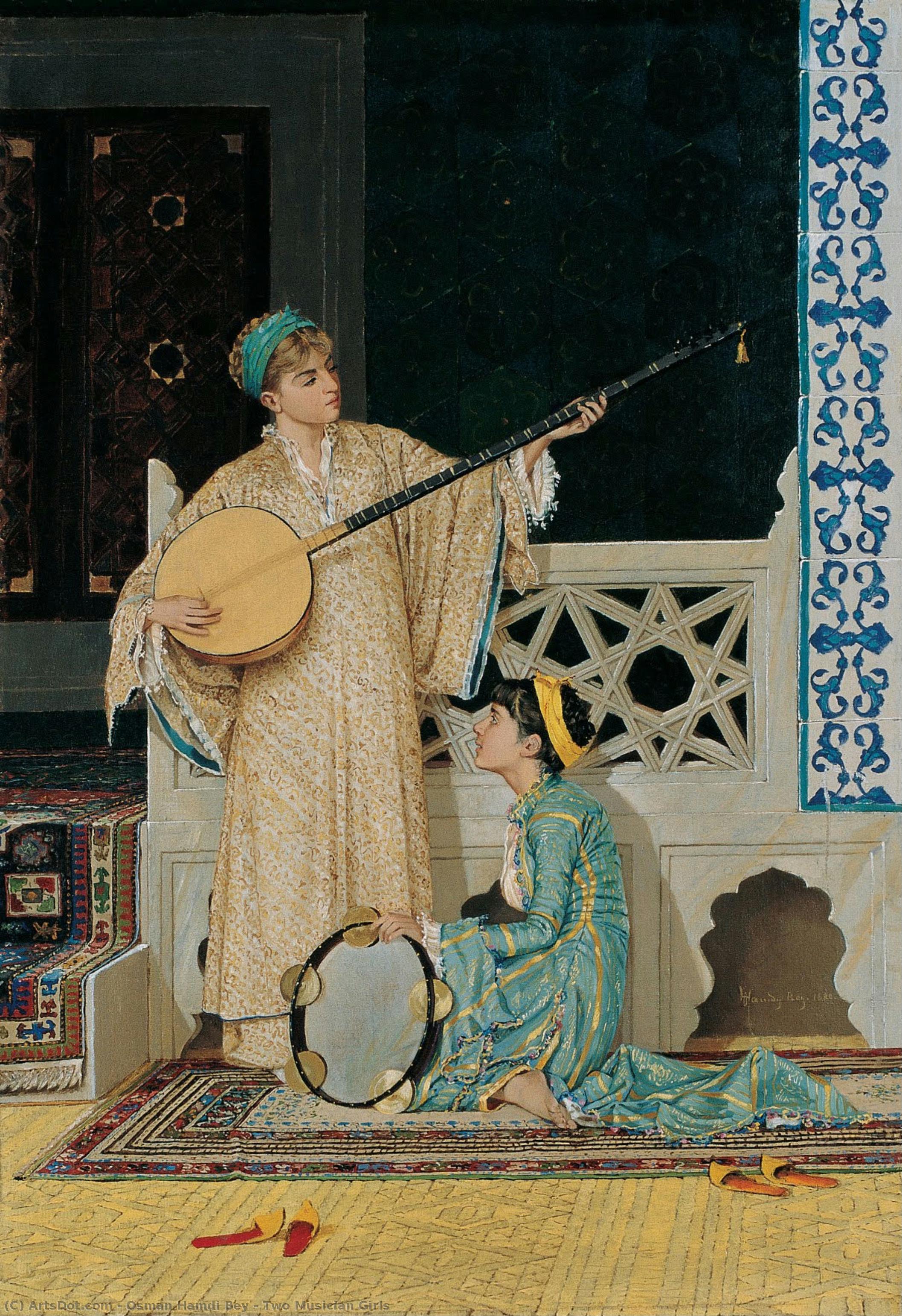
In the quiet, evocative depths of Osman Hamdi Bey’s Two Musician Girls, we find a profound departure from the traditional Orientalist gaze. While many of his Western contemporaries sought to depict the East through a lens of exoticism and sensuality, Bey offers a much more intimate and dignified perspective. This masterpiece captures a moment of serene intellectual and artistic pursuit, where the female figures are not mere subjects of observation, but active participants in their own cultural refinement. The painting breathes with the spirit of an era defined by Westernization within the Ottoman Empire, portraying women who are deeply engaged in the mastery of music and the cultivation of the self.
The composition is a masterful study of balance and texture, drawing the viewer into a private sanctuary that feels both timeless and historically grounded. As one gaze settles upon the two musicians, the rhythmic interplay between the seated figure with her tambourine and the standing companion with her lute creates a visual melody. The artist’s brushwork brings to life the intricate architectural details of the Bursa Green Mosque, where every carved stone and ornate tile serves as a silent witness to this musical duet. The presence of delicate birds fluttering near the edges of the frame adds a layer of organic vitality, suggesting that even in this structured, indoor setting, the spirit of nature and freedom remains ever-present.
The Artistry of Detail and Heritage
For the discerning collector or interior designer, Two Musician Girls offers an unparalleled richness of texture and color. Bey’s technique is nothing short of extraordinary; he weaves a tapestry of Ottoman decorative elements that elevate the painting from a simple portrait to a historical document. The heavy presence of traditional rugs, intricate woodwork, and fine stone carvings provides a tactile quality that makes the scene feel almost touchable. These elements are not merely background; they are symbols of a sophisticated domesticity and a deep respect for craftsmanship. The cool, blue tones of the ornate walls provide a stunning contrast to the warm, earthy hues of the instruments and textiles, creating a palette that is both calming and intellectually stimulating.
The emotional impact of this work lies in its quiet strength. There is no drama here, only the profound dignity of talent being nurtured. For those looking to adorn a space with art that inspires contemplation, this piece serves as a magnificent focal point. It brings with it an aura of cultured elegance and a sense of historical continuity. Whether placed in a grand library or a contemporary living space, a high-quality reproduction of this work invites guests to pause, listen to the silent music within the frame, and appreciate the enduring legacy of Osman Hamdi Bey’s vision of a modern, yet deeply rooted, Ottoman identity.