Theatrical Melancholy: Picasso's Harlequins
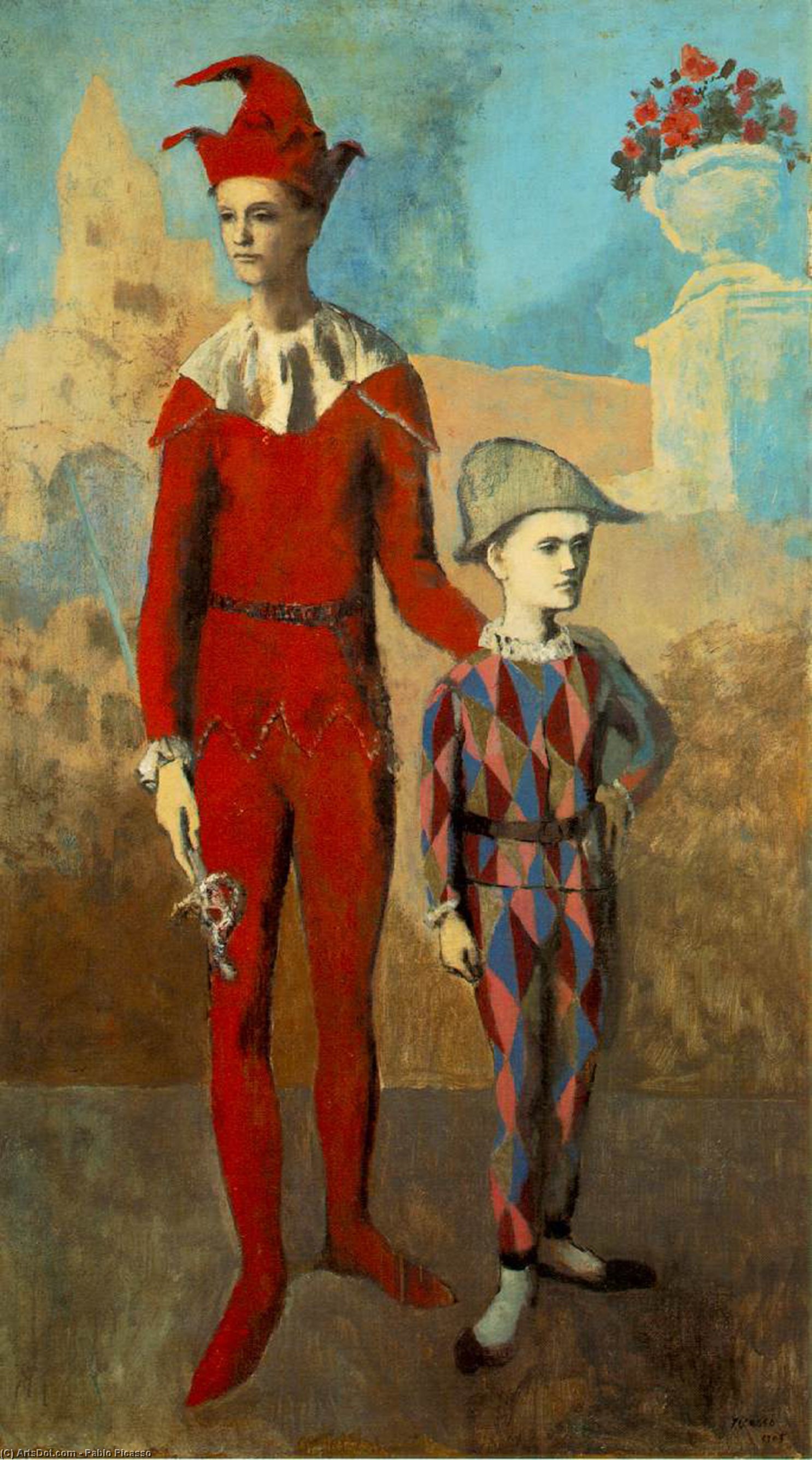
Step into the world of Pablo Picasso’s Acrobat and Young Harlequin, a captivating masterpiece that bridges his Blue and Rose Periods. This 1905 oil on canvas painting is a poignant exploration of human emotion, theatricality, and the duality of life. Created in Montmartre during Picasso’s time at Le Bateau-Lavoir, this work invites viewers to ponder themes of melancholy, resilience, and the masks we wear.
A Dance of Light and Color
The painting’s color palette is a harmonious blend of earthy tones and vibrant hues. The muted browns and beiges of the background provide a neutral canvas that accentuates the vivid costumes of the harlequins. The taller figure dons a bright red outfit with black and white accents, while the smaller figure sports a mix of red, blue, and white diamond patterns. A vase of flowers on the upper right introduces pops of red and green, adding a touch of life to the scene.
Bold Lines and Stylized Forms
Picasso’s use of bold, dark lines outlines the figures, giving them a graphic quality reminiscent of woodcut or printmaking techniques. The shapes are simplified and stylized, particularly in the harlequin patterns, which consist of geometric diamond shapes. The background features soft, blurred textures that contrast with the sharp, defined lines of the figures, creating a dreamlike atmosphere.
Symbolism and Emotional Depth
The two figures dressed as harlequins are traditional characters from commedia dell'arte known for their colorful costumes and roles as tricksters or jesters. However, their serious and contemplative expressions contrast with the usual playful nature of harlequins, symbolizing themes of melancholy, the duality of human nature, or the masks people wear in society. The vase of flowers could represent fleeting beauty or life amidst the somber mood.
Historical Context and Legacy
Painted toward the end of Picasso’s Blue Period and the outset of his Rose Period, Acrobat and Young Harlequin displays characteristics of both. The Blue Period is known for its somber themes and cool color palette, while the Rose Period introduces warmer hues and a focus on circus performers and harlequins. This painting was published in the art and philosophy review Action in March 1920 and now forms part of the permanent collection of The Barnes Foundation in Philadelphia.
Why This Painting Resonates Today
Acrobat and Young Harlequin is a timeless piece that continues to captivate art lovers, collectors, and interior designers. Its blend of theatricality, symbolism, and emotional depth makes it a versatile addition to any space. Whether you are drawn to its historical significance, its vibrant color palette, or its profound themes, this painting offers a rich tapestry of meaning and beauty.
Bring the magic of Picasso’s Montmartre into your home with a high-quality reproduction of Acrobat and Young Harlequin. This masterpiece is not just a work of art; it is a conversation starter, an emotional anchor, and a testament to the enduring power of Picasso’s vision.