A Window into Bohemian Paris: Picasso’s “At ‘Lapin Agile’”
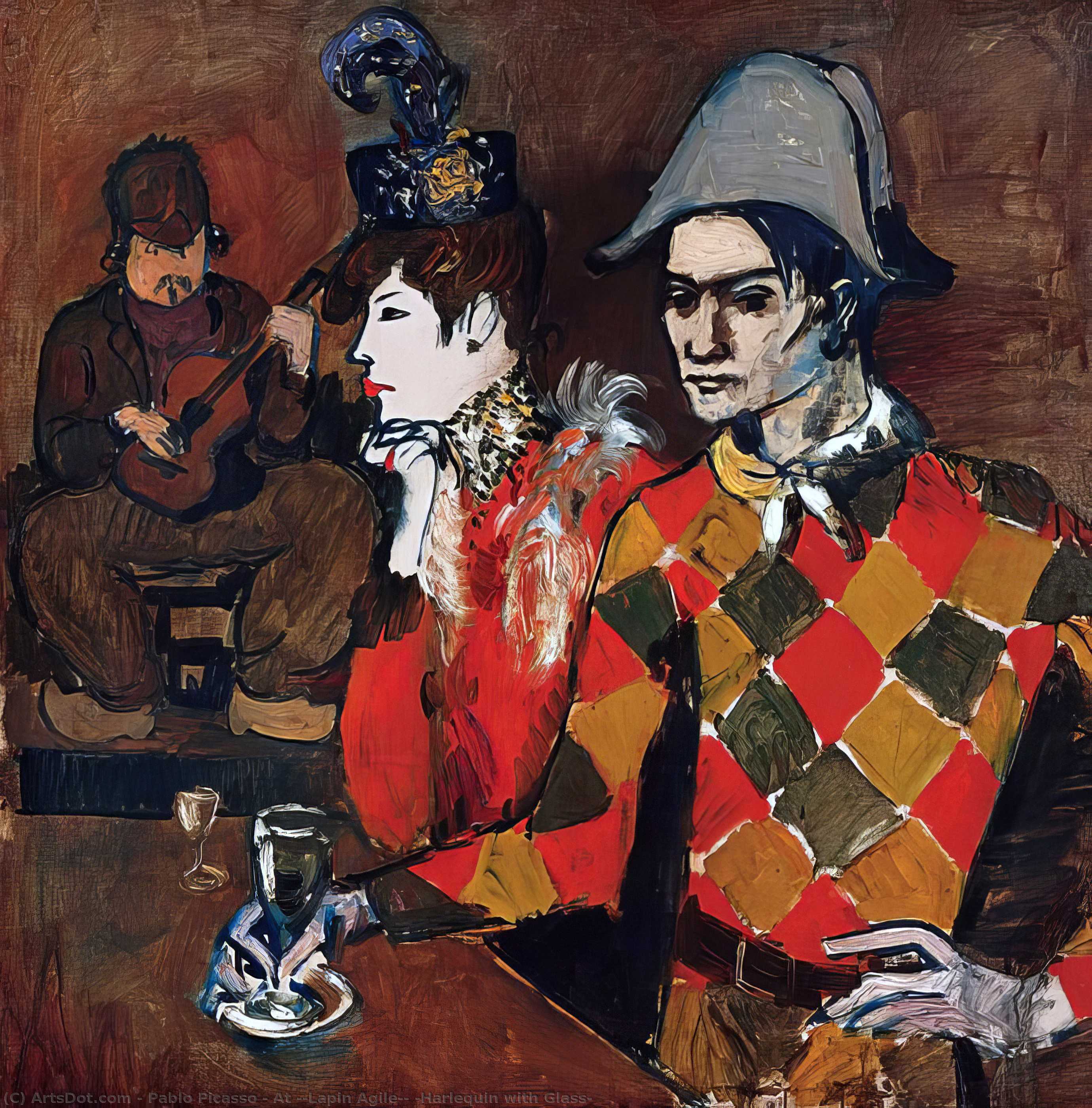
Pablo Picasso's 1905 masterpiece, “At ‘Lapin Agile’ (Harlequin with Glass),” is more than just a painting; it’s an evocative portal to the heart of early 20th-century Parisian nightlife and the vibrant artistic community that thrived within it. This oil on canvas (99 x 100 cm) captures a fleeting moment inside the legendary Le Lapin Agile cabaret, a haven for artists, writers, and musicians in Montmartre.
The Scene: A Cabaret of Creativity
The painting depicts the intimate interior of Le Lapin Agile, instantly recognizable by its simple décor and the gathering of figures bathed in warm, artificial light. A harlequin – often interpreted as a self-portrait of Picasso himself – dominates the foreground, gazing out with a contemplative expression while holding a glass. He is flanked by a woman adorned with a feathered hat, and a guitarist serenades them from the background. The composition isn’t about precise realism; instead, it prioritizes capturing the *feeling* of the space—the camaraderie, the quiet observation, and the underlying melancholy that often accompanied bohemian life.
Style & Technique: Bridging Eras
“At ‘Lapin Agile’” marks a pivotal moment in Picasso’s artistic development, firmly situated within his Rose Period (1904-1906). Following the somber tones of his Blue Period, this work embraces warmer hues – rosy pinks, earthy reds, and muted yellows – creating a more optimistic, though still introspective, atmosphere. The style demonstrates Picasso’s growing mastery of form and composition. Notice the flattened perspective, influenced by Post-Impressionism, and the bold, expressive brushstrokes that define shapes rather than meticulously rendering them. There's also a clear nod to
El Greco, visible in the elongated figures and their dramatic poses. The technique is characterized by visible impasto, adding texture and depth to the canvas.
Symbolism & Interpretation
The symbolism within “At ‘Lapin Agile’” is rich and layered. The harlequin, traditionally a figure of fun and mischief, here embodies a sense of alienation and artistic introspection. His gaze suggests a detachment from the scene, perhaps reflecting Picasso’s own feelings as an observer within this vibrant social circle. The cabaret itself represents a sanctuary for those on the fringes of society – a place where artists could freely exchange ideas and challenge conventional norms. The glass held by the harlequin can be interpreted as a symbol of both celebration and isolation.
Historical Context & Legacy
Created in 1905, this painting reflects a period of significant artistic experimentation and social change. Montmartre was *the* epicenter of avant-garde culture, attracting artists like Picasso,
Henri de Toulouse-Lautrec, and countless others seeking to break free from academic traditions. “At ‘Lapin Agile’” is not merely a depiction of a specific place; it’s a testament to the spirit of artistic collaboration and the search for meaning in a rapidly modernizing world. Today, it stands as an iconic representation of early 20th-century Parisian life and Picasso's enduring influence on modern art.
Emotional Impact & Collecting
“At ‘Lapin Agile’” evokes a complex range of emotions – nostalgia, melancholy, camaraderie, and a sense of quiet contemplation. It’s a painting that invites viewers to step into the scene and become part of the story. For collectors and interior designers alike, this artwork offers a unique opportunity to bring a piece of art history into their space. A high-quality reproduction captures not only the visual beauty but also the emotional depth of Picasso's masterpiece, adding a touch of bohemian elegance and intellectual sophistication to any environment.