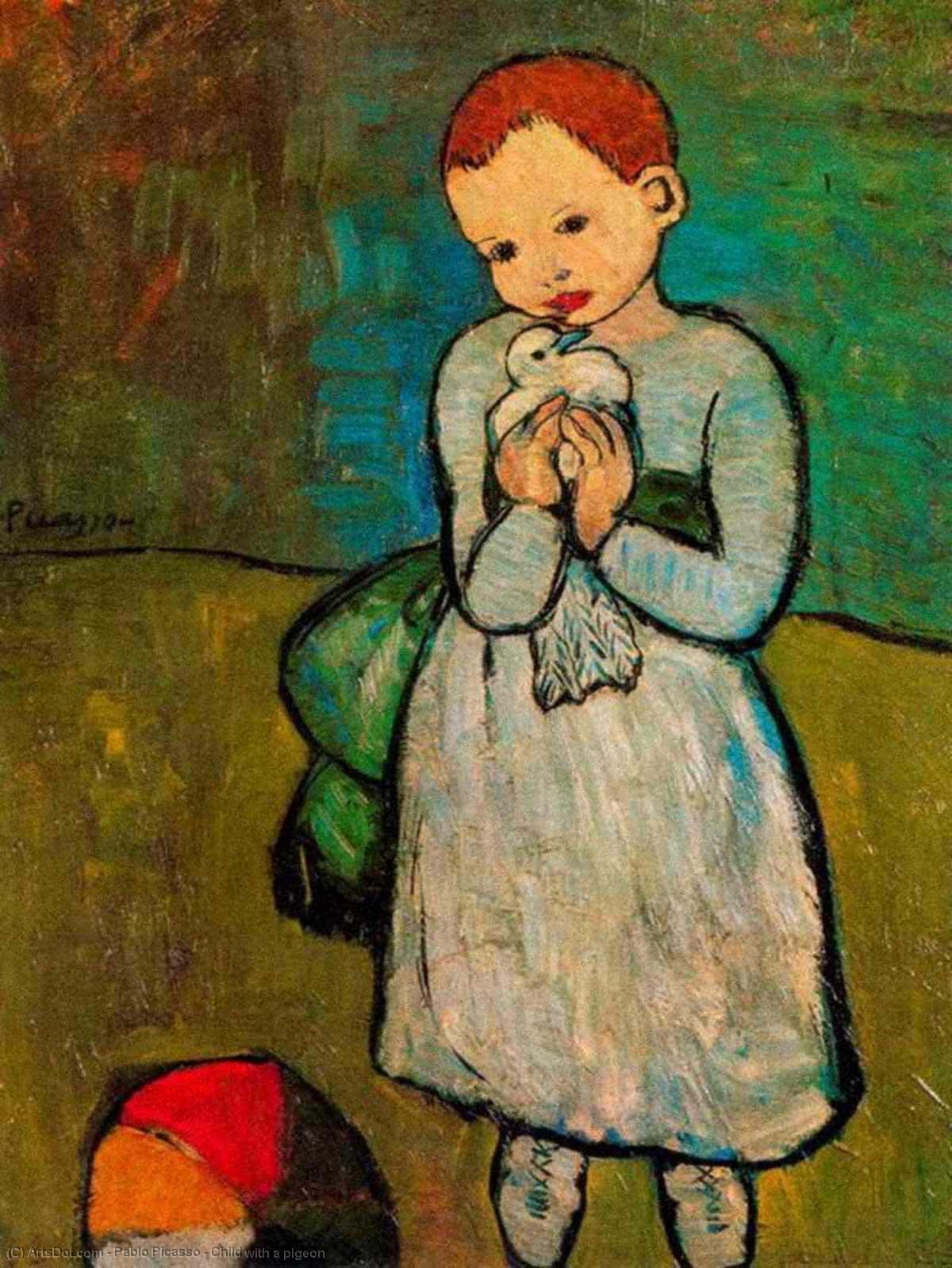
Explore Pablo Picasso’s ‘Child with a Pigeon,’ an Expressionist oil painting of youthful innocence & peace. A captivating work showcasing bold colors & simplified forms – a must-see!
Pablo Picasso (1881-1973) was a revolutionary Spanish painter and sculptor, co-founder of Cubism, and master of diverse styles. Known for iconic works like Guernica & Les Demoiselles d'Avignon, his legacy continues to inspire.
A Glimpse into Innocence: Exploring Picasso’s *Child with a Pigeon*
This captivating oil painting, *Child with a Pigeon*, offers a poignant glimpse into Pablo Picasso's evolving style at the dawn of the 20th century. Created around 1901, this work stands as a transitional piece between his earlier academic training and the groundbreaking explorations that would define his career, particularly his famed Blue Period.
Subject & Composition
The painting centers on a young boy tenderly holding a white dove – a universal symbol of peace and hope. The child, rendered with bright red hair and a rosy complexion, is dressed in a long, flowing white dress trimmed with green, adding a touch of vibrancy to the composition. A dark green bag hangs casually from his shoulder, while a red ball rests at his feet, hinting at childhood playfulness. Picasso simplifies forms, focusing on essential shapes rather than meticulous detail. The background consists of broad, loose brushstrokes in varying shades of green, creating an atmospheric depth without distracting from the central figure.
Style & Technique
*Child with a Pigeon* showcases elements of both Expressionism and Fauvism. Bold colors, though somewhat muted, are used expressively rather than realistically. The lines aren’t precise; instead, they define the boy's form and clothing with a rough, gestural quality. Picasso employs visible brushstrokes and impasto techniques – layering paint thickly – to create texture and physicality. This tactile surface invites viewers to connect with the artwork on a deeper level. The flattened perspective contributes to a two-dimensional aesthetic, prioritizing emotional impact over strict representation.
Historical Context & Artistic Evolution
Painted during a pivotal moment in Picasso’s career, this work reflects his recent move towards abstraction and experimentation. Having recently exhibited successfully with Francisco Iturrino in Paris, Picasso was beginning to forge his own path, moving away from traditional impressionistic techniques. The year 1901 marked the start of his Blue Period, characterized by somber tones and themes of poverty, loneliness, and melancholy. While *Child with a Pigeon* doesn’t fully embody the stark blues that would come to define this period, it demonstrates a shift in style – a move towards simplification, emotional intensity, and a unique visual language.
Symbolism & Emotional Resonance
The symbolism within the painting is rich and layered. The dove, of course, represents peace, innocence, and perhaps even spiritual hope. The child himself embodies purity and vulnerability. Some art historians suggest that the red ball symbolizes life’s energy or a fleeting moment of joy. The overall effect is one of quiet contemplation and gentle emotion. It evokes feelings of tenderness, protection, and a longing for simpler times.
Impact & Legacy
*Child with a Pigeon* is more than just a beautiful painting; it’s a window into the mind of one of history's most influential artists. It demonstrates Picasso’s early mastery of color, form, and emotional expression. The work was highly valued, spending nearly four decades on display at the National Gallery in London before being sold privately for £50 million in 2012. Its enduring appeal lies in its ability to connect with viewers on a deeply human level, reminding us of the beauty and fragility of childhood and the universal desire for peace. This piece would be an exquisite addition to any collection, bringing a touch of artistic brilliance and emotional depth to any interior space.