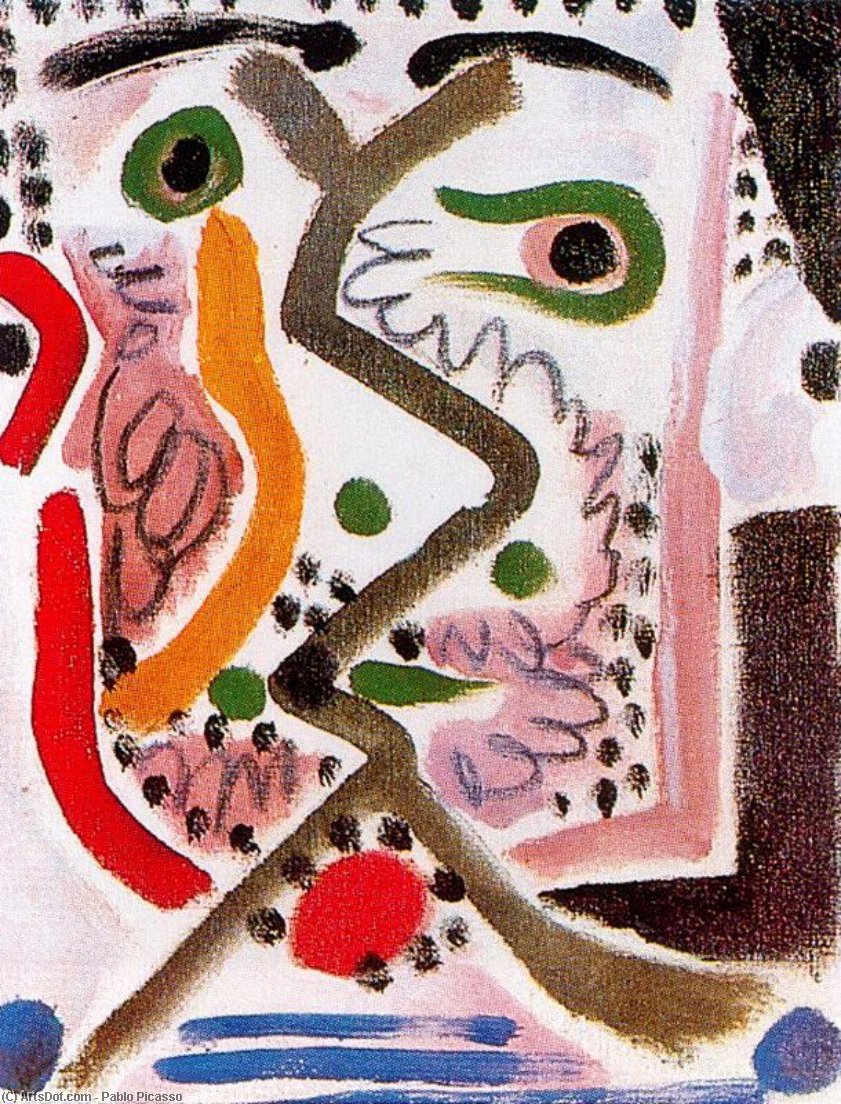
A Fragmented Vision: The Soul of Picasso’s Head of a Man 7
In the vast, transformative landscape of twentieth-century modernism, few works capture the raw, deconstructed energy of a revolution quite like Pablo Picasso’s “Head of a Man 7.” Painted in 1908, this masterpiece serves as a profound window into the artist's psyche during a period of monumental stylistic transition. It is far more than a mere portrait; it is a visual puzzle that challenges the viewer to look beyond the surface. As one gazes upon the fractured planes and intersecting lines, they encounter a face that seems to exist in multiple dimensions at once, embodying the very essence of the burgeoning Cubist movement. For the discerning collector or interior designer, this piece offers a sophisticated focal point, bringing an intellectual depth and a sense of avant-garde history to any curated space.
The technique employed in this work is a masterclass in the early tenets of Cubism, a style Picasso pioneered alongside Georges Braque. Rather than adhering to the traditional rules of perspective that had governed Western art for centuries, Picasso utilizes thick, deliberate brushstrokes to create a rich, tactile surface. The composition abandently mimics the way memory and perception actually function—not as a single, static image, but as a collection of overlapping fragments. The palette is unexpectedly vibrant, featuring a rhythmic dance of red, blue, yellow, green, and orange that breathes life into the geometric distortions. This interplay of color and form creates a dynamic tension, ensuring that the painting remains visually arresting from every angle.
The Hidden Narrative: Symbolism and Emotional Depth
Beneath the striking exterior of the man's profile lies a hauntingly beautiful secret. Upon close inspection, one can discern the faint, ghostly traces of a preparatory sketch—a female nude hidden beneath the final layers of paint. This layering technique speaks volumes about Picasso’s meticulous creative process and his fascination with duality. It suggests a dialogue between masculinity and femininity, life and death, and the seen versus the unseen. This hidden element adds a layer of archaeological intrigue to the piece, inviting viewers to peel back the layers of history and intention with their eyes.
The emotional resonance of “Head of a Man 7” is deeply rooted in the historical context of Picasso’s life. Created during a period marked by personal melancholy, the work reflects the artist's preoccupation with themes of loss and psychological complexity. The fragmentation of the subject's face can be interpreted as a metaphor for a fractured identity or the disorientation caused by grief. For those seeking to decorate a space with art that evokes profound thought, this painting provides an unparalleled emotional weight. It is a work that does not merely sit on a wall; it commands the room, offering a contemplative experience that mirrors the complexities of the human condition.
A Timeless Addition to the Modern Interior
For the art lover or interior designer, acquiring a high-quality reproduction of this iconic work is an opportunity to integrate a piece of art history into a contemporary setting. The bold, abstract nature of the composition allows it to harmonize with various design aesthetics, from minimalist modernism to eclectic, maximalist galleries. Because the painting balances intense color with structural complexity, it acts as both a decorative element and a conversational centerpiece.
Owning a piece that echoes the revolutionary spirit of 1908 means bringing home a fragment of the moment when art changed forever. Whether placed in a sunlit studio or a sophisticated corporate lounge, “Head of a Man 7” serves as a constant reminder of the power of innovation and the enduring beauty found within the broken and the rebuilt.