Introduction
The painting
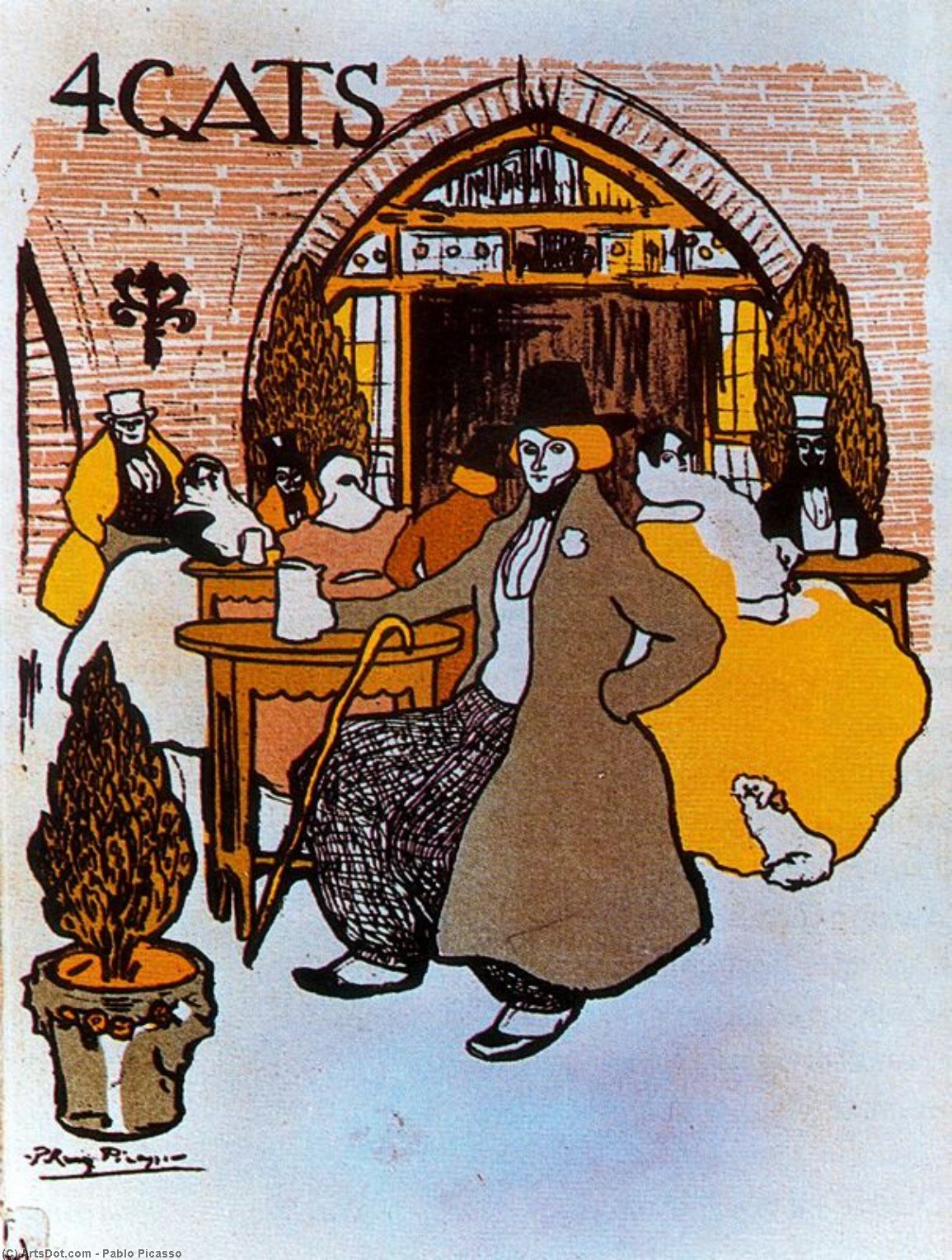
Menú de Els Quatre Gats is a masterpiece created by the renowned Spanish artist
Pablo Picasso in 1899. This work of art is an excellent example of Picasso's early style, which was heavily influenced by his experiences and exposure to various artistic movements during his time in Barcelona.
Background
Els Quatre Gats (The Four Cats) was a café located in Barcelona, Spain, that served as a gathering place for artists and intellectuals. The café was opened by Pere Romeu, who had previously operated a similar establishment in Paris called Le Chat Noir. Picasso was a frequent visitor to the café and even held his first solo exhibition there in 1900. For more information on
Pablo Picasso and his works, visit:
Artistic Style
The painting
Menú de Els Quatre Gats showcases Picasso's early style, which was heavily influenced by his exposure to various artistic movements during his time in Barcelona. The work exhibits elements of
Post-Impressionism, a movement that emerged in the late 19th century as a reaction against Impressionism.
Significance
Menú de Els Quatre Gats is significant because it represents Picasso's early experiences and exposure to various artistic movements during his time in Barcelona. The painting showcases the artist's unique style, which would later evolve into
Cubism, one of the most influential art movements of the 20th century. The painting is currently housed in the
Hastings Museum and Art Gallery in the United Kingdom.
Conclusion
Menú de Els Quatre Gats is an exceptional work of art by
Pablo Picasso, showcasing his early style and unique ability to capture the essence of a place and its culture. For more information on
Post-Impressionism Art Movement, visit:
You can also find more information about the painting on
Menú de Els Quatre Gats page.