A Tender Prelude to Modernism
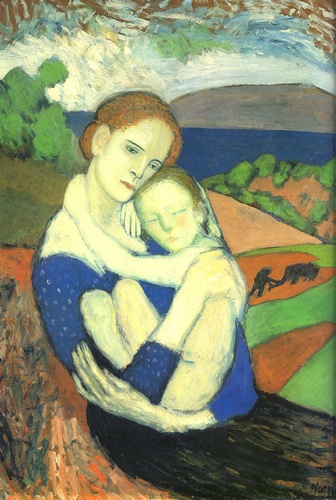
In the vast, revolutionary tapestry of Pablo Picasso’s career, certain works serve as quiet, profound precursors to the seismic shifts he would later ignite in the art world. “Mother and Child,” painted in 1901, is one such masterpiece. Before the fractured planes of Cubism or the stark political outcry of Guernica, there existed this intimate study of human connection. The painting captures a moment of serene domesticity, featuring Marie-Therese Vialatte and her daughter Maya seated upon a simple studio bench. It is a composition that breathes with a soft, rhythmic pulse, inviting the viewer into a private sanctuary of maternal devotion. Through his early mastery, Picasso does not merely depict a scene; he captures the very atmosphere of tenderness that defines the bond between parent and offspring.
The technical execution of this piece reveals an artist deeply engaged with the nuances of light and color. Utilizing a delicate palette of ochre, mauve, and pale blue, Picasso creates a visual harmony that is both soothing and structurally significant. These muted pastel hues do more than decorate the canvas; they envelop the subjects in a dreamlike haze, softening the edges of reality to emphasize emotional truth over literal representation. While the work predates his full embrace of Cubist fragmentation, one can already observe the seeds of his revolutionary approach. There is a subtle manipulation of form and a deliberate use of geometric undertones that suggest a burgeoning interest in breaking down traditional perspective, paving the way for the radical deconstruction of space that would define the twentieth century.
Symbolism and the Architecture of Emotion
Beyond its aesthetic beauty, “Mother and Child” functions as a profound exploration of psychological depth. The positioning of the figures—facing one another yet subtly separated by shifting planes—serves as a poignant metaphor for the complex duality of intimacy and individuality. Picasso masterfully balances the physical closeness of the embrace with a sense of quiet contemplation, suggesting that even within the most profound bonds, there exists a sacred, internal space. This interplay between connection and distance creates a tension that is both heartbreaking and beautiful, making the painting an enduring symbol of resilience and protection.
For the discerning collector or interior designer, this artwork offers much more than mere visual appeal; it provides an emotional anchor for a space. The painting’s ability to evoke feelings of warmth, serenity, and stability makes it an ideal centerpiece for environments designed for reflection and comfort. Whether placed in a contemporary gallery setting or a sophisticated residential study, a high-quality reproduction of this Picasso classic brings with it a sense of historical weight and timeless grace. It is an invitation to pause, to look closer, and to reconnect with the fundamental human experiences of love and vulnerability that transcend time and era.