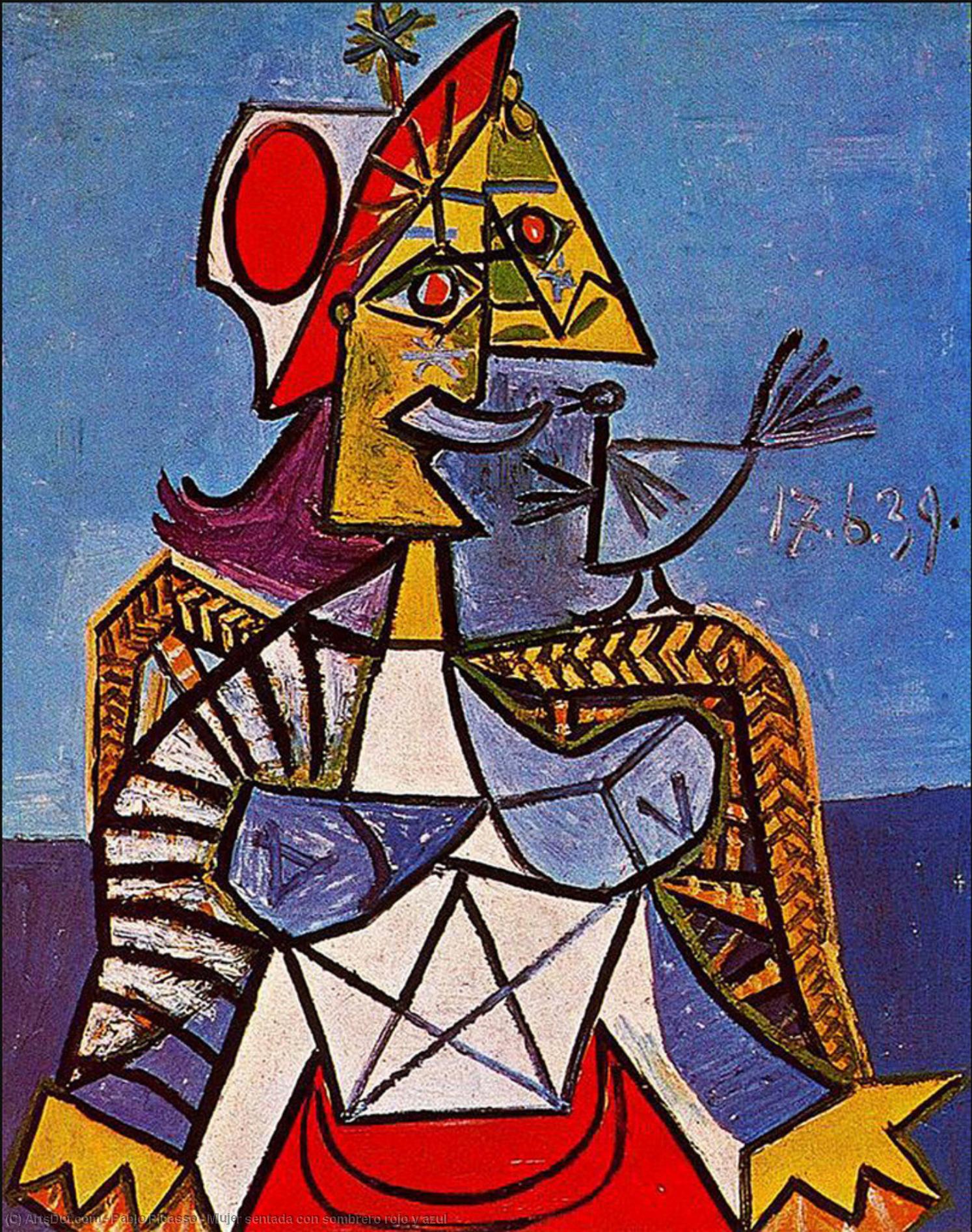
Mujer Sentada con Sombrero Rojo y Azul: A Pioneering Vision of Cubism
Pablo Picasso’s
Mujer Sentada con Sombrero Rojo y Azul stands as a cornerstone of Cubism, an artistic movement that irrevocably altered the landscape of 20th-century art. Created with oil on canvas around 1908–1909, this artwork exemplifies Picasso’s revolutionary approach to representation—a deliberate rejection of traditional perspective and realism in favor of fractured planes and geometric forms. It's a visual testament to Picasso’s intellectual curiosity and his unwavering determination to push the boundaries of artistic expression.
Artistic Style and Influences: Deconstructing Reality
Picasso’s Cubist style wasn’t born in isolation; it drew heavily from influences ranging from Cézanne’s exploration of spatial recession to African sculptures—particularly those found in ethnographic museums—which captivated Picasso's imagination with their simplified forms and bold contours. The painting itself embodies this ethos: the woman’s face and torso are dissected into interlocking cubes and planes, simultaneously presenting multiple viewpoints. This technique isn’t merely decorative; it aims to capture the essence of the subject by portraying its constituent parts rather than attempting to depict a single unified image. Notice how Picasso utilizes color—primarily reds and blues—to heighten emotional impact and contribute to the overall sense of dynamism.
Similar Works by Pablo Picasso: Exploring Innovation
Picasso’s artistic journey was marked by constant experimentation, and
Mujer Sentada con Sombrero Rojo y Azul shares stylistic similarities with other pivotal pieces from his oeuvre. Consider Studio (1909), a portrait of Picasso’s friend Fernande Olivier—another masterful example of Cubist fragmentation—and Seated Man (1910)—which similarly employs geometric abstraction to convey psychological depth. These paintings underscore Picasso's commitment to challenging conventions and forging new paths for artistic representation.
Museums and Collections: Witnessing Artistic Legacy
The
Museum Quartier Des Héronnières in Fontainebleau, France, houses a remarkable collection of modern and contemporary art—though
Mujer Sentada con Sombrero Rojo y Azul isn’t currently on display there. However, it serves as an inspiring reminder of the enduring power of artistic innovation—a legacy that continues to resonate with audiences worldwide. For a deeper understanding of Picasso's broader artistic vision, visit
The Museum Quartier Des Héronnières (Fontainebleau, France).
The captivating Mujer Sentada con Sombrero Rojo y Azul remains a testament to Picasso’s innovative spirit and his enduring influence on modern art—a masterpiece that invites contemplation and inspires admiration for its groundbreaking technique and profound emotional resonance.