The Enigmatic Faun: Unveiling Picasso’s Musician Faun N.3
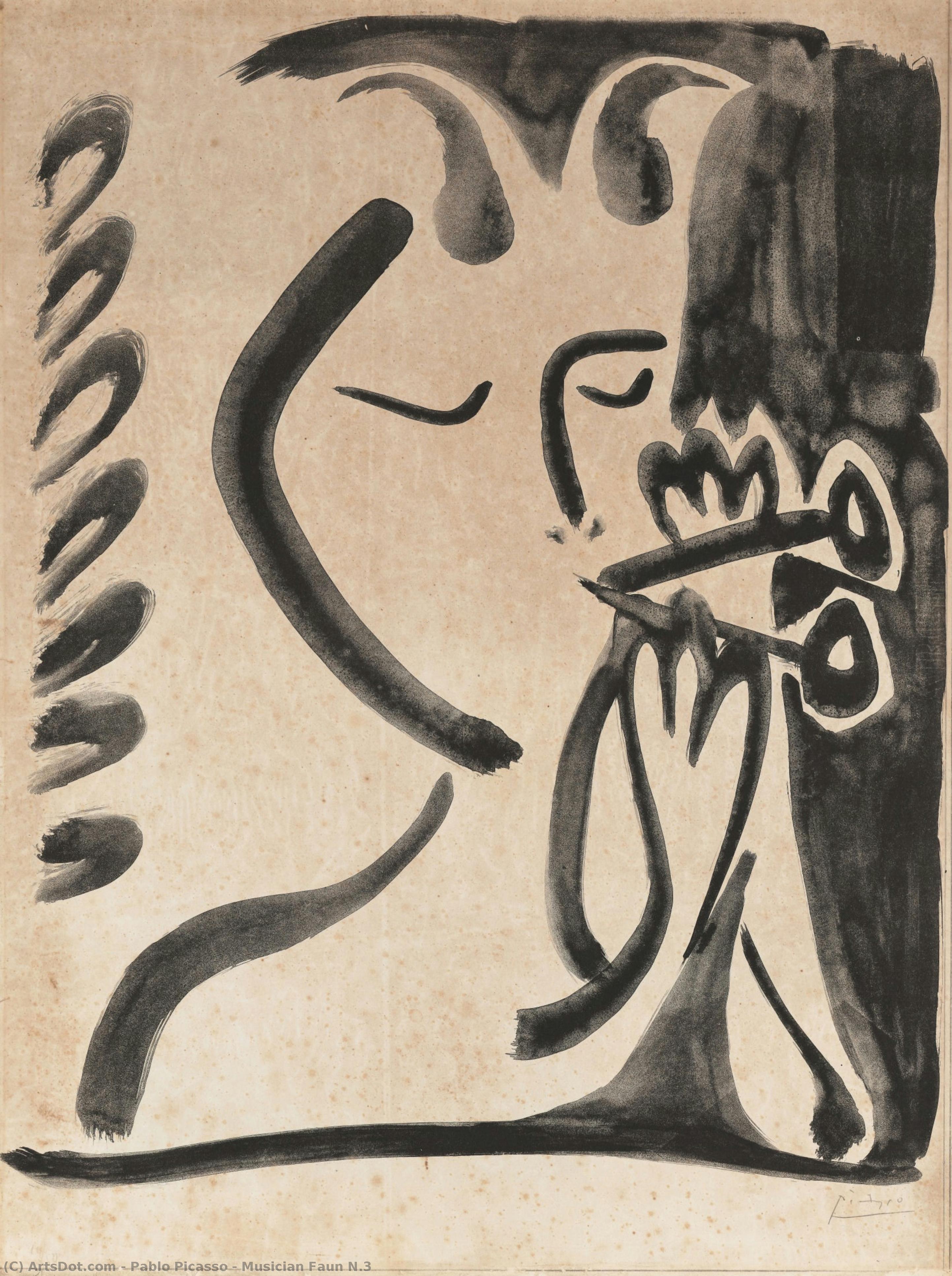
Pablo Picasso's "Musician Faun N.3," painted in 1948, is more than just a portrait; it’s a captivating distillation of the artist’s evolving Cubist sensibilities and his profound engagement with themes of melancholy, mythology, and the human condition. This work, housed within the Ema Klabin House Museum in São Paulo, Brazil, offers a glimpse into Picasso's creative process during a pivotal period – a time when he was experimenting with fractured forms and exploring the emotional resonance of seemingly simple subjects.
The photograph itself, taken at the museum, reveals the painting’s intricate details: the subtly tilted head of the musician, the suggestion of a flute or trumpet held to his lips, and the worn hat that adds an element of rustic charm. Picasso masterfully employs a monochromatic palette – primarily shades of grey and black – which amplifies the work's dramatic intensity and lends it a timeless quality. The deliberate lack of color forces the viewer to focus on the interplay of shapes, lines, and textures, creating a visual experience that is both intellectually stimulating and emotionally evocative.
Cubism and the Fragmented Self
“Musician Faun N.3” firmly establishes Picasso’s position within the burgeoning movement of Cubism. Emerging in the early 20th century, Cubism sought to represent subjects from multiple viewpoints simultaneously, shattering traditional notions of perspective and realism. Picasso, alongside Georges Braque, pioneered this revolutionary approach, breaking down objects into geometric forms and reassembling them on the canvas in a fragmented manner. This technique isn’t merely stylistic; it reflects a deeper exploration of the subject's essence – capturing not just its appearance but also its underlying structure and emotional state.
The faun himself—a creature from classical mythology associated with nature, music, and revelry—becomes a potent symbol within this context. Picasso’s fragmented representation suggests a sense of dislocation and perhaps even vulnerability. The musician's tilted head and ambiguous expression invite the viewer to contemplate his inner world, prompting questions about isolation, contemplation, and the bittersweet beauty of artistic creation.
Historical Context: War and Reflection
Painted in 1948, “Musician Faun N.3” was created during a period of immense global upheaval – the aftermath of World War II and the looming threat of the Cold War. Picasso’s work from this era often grappled with themes of loss, trauma, and the fragility of human existence. While not explicitly depicting war, the painting's somber mood and fragmented composition resonate with the anxieties and uncertainties of the time. The choice of a faun as the subject adds another layer of complexity, suggesting a connection between ancient myths and contemporary concerns.
Interestingly, Picasso’s exploration of the faun figure can be linked to his fascination with Iberian art – particularly the sculptures found in Spain—which he had studied extensively. These ancient forms, characterized by their stylized figures and symbolic imagery, provided inspiration for Picasso's own explorations of form and representation.
A ArtsDot Reproduction: Bringing Picasso’s Vision to Life
At ArtsDot, we are dedicated to preserving the legacy of artistic masters like Pablo Picasso. Our hand-painted reproductions of “Musician Faun N.3” meticulously recreate every detail of the original painting, capturing its nuanced textures and evocative atmosphere. We employ traditional techniques and utilize archival-quality materials to ensure that our reproductions faithfully represent Picasso’s artistic vision for generations to come.
Whether you are a seasoned art collector, an interior designer seeking a striking statement piece, or simply an admirer of Picasso's genius, a ArtsDot reproduction of “Musician Faun N.3” offers a unique opportunity to own a beautiful and meaningful work of art. Explore our selection today and discover the timeless allure of this enigmatic masterpiece.