A Vision of Childhood Through a Cubist Lens
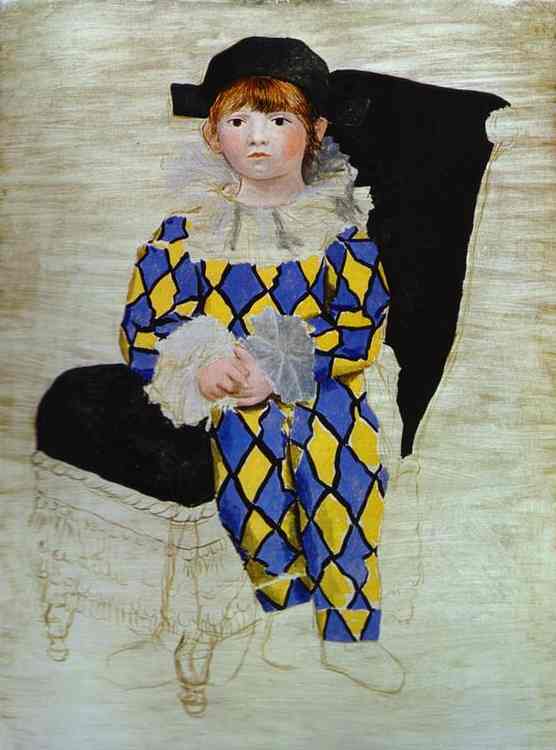
In the vast and ever-evolving tapestry of Pablo Picasso’s career, few works capture the tender intersection of familial intimacy and avant-garde experimentation as poignantly as "Paulo, Picasso's Son, as Harlequin." This captivating painting serves as a window into the artist's private world, portraying his young son, Paulo Ruiz y Picasso, not merely as a child, but as a character steeped in the whimsical traditions of the Commedia dell'Arte. As the young boy sits upon a chair, dressed in the iconic checkered costume of the harlequin, he embodies a sense of youthful exuberance and serene contemplation. The portrait transcends a simple depiction of childhood play; it is an exploration of identity, where the boundaries between the real child and the theatrical persona begin to blur under the artist's transformative gaze.
The brilliance of this piece lies in its masterful execution of the Cubist style, a movement Picasso helped pioneer. Rather than adhering to the traditional constraints of realistic depth, the artwork fractures reality into a sophisticated arrangement of geometric planes. This deliberate fragmentation invites the viewer to engage with the subject from multiple perspectives simultaneously, creating a dynamic visual rhythm that feels both modern and timeless. Through this lens, the child's form is reconstructed, offering a multidimensional experience that challenges the eye while maintaining a profound sense of structural harmony.
Technique, Texture, and Tonal Elegance
To behold this work is to appreciate the meticulous craftsmanship of Picasso’s hand. Executed in oil on canvas, the painting showcases a rich, tactile quality achieved through thick impasto strokes. These heavy applications of paint lend a sculptural dimension to the composition, allowing light to catch the ridges of the pigment and emphasizing the physical presence of the subject. The artist’s palette is a study in understated elegance, dominated by muted blues and warm yellows that create an atmosphere of quiet sophistication.
The interplay of these tones does more than just define shape; it evokes a specific emotional temperature. The cool blues provide a sense of tranquility and depth, while the golden yellows inject a spark of playfulness and light, mirroring the dual nature of the subject—the calm of a resting child and the vibrant energy of the harlequin character. For collectors and interior designers alike, this balance of color makes the piece an incredibly versatile addition to a curated space, capable of anchoring a room with its intellectual depth while providing a soft, inviting aesthetic.
Symbolism and the Legacy of the Harlequin
Beyond its formal beauty, "Paulo, Picasso's Son, as Harlequin" is rich with symbolic resonance. The harlequin costume itself carries significant historical weight, representing adaptability, humor, and the fluid boundary between reality and fantasy. By dressing his son in this attire, Picasso invites us to contemplate the masks we wear and the many layers of the human experience. Paulo’s posture—open and curious—suggests an innate fascination with the world, a quality that mirrors Picasso's own relentless artistic quest to find new ways of expressing complex human emotions.
Created during the mid-1920s, a period of intense creative exploration for Picasso, this work stands as a testament to his ability to infuse radical abstraction with deep, recognizable emotion. It is a painting that speaks to the heart of anyone moved by the beauty of transformation. Whether you are an art enthusiast seeking to connect with the revolutionary spirit of Cubism or a designer looking for a centerpiece that radiates both historical significance and soulful charm, this reproduction offers a profound encounter with one of the greatest minds in art history.