Introduction to the Painting and its Creator
Pablo Picasso, one of the most influential artists of the 20th century, co-founded the Cubist movement and is known for his pioneering role in modern art. Among his many masterpieces is the
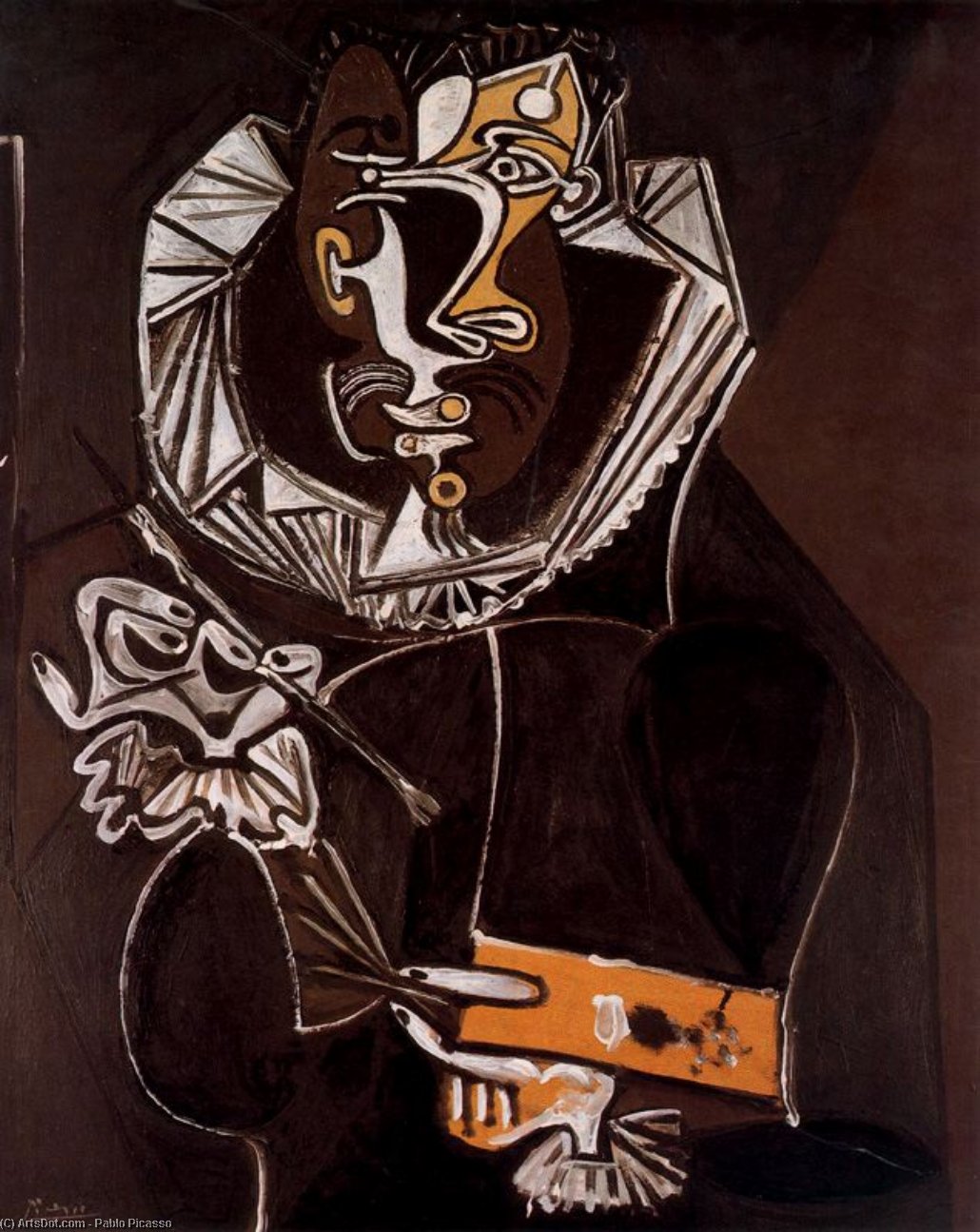
Portrait of a Painter (as El Greco), an oil on canvas painting created in 1950. This work is a tribute to the Spanish painter
El Greco, whose style influenced Picasso's own artistic development.
Historical Context and Artistic Style
The
Portrait of a Painter (as El Greco) was created during the post-World War II period, when artists were exploring new ways to express their ideas. The painting reflects Picasso's interest in
El Greco's elongated figures and dramatic use of color. However, it also showcases Picasso's unique Cubist style, which is characterized by fragmented forms and multiple perspectives.
Interpretation and Significance
The
Portrait of a Painter (as El Greco) is a complex work that invites viewers to consider the relationship between art, history, and identity. By depicting himself as
El Greco, Picasso suggests a connection between his own artistic vision and that of the earlier master. At the same time, the painting's fragmented forms and distorted perspective challenge traditional notions of representation and encourage viewers to see the world in new ways.
Related Works
If you enjoyed learning about the
Portrait of a Painter (as El Greco), be sure to check out other works by
Pablo Picasso on our website, such as:
For more information on Cubism and
Pablo Picasso, visit the
Wikipedia page or explore our collection of handmade oil painting reproductions at
ArtsDot.com.
Cubism and its influence on modern art can also be found at the
Kunstmuseum Bern, Switzerland, which features an extensive collection of works by
Pablo Picasso and other notable artists.
The
Portrait of a Painter (as El Greco) is a testament to Picasso's enduring legacy as one of the most important artists of the 20th century, and its significance continues to inspire art lovers and scholars today.