Pablo Picasso’s Self-Portrait at Age 36: A Window into Cubist Consciousness
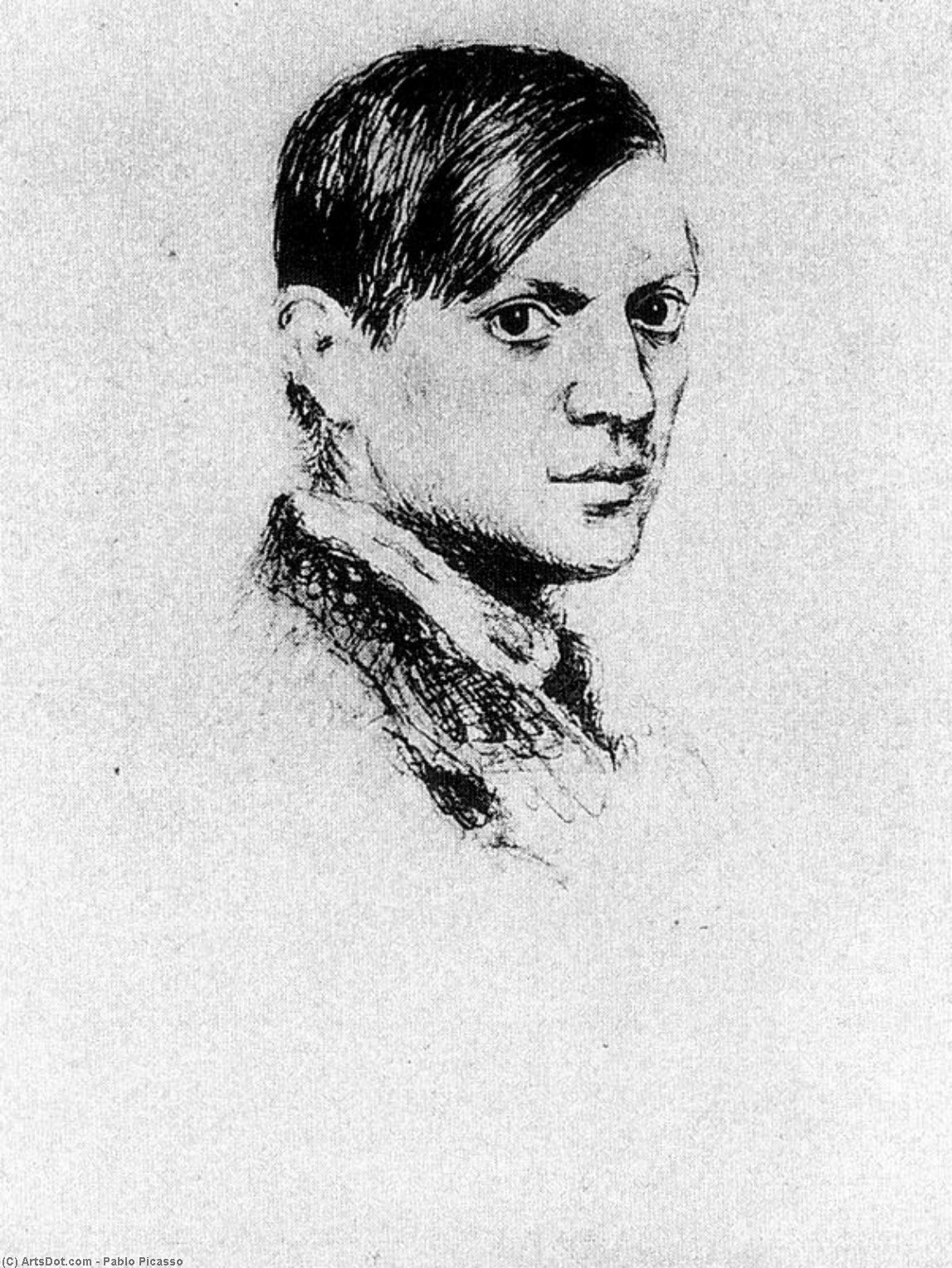
The black and white photograph captures a pivotal moment in Pablo Picasso's artistic journey – his self-portrait executed in 1936, just shy of his fortieth birthday. More than merely an image of the artist himself, it’s a masterful distillation of Cubism’s core principles, offering viewers a profound glimpse into Picasso’s intellectual and emotional landscape during a turbulent period in European history. The composition prioritizes a frontal bust portrait, positioned slightly off-center against a stark white backdrop that amplifies the subject's presence and directs attention to his gaze—a gaze imbued with both seriousness and introspection.
- Composition & Perspective: Picasso employs a flattened perspective characteristic of Cubism, rejecting traditional Renaissance conventions. The angular lines defining his facial features – jawline, forehead, cheekbones – are deliberately fractured, mirroring the fragmentation of reality as perceived by artists experimenting with this revolutionary style.
- Color Palette & Texture: As a monochrome reproduction, the photograph faithfully conveys the tonal range of Picasso’s original oil painting on canvas. Visible brushstrokes contribute to a palpable textural quality, hinting at the physicality of the artwork and adding depth to the image. The muted grayscale palette underscores the emotional gravity of the portrait.
- Style & Technique: Executed in early Cubist style, the self-portrait exemplifies Picasso’s relentless pursuit of innovation. Geometric forms dominate—cubes, cylinders, cones—representing a deliberate dismantling of conventional representation and embracing abstraction as a tool for conveying psychological complexity.
The painting's genesis coincided with the escalating tensions leading up to the Spanish Civil War (1936-1939), a conflict that deeply impacted Picasso’s artistic sensibilities. Influenced by Surrealist ideas, he sought to express not just visual likeness but also inner turmoil—a preoccupation with mortality and an awareness of the destructive forces reshaping Europe. The bull, a recurring motif in Picasso's oeuvre, symbolizes strength and resilience amidst adversity, while the horse represents vulnerability and suffering – themes interwoven throughout the composition.
Symbolic Significance: Beyond its formal elements, the self-portrait speaks to Picasso’s profound engagement with existential questions. The artist’s unwavering stare confronts the viewer directly, conveying a sense of unflinching honesty and confronting viewers with an honest reflection of his own psyche. It's a testament to Picasso's ability to transform personal experience into universal symbols—a cornerstone of Cubist thought and enduring artistic legacy.
Historical Context: Created during the shadow of war, Picasso’s self-portrait transcends mere biographical documentation; it embodies the spirit of an era grappling with profound moral dilemmas. The fractured forms and muted tones reflect the anxieties of a world destabilized by ideological conflict—a visual echo of the psychological fragmentation experienced by artists and intellectuals alike.
- Further Exploration: For deeper insights into Picasso’s artistic vision, consider visiting Kunstmuseum Bern (/en/museums/kunstmuseum-bern-schweiz-bern-en/), where you can admire reproductions of his iconic masterpieces like Guernica and Les Demoiselles d'Avignon.