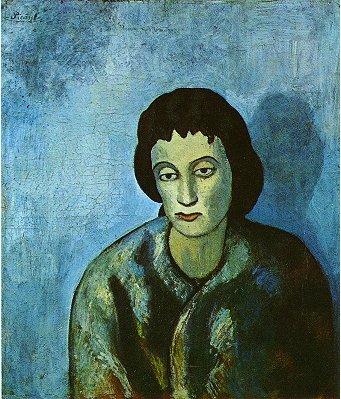
The painting "The Woman with the Edge" by
Pablo Picasso is a striking example of expressionism, created in 1902. This oil on canvas piece measures 60 x 49 cm and is characterized by its bold, vibrant colors and distorted forms.
Artistic Context
During this period, Picasso was experimenting with various styles, influenced by the works of
Henri Matisse and other avant-garde artists. The early 20th century saw a shift from traditional representational art to more radical and expressive forms, which is evident in "The Woman with the Edge."
Composition and Style
The painting features a woman with a greenish tint to her skin, dark hair, and an enigmatic expression. The background is dominated by a blue sky, adding depth to the scene. The woman's face is prominently displayed in the foreground, while her body extends into the background. This composition creates a sense of tension and dynamism.
Expressionist Elements
The painting showcases key elements of expressionism, including:
- Distorted forms: The woman's face and body are elongated and exaggerated, conveying intense emotions.
- Vibrant colors: The greenish hue of the woman's skin and the blue sky create a sense of unease and tension.
- Emphasis on emotion: The painting focuses on capturing the woman's emotional state rather than representing her in a realistic manner.
Artistic Influences
Picasso's work during this period was influenced by various artistic movements, including:
- Fauvism: The bold, vibrant colors used in the painting are reminiscent of Fauvist works.
- Cubism: The distorted forms and fragmented composition foreshadow Picasso's later Cubist experiments.
Conclusion
"The Woman with the Edge" is a captivating example of Picasso's early expressionist work. Its bold colors, distorted forms, and emphasis on emotion make it a significant piece in the development of modern art. For more information on Pablo Picasso and his works, visit
The Woman with the Edge at ArtsDot. Explore other notable paintings by Picasso, such as
Portrait of Sebastia Junyer-Vidal and
Woman in a Shawl, also available on our website. To learn more about expressionism and its influence on modern art, refer to the article on
Abstract Expressionism at Wikipedia.