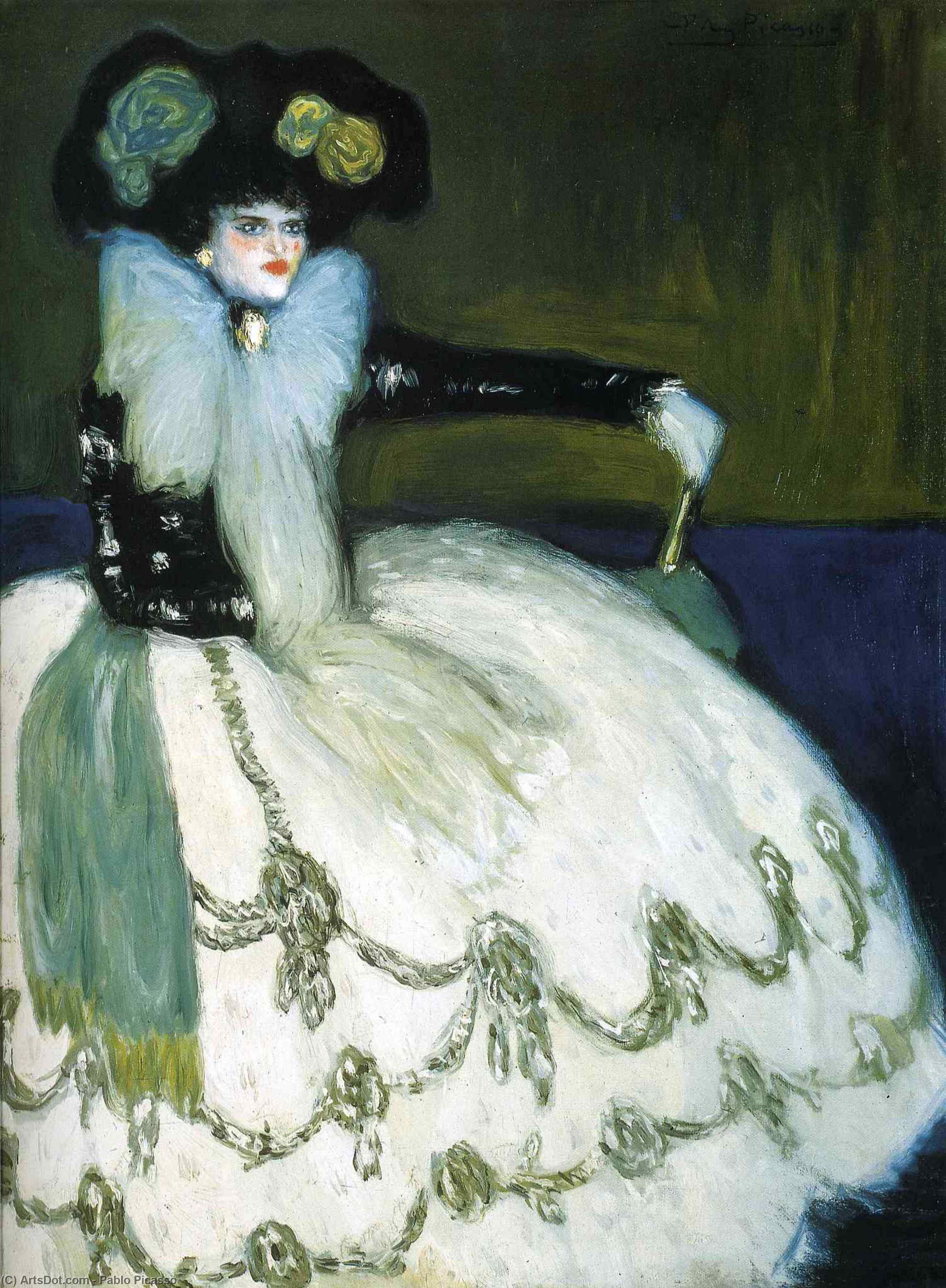
Woman Dressed in Blue: A Reflection of Picasso’s Early Style
Pablo Ruiz y Picasso's "Woman Dressed in Blue," painted in 1901 during his formative years as an artist, stands as a cornerstone of his oeuvre and embodies the essence of his pioneering exploration into Cubism. More than just a portrait, it represents a pivotal moment in artistic history—a conscious departure from Impressionistic conventions toward a radically new visual language that would reshape the landscape of modern art. The painting resides within Museo Nacional Centro de Arte Reina Sofía in Madrid, where its meticulous preservation allows visitors to experience firsthand the brilliance of Picasso’s early vision.
- Subject Matter: The artwork depicts a woman adorned in a striking blue gown and black hat embellished with yellow flowers. Her gaze is directed upwards, conveying an air of contemplation and serenity—a deliberate contrast to the turbulent political climate of the time.
- Style & Technique: Picasso employed oil on canvas, utilizing a technique characterized by fragmented planes and overlapping geometric shapes—a hallmark of Analytical Cubism. Unlike Impressionistic depictions that prioritize capturing fleeting impressions of light and color, Picasso sought to represent multiple perspectives simultaneously, challenging traditional notions of representation.
Influences Beyond Impressionism: Echoes of Romanticism & African Art
Picasso’s artistic journey was profoundly shaped by diverse influences—most notably Romanticism and the burgeoning fascination with African art. The Romantic movement championed emotion and imagination, mirroring Picasso's own expressive impulse to convey inner feelings through visual imagery. Simultaneously, Picasso drew inspiration from primitive sculptures found in ethnographic museums, particularly those originating in Africa. These sculptures’ simplified forms and bold contours served as a catalyst for his experimentation with geometric abstraction—a stylistic breakthrough that would propel him toward the revolutionary Cubist movement.
Historical Context: The Dawn of Modern Art Amidst Political Turmoil
Painted at the cusp of the 20th century, “Woman Dressed in Blue” emerged against a backdrop of significant political upheaval—the Spanish Civil War (1936-1939). Picasso’s decision to depict this woman not as a conventional portrait but as an object dissected into geometric planes reflected his broader artistic preoccupation with dismantling established visual conventions. The painting became a symbol of resistance and introspection, mirroring the anxieties and aspirations of artists grappling with the transformative forces reshaping European culture.
Symbolism & Emotional Resonance: A Portrait of Quiet Strength
Despite its stylistic innovation, “Woman Dressed in Blue” retains an undeniable emotional depth. The woman’s posture exudes confidence and composure—a deliberate defiance against the pervasive fear and uncertainty of the era. The blue hue dominates the canvas, symbolizing melancholy and introspection—yet it is tempered by the vibrant yellow flowers adorning her hat, representing hope and vitality. Picasso's masterful manipulation of color and form transcends mere visual representation; it communicates a profound psychological state—a testament to his ability to distill complex emotions into enduring artistic imagery.
Legacy & Relevance Today
“Woman Dressed in Blue” remains an iconic masterpiece, cementing Picasso’s position as one of the most influential artists of the century. Its pioneering approach to Cubism continues to inspire contemporary artists and designers—demonstrating that artistic innovation transcends temporal boundaries. The painting's enduring appeal lies not only in its aesthetic beauty but also in its ability to provoke contemplation about identity, emotion, and the transformative power of art itself. Exploring this artwork offers a glimpse into Picasso’s groundbreaking vision and its lasting impact on the trajectory of modern art history.