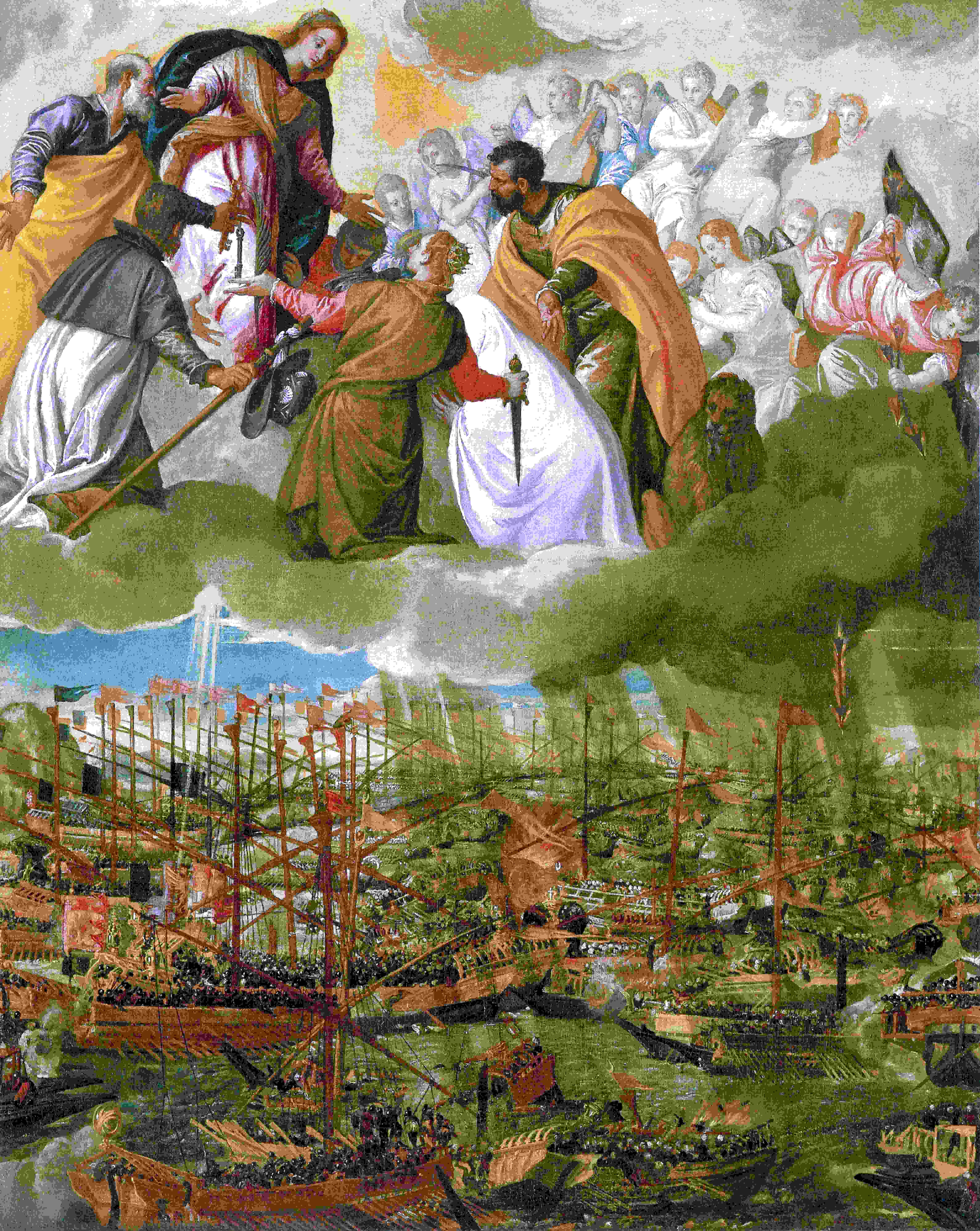
Paolo Veronese’s monumental 'Battle of Lepanto' explodes with vibrant color and theatrical grandeur, depicting the decisive Christian victory against Ottoman forces in 1572. This Venetian masterpiece showcases Veronese’s masterful technique and invites you to explore its captivating historical narrative.
Paolo Veronese (1528-1588): Venetian Renaissance master celebrated for vibrant color, dramatic compositions & opulent scenes of feasts and architecture. Explore his legacy!
Explore Venetian art's evolution at the Gallerie dell’Accademia! Discover masterpieces by Bellini, Titian & Canaletto in Venice’s historic Scuola della Carità. A stunning journey through 500 years of artistic brilliance.
A Triumph of Color and Allegory: Exploring Paolo Veronese’s Battle of Lepanto
The Battle of Lepanto, completed in 1572 by Paolo Veronese, transcends mere depiction; it embodies a profound statement about faith, power, and artistic ambition. More than just commemorating the decisive naval victory against Ottoman forces – a triumph for Christendom that reshaped European geopolitics – Veronese’s monumental canvas operates on multiple levels of symbolic interpretation, cementing its place as one of Venetian High Renaissance’s most enduring achievements. Its current home within the Gallerie dell'Accademia in Venice serves as a constant reminder of Veronese’s unparalleled ability to transform historical events into breathtaking visual narratives.
Historical Significance: The Clash Between Faith and Empire
The siege of Lepanto represents a watershed moment in European history. For decades, Ottoman naval dominance had instilled fear throughout the Mediterranean, threatening Christian kingdoms and disrupting trade routes. The Holy League – comprised primarily of Venice, Spain, and Papal States – united against the formidable Ottoman armada under Miguel López de Vega Carafa y Meléndez, marking the first major defeat for Ottoman power since Suleiman the Magnificent’s reign. Veronese skillfully captures this atmosphere of urgency and determination, reflecting the anxieties and aspirations of his time. The painting isn't simply documenting a battle; it’s conveying the spiritual significance of resisting tyranny and upholding Christian values.
Veronese’s Artistic Vision: Celestial Drama Beneath Turbulent Seas
Veronese eschewed a straightforward battlefield panorama in favor of an elaborate allegorical composition. Dividing the canvas into two distinct realms – the upper celestial expanse and the lower maritime scene – Veronese establishes a powerful visual dichotomy. Angels, saints, and Christ dominate the heavens, bathed in radiant light, symbolizing divine intervention and bolstering the morale of the Christian forces. Below, a swirling sea erupts with ships engaged in fierce combat, mirroring the earthly struggle for dominance. This juxtaposition isn’t accidental; it underscores Veronese's belief that God actively participates in human affairs, guiding victory through grace and righteousness.
Technique and Style: Mastery of Color and Chiaroscuro
Veronese’s technique is characterized by an astonishing command of color and light – hallmarks of Venetian painting at its zenith. He employs a masterful use of chiaroscuro, skillfully manipulating tonal variations to sculpt figures and create dramatic depth within the scene. The luminous hues of the celestial realm contrast sharply with the darker shades of the sea, intensifying the emotional impact of the artwork. Furthermore, Veronese’s meticulous attention to detail – from the intricate drapery folds to the expressive faces of the participants – demonstrates his unwavering commitment to realism blended seamlessly with idealized beauty.
Symbolism and Legacy: Venice's Lion and Artistic Influence
The inclusion of a lion emblazoned on one of the Venetian ships serves as a deliberate emblem of civic pride and reinforces Venice’s role as a champion of Christendom. Veronese’s work profoundly influenced subsequent generations of artists, notably Tintoretto and El Greco, who adopted his bold palette and dynamic compositional strategies. The Battle of Lepanto continues to resonate today not only for its historical importance but also for its enduring artistic merit – a testament to Veronese's genius and the transformative power of art to convey complex ideas and emotions. Its reproduction offers an opportunity to experience firsthand the grandeur and spiritual fervor that defined Venetian High Renaissance, bringing a masterpiece into any discerning home.