A Symphony of Light and Life: Unveiling Veronese's Celestial Tapestry
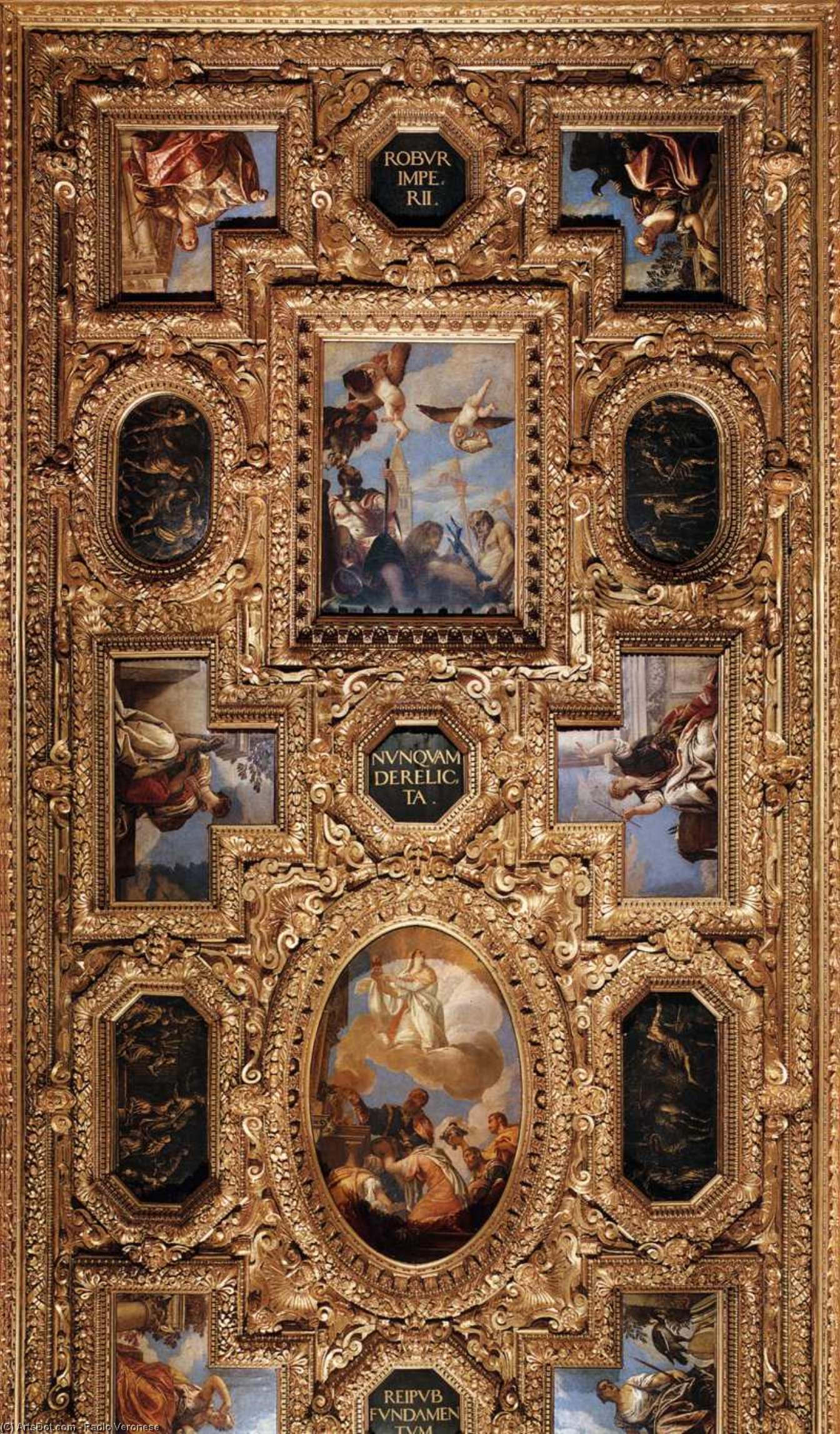
The ceiling decoration, a detail from Paolo Veronese’s monumental work within the Doge’s Palace in Venice, is more than just a decorative scheme; it’s an immersive theatrical experience rendered in vibrant fresco. Completed around 1578, this section captures a microcosm of the entire composition – a dazzling display of figures, architectural grandeur, and a masterful manipulation of light that immediately draws the viewer into its opulent world. Veronese, a Venetian master renowned for his dramatic scale and lavish color palettes, here demonstrates his unparalleled ability to create an illusion of boundless space and teeming life within the confines of a relatively small area.
The scene depicted is a carefully orchestrated tableau of biblical narratives interwoven with classical allusions. Notice immediately the gold frame, not merely a decorative element but a deliberate framing device that echoes the grandeur of Renaissance palaces and reinforces the sense of theatrical spectacle. Within this frame, we find a multitude of figures – angels, prophets, sibyls, and scenes from Genesis – each rendered with an astonishing level of detail and dynamism. The composition is remarkably balanced, utilizing diagonal lines to create movement and depth, while the carefully chosen color palette—rich reds, blues, golds, and greens—imbues the scene with a sense of warmth and vitality.
The Techniques of Venetian Grandeur: Fresco and Illusion
Veronese’s technique is a testament to the skill and ingenuity of Renaissance artists. He employed the traditional fresco method, applying pigments directly onto wet plaster, ensuring that each color became permanently integrated into the wall surface. This process demanded meticulous planning and rapid execution – a challenge he met with remarkable precision. However, Veronese went beyond mere technical proficiency; he masterfully utilized *trompe-l'oeil* techniques to create an illusion of depth and perspective. The receding architectural elements, particularly the arches and columns, are painted with such realism that they seem to extend infinitely into the distance, further enhancing the sense of spaciousness.
The use of light is particularly noteworthy. Veronese expertly manipulates shadows and highlights to create a dramatic chiaroscuro effect, emphasizing certain figures and adding layers of complexity to the scene. The golden light streaming from an unseen source illuminates the central figures, drawing our attention to their gestures and expressions. This masterful control of light not only enhances the visual impact but also contributes significantly to the overall emotional atmosphere – one of awe, wonder, and divine majesty.
Symbolism and Narrative: A Window into Renaissance Thought
Beyond its purely aesthetic qualities, this detail is rich in symbolism. The figures depicted represent a synthesis of biblical narratives and classical mythology, reflecting the humanist ideals that flourished during the Renaissance. The sibyls, prophetic women from antiquity, foreshadow the coming of Christ, while the prophets offer glimpses into his divine mission. The inclusion of both Jewish and pagan figures underscores the belief that salvation was offered to all humanity through faith. Furthermore, the depiction of scenes from Genesis—the Creation, the Fall of Man, and Noah’s Flood—reminds us of humanity's relationship with God and the consequences of sin.
The overall effect is one of profound beauty and intellectual stimulation. Veronese’s ceiling decoration is a testament to his artistic genius – a dazzling display of color, composition, and technique that continues to captivate viewers centuries after its creation. It stands as a powerful reminder of the enduring legacy of Venetian art and the transformative power of visual storytelling.