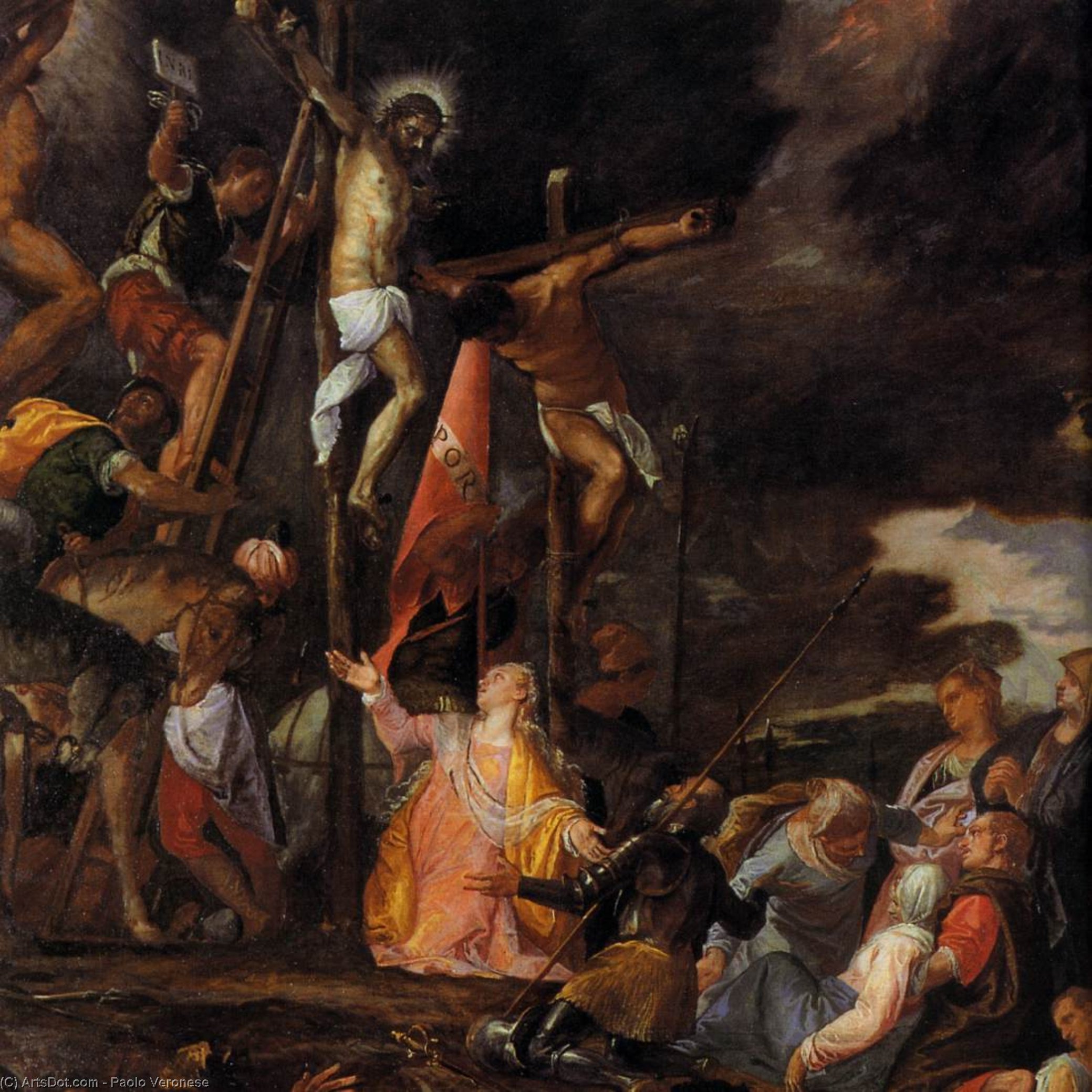
A Venetian Visionary: Exploring Paolo Veronese’s Crucifixion
Paolo Caliari, known universally as Paolo Veronese, ascended from the artistic currents of 16th-century Venice to become a titan of color and grandeur – an artist whose canvases continue to captivate audiences centuries later. Born in Verona in 1528, his lineage traced back to humble beginnings; his father was a stonemason, grounding him in the tangible beauty of form and material. Yet, Veronese’s artistic trajectory swiftly propelled him toward unparalleled heights of creativity within the epicenter of European art. His formative years under Antonio Badile and Giovanni Francesco Caroto instilled foundational skills in traditional painting methods, but it was his relocation to Venice in 1550 that irrevocably transformed his artistic vision. The city itself became an inexhaustible source of inspiration, its opulent courts, vibrant marketplaces, and shimmering canals shaping the monumental scale and dramatic intensity of his oeuvre. He swiftly absorbed the stylistic prowess of Venetian luminaries like Titian, whose masterful manipulation of color profoundly influenced Veronese’s distinctive palette—a palette characterized by luminous hues and subtle gradations that achieved an unprecedented level of realism.
- Subject Matter: The painting depicts the crucifixion of Jesus Christ, a cornerstone of Christian iconography. However, Veronese doesn't portray it as a purely devotional scene; rather, he presents it within a richly detailed narrative framework.
- Style: Veronese’s style embodies Venetian Mannerism—a movement that prioritized elegance and refinement over naturalistic representation. He eschewed the conventions of High Renaissance perspective, favoring instead flattened planes of color and stylized figures to convey emotion and grandeur.
Technique: Veronese employed oil paint on canvas, utilizing a layering technique known as *glazing*. This method involved applying thin translucent layers of pigment over previous coats, building up depth and luminosity gradually—a masterful feat that allowed him to capture the subtle nuances of light and shadow with remarkable precision. The artist’s meticulous attention to detail extended beyond mere visual accuracy; he incorporated intricate architectural elements and meticulously rendered drapery folds to heighten the sense of realism and create a convincing illusion of space.
Historical Context: Created in 1580, Crucifixion emerged during a period of artistic ferment within Venice—a city grappling with religious reform and asserting its dominance as a cultural powerhouse. Veronese’s commission reflects the Venetian aristocracy's desire to commemorate significant events and express piety through monumental art. The painting stands alongside other ambitious projects undertaken by Veronese during his prolific career, demonstrating the artist’s commitment to elevating artistic achievement to new levels of sophistication.
Symbolism: Beyond its religious significance, Crucifixion is laden with symbolic representations—a deliberate strategy employed by Veronese to communicate profound theological ideas. The positioning of Jesus on the cross symbolizes sacrifice and redemption, while the surrounding figures represent humanity’s response to divine grace. Furthermore, the inclusion of architectural elements like arches and columns reinforces themes of permanence and majesty, mirroring the enduring legacy of Christian faith.
Emotional Impact: Veronese's Crucifixion transcends mere visual depiction; it aims to evoke a visceral emotional reaction in the viewer—a testament to his artistic genius. The artist’s masterful use of color and composition generates an atmosphere of solemn contemplation, prompting reflection on themes of suffering, compassion, and spiritual transcendence. It remains a powerfully evocative artwork, capable of stirring viewers into profound introspection and reaffirming the enduring power of art to communicate universal human experiences.
Conclusion: Paolo Veronese’s Crucifixion exemplifies the apex of Venetian Mannerism—a masterpiece that continues to inspire admiration for its technical brilliance, stylistic innovation, and emotive resonance. Its enduring appeal speaks to the timeless fascination with religious iconography and the profound capacity of art to convey complex spiritual ideas. Reproductions of this iconic painting offer collectors and interior designers alike an opportunity to experience firsthand the grandeur and luminosity of Veronese’s unparalleled artistic vision.