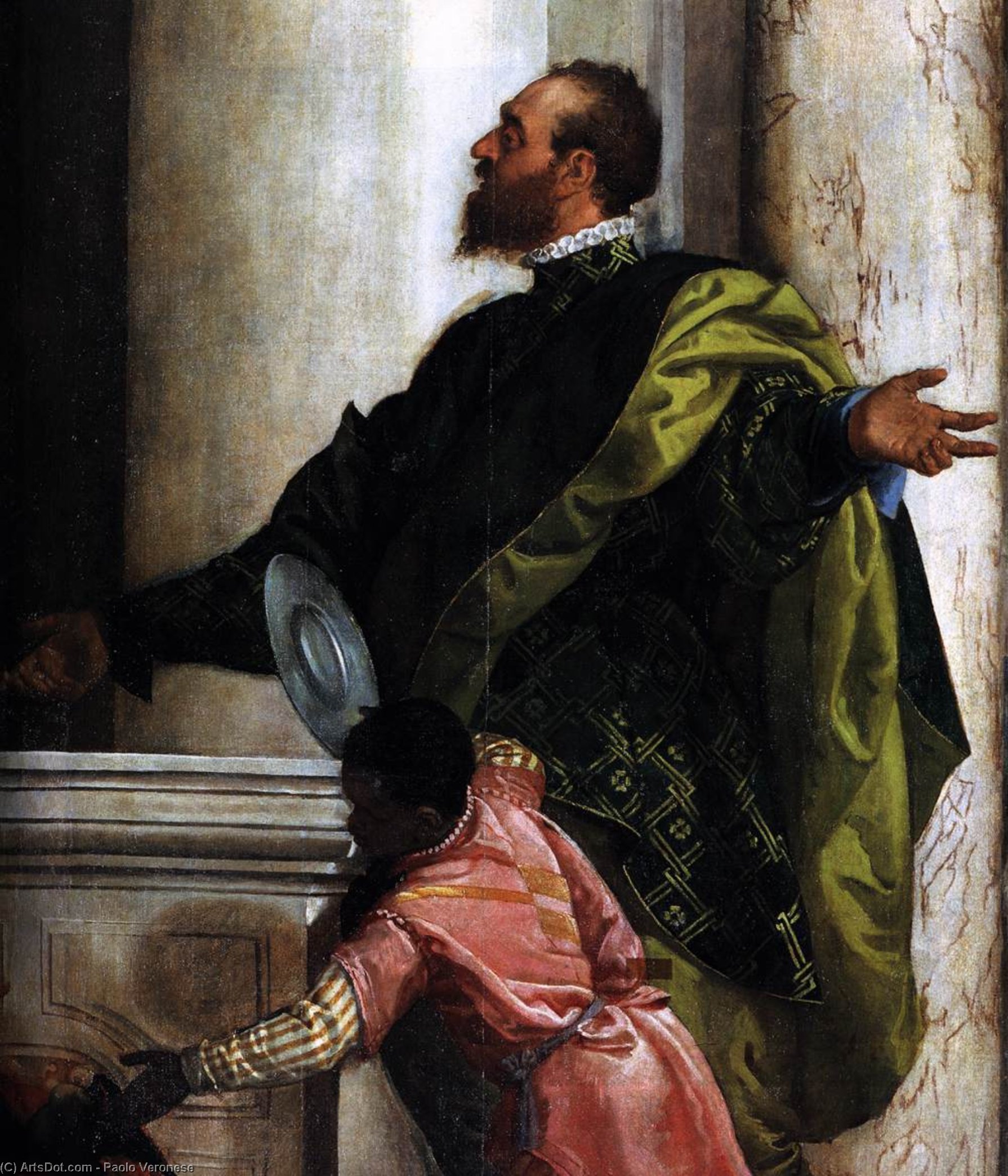
A Grand Tapestry of Light and Life: Unveiling Veronese's "Feast"
Paolo Veronese’s “Feast in the House of Levi,” painted in 1573, isn’t merely a depiction of a biblical scene; it’s an immersive experience. Commissioned for the refectory of the Dominican friary in Venice, this monumental canvas—a staggering 5.5 by 13 meters—immediately overwhelms with its sheer scale and opulent detail. It's a testament to Veronese’s mastery of color, composition, and his uncanny ability to transform religious narrative into a dazzling spectacle. More than just a painting, it’s a carefully constructed world, brimming with figures, architectural grandeur, and an almost palpable sense of celebratory excess – a deliberate choice that ultimately led to its controversial reception by the Venetian Inquisition.
- Subject Matter: The painting reimagines Luke 5:29-32, depicting Christ presiding over a lavish banquet in the home of Levi (St. Matthew), surrounded by a throng of Roman officials, merchants, and commoners. However, Veronese subtly shifts the focus from the biblical story itself to the *representation* of that event – a deliberate move that would later draw criticism.
- Style: Veronese’s style is firmly rooted in Venetian Renaissance painting, yet he transcends mere imitation. He masterfully blends elements of Mannerism—particularly in the elongated figures and complex spatial arrangements—with a vibrant naturalism. The effect is one of dazzling brilliance and theatricality.
The Alchemy of Color: Veronese’s Revolutionary Palette
Veronese was renowned for his unparalleled command of color, and “Feast” showcases this talent in breathtaking abundance. He employed a technique known as *colorito*, prioritizing the intensity and luminosity of individual hues over precise modeling or shading. The palette is extraordinarily rich—deep reds, vibrant blues, shimmering golds, and dazzling greens—all applied with an almost obsessive attention to detail. Notice how he uses color not just to depict objects but also to create a sense of atmosphere and movement. The warm glow emanating from the central figures contrasts sharply with the cooler tones used for the architectural backdrop, drawing the viewer’s eye into the heart of the scene.
Technique: Veronese utilized thin layers of oil paint applied in *glazes*, building up color and luminosity gradually. This technique allowed him to achieve an unparalleled level of brilliance and depth, particularly evident in the reflections on polished surfaces like marble and metal. The use of *sfumato*—a subtle blurring of edges—further enhances the sense of atmosphere and creates a dreamlike quality.
A World Constructed: Architecture, Perspective, and Symbolism
The architectural setting is as crucial to “Feast” as the figures themselves. Veronese meticulously recreates a Roman-inspired interior, complete with soaring arches, elaborate columns, and richly decorated walls. However, he deliberately avoids traditional linear perspective, opting instead for a complex system of converging diagonals that create a sense of depth and dynamism. This unconventional approach—a departure from the established rules of Renaissance art—further contributes to the painting’s theatricality and reinforces its overall impression of grandeur.
- Symbolism: The abundance of food, drink, and luxurious furnishings symbolizes Christ's generosity and his invitation to all. The presence of Roman officials represents the universality of salvation—that even those considered outsiders are welcome in God’s kingdom.
- Controversy: The painting’s lavishness and its departure from traditional religious iconography drew criticism from the Venetian Inquisition, who deemed it irreverent and overly sensual. The inclusion of figures like a man with a nosebleed (a common depiction of Judas) and drunken Germans was particularly problematic.
A Legacy of Spectacle: Veronese’s Enduring Influence
Despite the controversy, “Feast in the House of Levi” remains one of Veronese's most celebrated works. It exemplifies his mastery of color, composition, and theatricality—qualities that have influenced generations of artists. Reproductions of this monumental painting continue to captivate viewers with their sheer scale and dazzling beauty. Whether admired for its technical brilliance or its audacious departure from convention, “Feast” stands as a testament to Veronese’s genius and his enduring legacy as one of the greatest painters of the Venetian Renaissance.